Electric Fuse Board: Safe Troubleshooting and Maintenance
Learn how to inspect, test, and maintain your electric fuse board with practical steps, tools, and safety tips from FuseBoxCheck to protect your home.


In this guide you will learn how to safely inspect and maintain your electric fuse board, identify common signs of overload, and decide when to call a licensed electrician. You'll review essential safety steps, the tools you need, and a practical, step-by-step approach to basic checks that reduce risk and help protect your home's electrical system.
What is an electric fuse board and why it matters
An electric fuse board (also known as a fuse box or distribution board) is the central hub where your home’s electrical circuits are protected and distributed. It houses fuses or circuit breakers that interrupt power when a fault occurs, reducing fire risk and protecting appliances. In modern homes, the fuse board is typically labeled and color-coded to map circuits for lighting, outlets, and heavy appliances. According to FuseBoxCheck, understanding the basic layout helps homeowners prioritize safety and plan maintenance without unnecessary risk. The main features to know are the main switch, the circuit breakers or fuses, the neutral and earth bars, and the labeling that links each breaker to a room or device. This knowledge empowers you to recognize warning signs early, schedule safe inspections, and communicate effectively with electrical professionals. Always treat any panel as potentially energized and avoid probing inside unless you have isolated the supply and are sure you know what you’re doing. If in doubt, call a pro.
Safety foundations before you start a DIY inspection
Before you touch the fuse board, establish a safe workspace and put personal protection in place. Wear insulated gloves and safety goggles; remove jewelry; keep children away. Verify there is no live voltage by using a non-contact tester with multiple checks. If you smell burning or notice scorch marks, power down at the main switch and evacuate. FuseBoxCheck emphasizes the importance of planning, isolating power, and never attempting work on a live panel. Do not open the enclosure unless you know the main supply is isolated. Keep a flashlight, a notepad, and your phone ready to document circuits. If your home uses a modern smart panel, follow manufacturer safety notes. By building a safety-first mindset, you reduce the risk of shock, arc flash, or wiring damage. Finally, never bypass safety devices to save time; this undermines protection and may be illegal in your area.
Key components you should recognize
The main switch is the large handle that shuts off all power to the circuits. The incoming feed usually lands on a neutral bar and an earth bar, which remain isolated from live parts. Circuit breakers or fuses protect individual branches and can be reset or replaced after a fault. The busbar distributes power to all connected circuits, and the labeling should map each breaker to a room or major appliance. Understanding these elements helps you map out problem areas and communicate clearly with a licensed electrician when needed. FuseBoxCheck highlights that a labeled panel reduces unknowns during an inspection and speeds up diagnostics.
Understanding circuits, fuses, and breakers
Fuses provide overcurrent protection by melting a metal strip when excessive current flows. Circuit breakers perform the same safety role but can be reset after a fault. In older homes you may still encounter fuses; newer installations usually rely on circuit breakers. When monitoring for trouble, look for repeated nuisance trips, discoloration, or a burning smell around the panel. These are warning signs that deserve professional attention. The choice between fuses and breakers isn’t just historical—it affects how you diagnose faults and plan upgrades. FuseBoxCheck notes that modern panels favor breakers for convenience, but the basic safety principle remains the same: protection first, then investigation.
Step-by-step: planning your inspection safely
Begin by identifying the exact location of the fuse board and checking its accessibility. Gather your tools and set a clear plan for what you will test. Label your sections in advance so you can compare notes after any changes. Take photos of labels and circuit arrangements before you touch anything. With a deliberate plan, you minimize confusion and reduce the chance of accidentally disturbing a live conductor. If labeling is outdated, prioritize updating the list after each test. Following a structured plan makes the process safer and more efficient, especially for homeowners who are new to electrical work. FuseBoxCheck reminds readers to respect local codes and safety standards at all times.
Troubleshooting common fuse box problems
Frequent trips and buzzing noises are common signals of underlying issues. A buzzing panel could indicate loose connections, overloaded circuits, or degraded components. Burn marks, a warm enclosure, or a sulfurous smell require immediate disconnection from power and professional assessment. If a circuit plate or breaker is repeatedly tripping on a specific appliance, check that device’s plug and cord for damage and ensure it isn’t drawing more current than the circuit allows. Document patterns of trips and investigate whether they align with certain loads or times of day. FuseBoxCheck analysis shows that consistent trip patterns often point to a shared circuit that needs rebalancing or a service upgrade. Always treat signs of danger seriously and never bypass protective devices to save time.
Tools, measurements, and reading the data
A basic toolset includes an insulated screwdriver, a non-contact voltage tester, a digital multimeter, and a clamp meter for measuring current on a live circuit without breaking the circuit. Use a voltage tester to verify de-energization before handling any wires. Learn to read symbol codes on labels and verify color codes against regional standards. Keep a dedicated notebook for circuit mapping, noting which room or appliance each breaker controls. This practice makes future maintenance easier and safer, especially when you are coordinating with electricians for upgrades or replacements.
Maintenance routines to extend fuse box life
Schedule periodic visual inspections to catch early signs of wear. Tighten screws on the panel cover if you notice looseness, and replace any corroded connectors. Keep the area clean and dry to avoid moisture intrusion, which can compromise insulation and insulation resistance. Refresh labeling every few years or after renovations to preserve a clear map of circuits. While routine maintenance reduces surprises, never attempt any major work without isolating power and verifying a safe state first. Consistent maintenance can extend the life of the fuse board and reduce the likelihood of unexpected outages.
When to upgrade or rewire: long-term planning
If your home experiences frequent power trips, has an aging fuse board, or you’re planning major electrical additions, it’s prudent to plan an upgrade or relocation with a licensed electrician. Rewiring or upgrading may involve code-compliant components, panel relocation, and ensuring suitable service capacity from the utility supply. FuseBoxCheck recommends scheduling an assessment when undertaking renovations, adding high-demand equipment, or expanding living space. A professional can help you determine whether a panel upgrade, service upgrade, or complete relocation offers the best balance of safety, cost, and future-proofing for your home.
Tools & Materials
- Insulated screwdriver set(Phillips #2 and flat-head with insulated handles for comfort and safety)
- Non-contact voltage tester(To verify the absence of voltage without touching conductors)
- Digital multimeter(Voltage and continuity testing; include probes and proper settings)
- Clamp meter(Useful for measuring current without disconnecting circuits)
- Safety gloves and goggles(Electrical-rated PPE; avoid jewelry and metal accessories)
- Work flashlight(Bright, preferably head-mounted for hands-free use)
- Notepad and pencil(Document labeling, trips, and test results)
- Rags or towels(Wipe up any moisture and keep the area dry)
Steps
Estimated time: 60-90 minutes
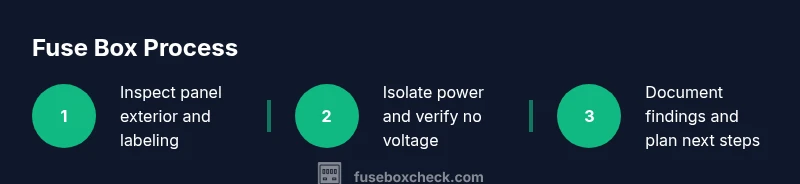
- 1
Assess the area and gather tools
Before touching the fuse board, clear the workspace and collect your tools. Confirm the panel is accessible and free of moisture, pets, or clutter. This preparation reduces accidents and helps you stay organized during the inspection.
Tip: Have a clear plan and a companion if possible; never work alone around electrical equipment. - 2
Switch off the main supply and verify power
Turn off the main switch to de-energize the panel. Wait 60 seconds, then verify there is no voltage using a non-contact tester before proceeding. This ensures you won’t accidentally contact live conductors.
Tip: If your main switch is difficult to reach, pause and seek assistance rather than forcing access. - 3
Inspect the panel exterior and labeling
Look for signs of wear, loose screws, or discoloration on the enclosure. Compare the existing labeling to the actual circuits and take photos for documentation.
Tip: Note mislabeled circuits and plan to update the panel mapping after testing. - 4
Open the enclosure and observe internal components safely
Only open the panel if you are sure the supply is isolated. Keep hands away from exposed conductors and avoid touching busbars. Observe the condition of fuses or breakers and look for signs of overheating.
Tip: Do not touch multiple conductors at once; work one circuit at a time. - 5
Test circuits with basic methods
Use the non-contact tester and, if trained, test a low-risk circuit at the panel to confirm safety before physically handling any components. Do not replace fuses or breakers without understanding the load and purpose of the circuit.
Tip: Never bypass protective devices to speed up the process. - 6
Decide next steps and document findings
Summarize any issues observed, update the circuit map, and determine whether a pro should intervene. Store photos and notes in a dedicated file for reference during professional consultations.
Tip: A well-documented report speeds up professional service and reduces unnecessary visits.
Your Questions Answered
Is it safe to inspect an electric fuse board myself?
Safe DIY inspection is possible if you isolate power, wear PPE, and avoid touching live parts. If you are unsure, stop and consult a professional.
You can inspect safely if you isolate power and wear PPE; if unsure, call a professional.
What are common signs my fuse box needs attention?
Frequent trips, buzzing sounds, a warm panel, burning smell, or scorch marks indicate issues that need assessment by a professional.
Look out for trips, buzzing, heat, or burning smells that signal problems.
Can I upgrade from fuses to circuit breakers myself?
Upgrading typically involves panel replacement or reconfiguration to meet code requirements. A licensed electrician should perform the upgrade.
Upgrades should be done by a licensed electrician to ensure safety and compliance.
What is the difference between a fuse box and a circuit breaker panel?
Fuses require replacement after a fault; breakers can be reset. Breaker panels are more convenient but serve the same protective purpose.
Fuses blow and need replacement; breakers trip and can be reset.
How often should I get a professional inspection?
Schedule professional inspections when renovating, after repeated trips, or when you notice signs of wear. Local codes guide routine maintenance.
Check with a pro if you’re remodeling or see repeated trips; follow local codes.
What tools do I need for testing a fuse box safely?
You’ll typically need insulated screwdrivers, a non-contact tester, a digital multimeter, and safety gloves. Always follow manufacturer safety notes.
Essential tools include insulated screwdrivers, a tester, and a multimeter.
Watch Video
Highlights
- Inspect safely before touching any panel
- Label circuits to simplify future maintenance
- Use the right tools and test before handling
- Document findings for professional reference