Fuse Box com: Safe, DIY Guidance for Your Fuse Box
Learn practical, safety-first steps for inspecting and maintaining your fuse box com with FuseBoxCheck. This guide covers basics, testing, and when to call a professional.


You will learn to safely inspect, test, and reset a fuse box com, while identifying common issues and knowing when to call a professional. This quick guide covers essential tools, basic safety steps, and warning signs to watch for in home electrical panels. Use this as a practical, confidence-building starting point.
Understanding fuse box com and safety basics
The phrase fuse box com is used here to denote practical, consumer-focused guidance for working around residential electrical panels. The core principle is safety first: treat all panels as live until you have verified no voltage, use insulated tools, and avoid wet or damp environments. Home electrical work carries risk, including shocks and arc faults, so understanding the basics helps homeowners prevent common mistakes. This guide draws on standard safety practices and synthesizes recommendations for homeowners and DIY enthusiasts. FuseBoxCheck emphasizes that knowledge of panel layout, labeling, and load distribution reduces surprises at the panel and protects electrical devices connected to circuits throughout the home. By keeping your approach systematic and conservative, you minimize risk while maintaining functionality in everyday situations.
Panel labeling and common layouts you’ll see
Most residential panels have a main disconnect and a row of branch breakers or fuses, each corresponding to a circuit in your home. Labels are critical: they map circuits to rooms or appliances and prevent guesswork when something trips. If labels are missing or faded, create a new map. Take photos of the panel both with the door open and closed, in good lighting. Modern panels often use standard color coding for hot wires and grounding, but never rely on color alone—verify with a tester before touching conductors. Fuse box com guides emphasize labeling as a long-term habit that saves time during maintenance or emergencies and helps you plan load distribution across rooms.
Safe reset procedure overview
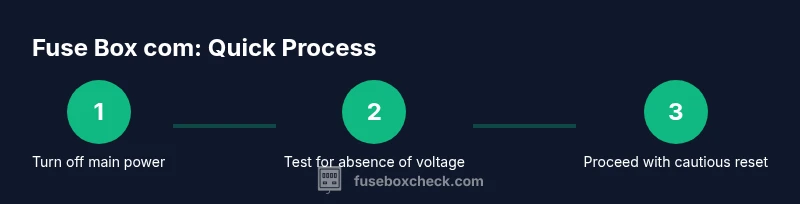
Resetting a tripped circuit should be approached methodically: first verify that the power is turned off to the specific circuit, then switch the breaker fully to the OFF position before returning it to ON. If you’re dealing with a fuse, remove the fuse only after confirming no voltage and replacing it with one of the correct amperage. Always stand on a dry surface, keep tools insulated, and avoid leaning directly over the panel. If you notice any burning smell, buzzing, or scorching, shut off power at the main disconnect and seek professional help.
Diagnostic testing: voltage checks and circuit tracing
With the power off, use a non-contact voltage tester to confirm no current before touching any conductors. A multimeter can verify voltage in a controlled way and help you identify a dead circuit versus a short or overload. When tracing a circuit, work slowly and label each tested component. Do not rely on a single measurement or guesswork; cross-check readings and document findings. FuseBoxCheck guidance emphasizes compiling a quick circuit map that you can reference in future inspections, which reduces risk of mistakes during reassembly.
Maintenance and labeling practices to keep it tidy
Regular maintenance includes updating circuit labels, keeping the panel door closed when not actively testing, and removing dust with a dry cloth. Avoid using liquids or cleaners inside the panel. If you need to access the inside repeatedly, consider mounting a small flashlight nearby for illumination. A tidy, labeled panel makes future troubleshooting faster and safer, and helps prevent mixed or misattributed circuits.
When to call a professional and how to choose one
If you encounter repeated tripping, fried smells, smoke, or the panel feels warm to the touch, stop work immediately and call a licensed electrician. A pro can perform a thorough diagnostic, confirm compatibility of breakers or fuses with your service panel, and address potential hidden issues such as outdated wiring or improper grounding. When selecting a professional, ask about licensing, insurance coverage, and recent experience with your panel type. FuseBoxCheck recommends seeking electricians who provide clear, written estimates and a safety plan before any work begins.
Authority sources
- https://www.osha.gov
- https://www.energy.gov
- https://www.nfpa.org
Tools & Materials
- Non-contact voltage tester(Verify no active voltage before handling conductors)
- Insulated screwdriver set(Sizes for Phillips and flathead; insulated handles)
- Digital multimeter(Measure voltage, continuity, and resistance safely)
- Protective gloves(Insulated, ANSI-rated, fit snugly)
- Safety glasses(ANSI Z87.1 compliant for eye protection)
- Flashlight or headlamp(Adequate lighting inside panel, especially in dim areas)
- Replacement fuses or spare circuit breakers(Match amperage and type to existing devices)
- Circuit labeling tape and marker(Keep a labeled map of circuits for future tests)
- Electrical fire extinguisher (Class C/equivalent)(Accessible for emergencies; not a substitute for proper disconnection)
Steps
Estimated time: 25-40 minutes
- 1
Prepare the workspace and safety gear
Clear the area around the panel, dry the floor, and put on safety glasses and insulated gloves. Gather your tools and review the panel labeling to minimize delays. Having a plan reduces time under the panel and lowers risk.
Tip: Keep a dry, non-conductive surface under the panel; moisture increases shock risk. - 2
Identify the correct fuse or breaker
Look at the panel labels to locate the circuit that tripped. If labels are missing, use testing tools to confirm which circuit is affected before touching any conductors.
Tip: Double-check the circuit number with the label map to avoid testing the wrong circuit. - 3
Reset the fuse or switch
If a breaker tripped, switch it fully OFF and then back to ON. If a fuse blew, replace it with a new fuse of the same amperage and type. Do not mix fuse types or exceed rated current.
Tip: Never force a breaker or fuse; forced actions can indicate deeper electrical issues. - 4
Test circuits after restoration
With power restored to the panel, test the affected outlets and devices on the circuit. Use a multimeter for voltage checks and verify that other circuits remain stable.
Tip: Test gradually by plugging in devices one by one to monitor for recurrences. - 5
Label and document the panel
Update or create labels for circuits and record any changes to the map. A clear panel map speeds future diagnostics and reduces guesswork.
Tip: Take a smartphone photo of the updated panel map for quick reference. - 6
Call a professional if issues persist
If the panel remains unstable, or if you smelled burning or saw arcing, shut off the main and contact a licensed electrician. Recurrent trips often signal wiring problems that require professional oversight.
Tip: Have your updated circuit map ready when the electrician arrives.
Your Questions Answered
What is fuse box com?
Fuse box com in this guide refers to practical, consumer-focused guidance for working around residential panels. It emphasizes safety, labeling, and proper testing before touching any conductors.
Fuse box com here means practical, safe tips for working near your home panel. Always prioritize safety and labeling.
Is it safe to reset a fuse box?
Only when you have verified no voltage on the circuit, are wearing protective gear, and understand the circuit layout. If you’re unsure, stop and consult a licensed electrician.
Yes, but only if you’re sure no voltage is present and you have the right precautions.
What tools do I need for fuse box maintenance?
You’ll want a non-contact voltage tester, insulated screwdriver, digital multimeter, gloves, safety glasses, flashlight, and spare fuses or breakers.
Get a tester, insulated tools, and a few spare fuses for safe maintenance.
How often should I inspect my panel?
Aim for a quarterly quick check, plus a full review whenever you notice unusual tripping or device malfunctions.
Do a quick check every few months, and inspect more often if you see problems.
Can a fuse box be replaced?
Yes, but replacement should be performed by a licensed electrician due to safety and code requirements. Expect cost to vary with panel type and labor.
A replacement is possible but needs a licensed professional and proper permits.
What’s the difference between a fuse and a circuit breaker?
A fuse is a one-time device that must be replaced after a trip; a circuit breaker can be reset after tripping. Modern homes usually use breakers.
Fuses blow and need replacement; breakers trip and can be reset.
Watch Video
Highlights
- Always prioritize safety by turning off power and wearing protection.
- Test with proper tools before touching conductors.
- Label circuits and maintain an up-to-date panel map.
- Know when to call a licensed electrician for persistent issues.