Fuse and Relay Box Troubleshooting: A Practical How-To
Learn to safely inspect, diagnose, and service a fuse and relay box with a clear, step-by-step approach. Includes safety tips, tools, and maintenance guidance for homeowners.


Learn how to inspect and troubleshoot a fuse and relay box to identify blown fuses, tripped breakers, or faulty relays. With basic safety gear and common tools, you’ll follow a clear, step-by-step process to test components, reseat connections, and replace parts safely, reducing the risk of fire and electrical shock.
Understanding the Fuse and Relay Box: Role in your home electrical system
The fuse and relay box is the brain of your electrical system. It houses fuses or breakers that protect wires by interrupting current when a fault occurs, and it may include relays that control high-current devices such as HVAC systems, water heaters, and sump pumps. Knowing how these components work together helps you identify what’s failing and why. According to FuseBoxCheck, homeowners who learn the basics are better prepared to recognize early warning signs and avoid dangerous situations. This guide equips you with practical steps to inspect, test, and replace components safely. You’ll learn to distinguish between fuse protection, breaker control, and relay actuation, so you can pinpoint issues without unnecessary risk. With the right approach, you can reduce downtime and protect your home from electrical hazards.
In many homes, the fuse box and relay box may be in one panel or split across two panels. Older houses may still use cartridge fuses, while newer installations rely on circuit breakers. Relays are often found inside control panels for heating systems, well pumps, or cooling equipment. Recognizing the layout of your system helps you plan a safe diagnostic path and prevents accidental contact with live conductors. FuseBoxCheck’s guidance emphasizes patience, careful testing, and documentation so you can keep your panel in good condition for years to come.
Fuse box vs relay box: Key differences
A fuse box primarily houses fuses that interrupt circuit current when the conductor overheats or shorts. When a fuse blows, the circuit is opened permanently until the fuse is replaced with a new one of the same rating. A relay box, on the other hand, contains electromechanical switches (relays) that control larger loads without carrying them through the user-facing switches. Relays are common in HVAC systems, well pumps, and other equipment that require a remote or automated on/off signal. Some panels mix both fuses and relays to provide protection and control in one place.
Understanding these differences helps you diagnose whether a fault lies with a protective device (fuse) or a control component (relay). If a relay sticks or a contact wears out, you may notice delayed activation, buzzing sounds, or inconsistent operation. Fuse boxes with breakers differ in how they reset after a fault; breakers trip and can be reset, while blown fuses require replacement. This distinction guides your troubleshooting approach and ensures you source the correct replacement parts when needed.
Safety first: PPE and precautions
Before touching any part of a fuse or relay box, gather the essential PPE: insulated gloves, safety glasses, and a non-conductive tool set. Always start with a primary de-energization: switch off the main breaker, and if possible, lock out the panel to prevent accidental re-energization. Use a non-contact voltage tester to verify there is no live voltage on exposed lugs before you touch anything. Keep water away from the panel area and stand on a dry surface. If you smell burning insulation, notice melted plastic, or see scorch marks, stop immediately and call a licensed electrician. FuseBoxCheck emphasizes that patience and safety are non-negotiable when working near live electrical equipment.
If you must work in tight spaces, take breaks to avoid fatigue, which can increase the risk of drops or slips. Work with one hand when feasible to minimize current pathways through your body. Never bypass protective devices or replace a fuse with a higher rating, as this can lead to overheating and fire.
Signs of trouble in a fuse and relay box
Look for signs that a panel may require service:
- Burning smell or visible scorch marks on the panel or wiring
- Warm or hot surfaces around the enclosure after use
- Frequent circuit trips, buzzing, or crackling sounds from the panel
- Melted insulation, corrosion on terminals, or loose, discolored connections
- Fuses that repeatedly blow or breakers that trip with only light loads
Document any issues with photos and notes. FuseBoxCheck notes that early warning signs often appear as small, regular faults rather than a single dramatic failure. Taking action early can prevent more serious problems down the line and reduce the risk of electrical shock or fire.
Tools and materials you’ll need (and how to use them safely)
This section sets the foundation for a careful inspection. You’ll want a mix of diagnostic tools and basic replacement parts to handle common problems. Start with basic PPE and testing gear, then move to replacement components if you identify a faulty fuse or relay. Always confirm power is off before touching any wire or connection. A well-prepared toolbox helps you keep track of what you’ve tested and what you’ve replaced.
Recommended items include:
- Multimeter or digital voltage tester for continuity and voltage checks
- Non-contact voltage tester to verify dead circuits without contacting conductors
- Insulated screwdriver set for safe panel removal and terminal work
- Pliers, wire cutters, and electrical tape for secure connections and insulation
- Replacement fuses of the correct type and rating, plus compatible relays when needed
- Flashlight or headlamp for better visibility inside dark panels
In addition to tools, keep a notepad or labeling tape to document changes and circuit designations. Labeling helps you track which circuits you’ve serviced and ensures future work stays organized.
Step-by-step diagnostic approach (overview)
A structured diagnostic approach helps you separate safe checks from risky actions.
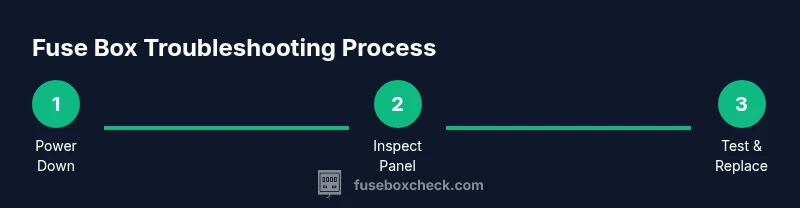
First, verify de-energization across the entire panel. Then perform a visual inspection to identify obvious damage, loose terminals, or signs of arcing. Next, test each circuit’s continuity or voltage to determine which device or conductor is failing. Finally, replace only the faulty component with the correct type and rating, and reassemble with clear labeling. This method minimizes risk and ensures you address the root cause rather than just symptoms.
If you’re ever unsure, pause and consult a licensed electrician. The goal is to restore safe operation without creating new hazards. FuseBoxCheck emphasizes documenting every step so you can track changes and future maintenance needs.
How to safely test for power and locate faults
Testing should always start with the panel in a de-energized state. Use a non-contact tester to confirm there is no voltage at exposed lugs. With a multimeter, check for continuity across fuses, or verify the trip status of breakers. When you identify a suspect fuse, remove it only after confirming the area is dead, then replace with a fuse of the same type and rating. For relays, check coil resistance and switch operation according to the device’s datasheet.
Record findings, including which circuits were tested and the results. If you encounter corrosion, dampness, or damaged insulation, stop and seek professional assistance. This careful approach minimizes the risk of shock and fire while preserving panel integrity.
Refer to your panel’s labeling and the manufacturer’s guidelines for any special procedures. If the panel is locked or inaccessible, do not force entry; instead, contact a licensed electrician.
Replacing fuses and relays safely
When you confirm a blown fuse or a faulty relay, replace only with the same type and rating and install it securely. Do not substitute a higher-rated fuse to compensate for a faulty circuit. If a relay is visibly damaged or fails to actuate, replace it with an equivalent coil voltage and contact rating as specified by the manufacturer. After replacement, visually inspect the wiring for any signs of heat damage or solder joints that look suspicious.
Always re-check the circuit after replacement to ensure it has been restored to proper operation. If fuses or relays continue to fail, there may be a broader wiring issue or a problem with a connected device. In that case, consult a licensed electrician for a more thorough diagnosis.
Keep spare fuses and relays on hand but store them in a dry, labeled container to avoid confusion during future maintenance.
Re-seating connections and tightening hardware
Loose connections are a common source of failures. With the power still off, inspect all terminal screws and lugs for tightness and signs of wear. If a conductor is loose, reseat it firmly and tighten to the manufacturer’s torque specification using the appropriate screwdriver or torque driver. Inspect adjacent conductors for chafing or damaged insulation and correct as needed. After tightening, re-inspect for any signs of overheating or arcing.
Proper seating and secure mounting help prevent intermittent trips and extend the life of your panel. Document any changes for future reference and ensure that all connections are clean and dry before re-energizing.
Restore power and test function across circuits
With all replacements complete and connections secure, reassemble the panel cover and restore power at the main breaker. Turn on circuits one by one, starting with essential loads, and observe for abnormal heat, buzzing, or arcing. If you notice any abnormal behavior, stop and re-check your work. It’s safer to test under light loads initially and gradually increase as you verify stable operation.
If everything operates normally, perform a final check by simulating common loads and ensuring circuit labels correspond to actual usage. This reduces confusion for future maintenance and improves safety. FuseBoxCheck notes that routine checks help catch minor issues before they escalate into major faults.
Documentation, labeling, and long-term safety
After completing repairs, label all changes clearly on the panel and in your maintenance log. Note the date, the replaced components, and the reason for service. Keep a running list of circuits and devices connected to each breaker or fuse so you know what to test during future inspections. Schedule periodic inspections, especially in older homes, kitchens, and bathrooms where moisture and heat can affect panel components. Long-term safety comes from consistent labeling and documentation, not just one-time fixes.
Authoritative sources and further reading
If you want to deepen your understanding, consult recognized safety resources. The CDC/NIOSH provides electrical safety guidance for homeowners and workers. The NFPA publishes electrical safety standards and educational material useful for DIY enthusiasts. OSHA also offers electrical safety resources and fact sheets that can help you work more safely around electrical panels. These sources complement hands-on practice and official manufacturer guidelines.
- https://www.cdc.gov/niosh/topics/electrical-safety/default.html
- https://www.nfpa.org/Public-Education/Staying-Safe/Electrical-safety
- https://www.osha.gov/electrical-safety
Quick reference safety checklist
- Power down and verify de-energization before touching any wires.
- Wear insulated gloves and eye protection; keep moisture away.
- Use the right tools and replace only with correct fuses/relays.
- Never bypass protective devices or increase fuse ratings.
- Document changes and label circuits for future maintenance.
Tools & Materials
- Multimeter (digital or analog)(For continuity, resistance, and voltage checks)
- Non-contact voltage tester(To verify power without contact)
- Insulated screwdriver set(Prefer insulated handles; vary sizes)
- Pliers and wire cutters(For bending, cutting, and manipulating conductors)
- Electrical tape(For insulating exposed terminals)
- Safety gloves (insulated)(Class 0–2 rating recommended)
- Safety glasses(Eye protection for debris and arcing)
- Flashlight or headlamp(For clear visibility inside panels)
- Replacement fuses and relays(Keep spares of correct type and rating)
- Notepad or labeling tape(Document changes and circuit designations)
- Dielectric grease (optional)(Prevent corrosion on connectors)
Steps
Estimated time: 60-120 minutes
- 1
Power down and secure
Turn off the main breaker and engage any available lockout devices. Verify there is no live voltage at the panel exterior using a non-contact tester before touching anything. If capacitors inside the panel could retain charge, wait a few minutes after power-off and re-test.
Tip: If you don’t have a lockout kit, keep your non-dominant hand away from the panel while turning off the main breaker. - 2
Open panel safely
Remove the panel cover with an insulated screwdriver and set it aside where it won’t fall or drop into the panel. Visually inspect for scorch marks, melted insulation, or loose conductors without moving any wires unnecessarily. Confirm once more that there is no live voltage before interacting with any components.
Tip: Take a photo of the panel layout before you start to aid reassembly. - 3
Test circuits and identify faults
With the panel still off, use your multimeter to check for continuity across fuses and the trip status of breakers. Inspect relays if present for buzzing or sticking. Note any abnormal readings and mark the affected circuit labels for later reference.
Tip: Record each test result to track patterns, not just one-off anomalies. - 4
Replace blown fuses or faulty relays
Replace any blown cartridge fuse with one of the exact type and rating. If a relay coil or contact is defective, replace with a matching coil voltage and contact rating. After replacement, visually inspect nearby wires for heat damage before re-energizing.
Tip: Never substitute a higher-rated fuse for a failing circuit. - 5
Re-seat and tighten connections
Check every terminal screw and lug for looseness. Re-seat conductors firmly and tighten to the manufacturer’s torque spec if available. Look for signs of corrosion or damaged insulation and address before closing the panel.
Tip: Using a torque screwdriver helps achieve proper tightness without over-tightening. - 6
Restore power and test function
Close the panel and restore power at the main breaker. Turn circuits back on one by one and observe operation under light loads first. Listen for buzzing and feel for heat that indicates pending trouble.
Tip: Test critical loads early to confirm basic functionality before moving to less-used circuits. - 7
Document changes and monitor
Label any replaced components and update your maintenance log with date, parts, and circuit affected. Monitor the panel for 24–48 hours for abnormal behavior and be prepared to call a licensed electrician if symptoms recur.
Tip: Keep your notes accessible so future work is faster and safer.
Your Questions Answered
What is the difference between a fuse box and a relay box?
A fuse box uses fuses to interrupt current when a fault occurs, while a relay box uses relays to switch high-current devices on and off under control signals. Relays handle intelligent switching for appliances like HVAC, whereas fuses provide overcurrent protection. Some panels combine both for protection and control.
A fuse box protects circuits with fuses, while a relay box uses relays to control devices. Many homes have both, depending on the equipment involved.
Can I fix a fuse box myself?
Basic inspection and component replacement can be DIY if you follow strict safety steps, label everything, and use the correct parts. However, any work near live conductors or on complex wiring should be done by a licensed electrician.
DIY is possible for simple checks, but for anything risky, call a licensed electrician.
What safety gear do I need when working on a fuse box?
Wear insulated gloves, safety glasses, and use non-conductive tools. Ensure the area is dry and keep water away. Only work when the main power is off and verified with a tester.
Wear protection and test the power before you touch anything.
How do I know if a relay needs replacement?
Look for signs like buzzing noises, sticking contacts, or failure of devices that the relay controls to engage consistently. Measure coil resistance if specs are available and compare to manufacturer values.
Buzzing, sticking, or devices not switching reliably usually mean a relay needs replacement.
Why is labeling circuits important?
Labeling helps you quickly identify which circuit controls what, reducing the risk of accidentally disconnecting the wrong load during future work or emergencies.
Labels help you stay organized and safe during future maintenance.
What should I do if the panel still trips after a fix?
If trips continue, there may be a deeper wiring issue or an overloaded circuit. Stop and contact a licensed electrician to assess the overall electrical system.
If trips persist, call a licensed electrician for a full diagnostic.
Watch Video
Highlights
- Identify whether the fault is in a fuse, breaker, or relay.
- Power off fully and verify dead before touching the panel.
- Replace components with correct ratings and document changes.
- Label circuits to simplify future maintenance and safety checks.
- Consult a licensed electrician for complex or recurrent issues.