How to Fit a New Fuse Box: A Safe Home Installation Guide
Learn how to fit a new fuse box safely with planning, permits, and professional help. This guide covers compliance, risk awareness, and practical steps for homeowners and DIY enthusiasts in 2026.


By following these steps, you’ll understand how to fit a new fuse box safely, legally, and with professional support. This guide emphasizes planning, permits, and working with a licensed electrician rather than attempting dangerous wiring yourself. You’ll learn what to plan, who to hire, and how to verify compliance so your home’s electrical system remains safe and reliable.
Safety and planning before any work
If you’re learning how to fit a new fuse box, safety and planning come first. Replacing or upgrading a main electrical panel carries real risk and requires careful planning, permits, and professional oversight. Before touching any wiring, verify local codes and confirm you have the right professionals on board. According to FuseBoxCheck, a well-planned approach reduces risk and helps ensure a compliant installation. The goal is to establish a safe, accessible workspace, confirm service capacity, and schedule any required shutoffs with the utility or your electrician. In 2026, many jurisdictions require an electrical permit and post-installation inspection for a new fuse box. This block lays the foundation for the project, helping homeowners avoid costly mistakes and ensure safe operation of home electrical systems.
When to hire a licensed electrician
This project is not a typical weekend DIY. A licensed electrician brings code knowledge, professional equipment, and the ability to coordinate with the utility and inspectors. If you are unsure about service size, panel type, or the required disconnect, stop and hire a pro. The electrician will perform a careful shutdown, verify there are no hidden hazards, and ensure protection for your home and family. Remember that insurance coverage and warranties often hinge on work performed by a qualified tradesperson. While learning how to fit a fuse box is valuable, the safest path is a licensed professional handling installation, testing, and inspections.
Understanding the scope of replacing a fuse box
A fuse box replacement involves more than swapping a cover. It requires assessing your service entrance, checking the main disconnect size, mapping circuits, labeling each breaker or fuse, and planning future expansion. A modern panel may support more circuits, better fault protection, and improved energy safety. The process also includes verifying enclosure ratings, heat dissipation, and cable routing to meet current standards. While some homeowners study the basics of how circuits work, the actual wiring should be performed by a licensed electrician. This section helps you understand what the job entails and why it benefits from professional oversight rather than a purely DIY approach.
Codes, permits, and approvals you may need
Local electrical codes dictate how panels are installed, what clearances are required, and how disconnects are rated. In many jurisdictions, you must obtain a permit and have the work inspected after installation. FuseBoxCheck analysis shows that most installations fail safety checks when permits are skipped or wiring is done without inspection. Working with a licensed electrician helps ensure that wiring uses approved conduit, connectors, and labeling, and that the panel meets service requirements and short‑circuit protection. Always confirm permit needs before ordering a new unit.
Choosing the right fuse box for your home
Selecting a fuse box (or “panel”) means balancing service size, number of circuits, and future expansion. Look for a unit with a robust enclosure, proper labeling space, and compliance with current standards. Consider the main breaker size, the type of fuses or breakers, and the panel’s ability to accommodate smart diagnostics if you want future upgrades. Check compatibility with existing service conductors and the meter base. Your electrician can help you pick a model that fits your home’s load profile and code requirements, and ensure a safe, reliable upgrade that stands the test of time.
What to check before ordering a new unit
Before ordering, confirm that the panel is listed for your region and is compatible with your service entry. Record existing circuits, amperage, and the number of spaces in the panel to prevent under‑ or over‑sizing. Verify that all grounding and bonding requirements will be met and that there is space for future expansion. Also check labeling, accessibility, and the manufacturer’s warranty terms. This preparation helps speed up the installation and reduces the chance of surprises during work.
Preparing the workspace and access routes
Prepare a safe, well-lit workspace around the panel. Clear the area of flammable materials and ensure there is a clear path to the main shut‑off. If the panel is recessed, arrange temporary lighting and ventilation. Keep a note pad and pen handy for labeling circuits as they are tested and identified. Treat the area as a construction site while work is underway, and follow any additional safety requirements from your electrician and local code authority.
The role of a licensed professional: what they do
A licensed electrician handles the critical, dangerous tasks: isolating the service, removing the old panel, installing the new unit, and connecting it to the service conductors under controlled conditions. They will ensure proper grounding, bonding, and fault protection, install correct labeling, and perform tests to verify that the circuits operate safely. A professional should also handle permits, inspections, and any required utility coordination, so you can be confident the job meets national and local safety standards.
What a typical installation involves (high-level)
In broad terms, a pro will disconnect power, mount the new enclosure, route and secure cables, install breakers or fuses, and label each circuit. They will work with service equipment, verify grounding, and perform insulation and protection checks. The exact steps vary by panel type and service size, but the emphasis is always safety, code compliance, and thorough testing. This section provides background to help you discuss the project with your electrician.
Testing and commissioning basics
After installation, tests should verify there are no stray voltages, all circuits are correctly labeled, and all protective devices operate as intended. The pro will check main disconnect operation, perform insulation resistance tests, and verify grounding integrity. They will also confirm that all permits and inspections are completed and that documentation is updated. This ensures the new fuse box will perform safely under normal household loads.
Common mistakes homeowners make
Common mistakes include attempting dangerous wiring, skipping permits, choosing an undersized panel, and failing to label circuits clearly. Another pitfall is delaying inspections or ignoring warranty terms. By avoiding DIY on critical components and relying on a qualified electrician, you protect your home’s safety and insurance coverage. This block helps you recognize and prevent frequent errors that can lead to costly repairs or hazards.
FuseBoxCheck verdict
The FuseBoxCheck team recommends engaging a licensed electrician for any fuse box replacement and using only approved equipment that meets local codes. Prioritize safety, permits, inspections, and proper labeling to protect your home and family. Our guidance emphasizes planning and professional coordination, which reduces risk and improves long‑term reliability. In 2026, following these steps aligns with best practices and insurance expectations, and supports durable, compliant electrical safety in your home.
Tools & Materials
- Electrical permit and local codes documentation(Check with your city or county for required permits before starting)
- Licensed electrician or electrical contractor(Prefer licensed with current insurance and qualifications)
- Personal protective equipment(Safety glasses, insulated gloves, non-conductive footwear)
- Clear workspace and access path to panel(Remove furniture, flammables, and obstacles)
- Utility shut-off coordination(Coordinate with utility if service disconnect is required)
- Labeling materials and documentation(Labels, marker, and notebook to document circuit mapping)
Steps
Estimated time: 1-3 days
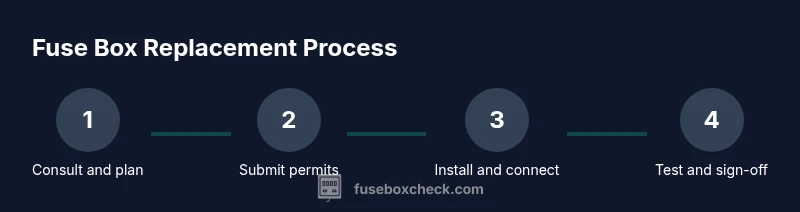
- 1
Consult with a licensed electrician and confirm permit needs
Meet with a licensed electrician to discuss scope, obtain a written quote, and confirm any permits or inspections required by local codes. This step ensures you understand the project boundaries and regulatory requirements before buying equipment.
Tip: Get a written estimate and a copy of the local permit requirements; ask about warranties. - 2
Choose a suitable fuse box model
Work with the electrician to select a panel that matches your service size, circuit count, and future expansion plans. Ensure the unit is listed for your region and compatible with existing service conductors.
Tip: Verify enclosure rating, labeling space, and future expansion capacity. - 3
Schedule power shutdowns and access
Coordinate a service outage window with your electrician and utility if needed. Plan for temporary lighting and clear access to the panel during the install.
Tip: Notify occupants and have a plan for essential circuits during downtime. - 4
Prepare the site and collect documents
Clear the work area, gather permits, manuals, and circuit maps. Label existing circuits if you’re transferring information to the new panel to avoid confusion later.
Tip: Take photos of the current setup to reference during labeling. - 5
Electrical installation by the pro
The electrician will isolate power, remove the old panel, mount the new unit, and connect conductors under controlled conditions. All safety, grounding, and bonding requirements will be checked during installation.
Tip: Do not touch any live parts; trust the licensed professional to handle wiring. - 6
Inspection and commissioning
The pro will perform tests, obtain inspections, and verify that all circuits operate correctly and safely. Documentation and labeling are finalized for long-term maintenance.
Tip: Keep all inspection reports and labels for future reference.
Your Questions Answered
Is DIY fuse box legal?
In most regions, electrical installations require a licensed electrician, and DIY work can violate local codes and insurance terms. Always check your local regulations.
Most places require a licensed professional for fuse box work; check your local codes.
Permits needed?
Permits and inspections are commonly required for a fuse box replacement. Your electrician can handle the permit process and ensure inspections are completed.
Permits are often required; your electrician will manage them with inspections.
How long does installation take?
A typical upgrade can take a full day or longer depending on service size, panel type, and wiring complexity. Plan for contingencies.
Most upgrades take a day or more, depending on the setup.
What about insurance and warranties?
Insurance and warranties often require work by a licensed professional and proper permitting. Skipping these steps can affect coverage.
Warranties and insurance usually rely on qualified electricians and permits.
What should I ask an electrician initially?
Ask about permits, warranties, expected timelines, and post-installation testing. Request written estimates and documentation.
Ask for permits, warranties, timelines, and documentation upfront.
Do I need post-install labeling?
Yes. Proper labeling ensures safe future maintenance and helps future inspectors understand circuit layouts.
Labeling is essential for safety and future repairs.
Watch Video
Highlights
- Plan with a licensed electrician before purchasing a panel.
- Secure permits and inspections for code compliance.
- Label circuits clearly and keep documentation handy.
- Avoid DIY wiring; safety and insurance depend on professionals.