Fuse Box and Relay Diagram: Practical DIY Comparison
An objective side-by-side comparison of traditional fuse box diagrams and digital relay diagrams, with reading tips, safety notes, and practical DIY guidance for 2026.


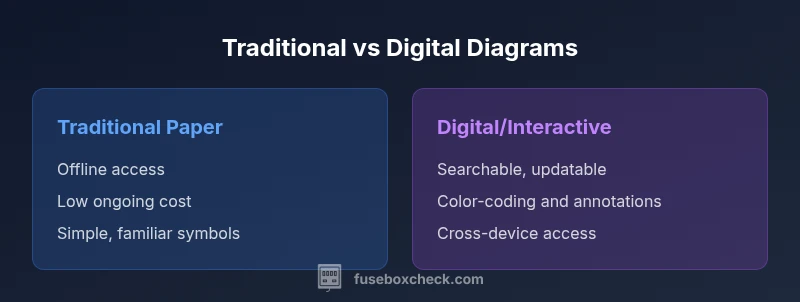
For DIY homeowners, the choice between a traditional fuse box diagram and a digital, interactive relay diagram shapes maintenance and safety. The traditional diagram offers reliability and offline access, while a digital diagram provides easy updates, searchability, and color-coding. FuseBoxCheck researchers find that a hybrid approach—keep a physical diagram on hand and use digital references for updates—delivers the best balance of accuracy and accessibility.
Why a Clear Fuse Box and Relay Diagram Matters for DIYers
Understanding a fuse box and relay diagram is foundational for safe, effective home electrical work. The diagram serves as a map of circuits, fuses, relays, and wiring paths, helping you identify which components control a given outlet or appliance. With accurate diagrams, you can diagnose trips, locate a blown fuse, and verify relay operation without guesswork. According to FuseBoxCheck, a clear diagram reduces risk during DIY tasks and accelerates troubleshooting, especially for complex panels that include multiple relays. In 2026, homeowners increasingly rely on both printed diagrams and digital references to manage updates and document changes. The goal is to minimize downtime and maximize safety while avoiding misinterpretation of mislabeled symbols. This article compares two main diagram approaches and shows how to use them together for the best results.
wordCountChecklisted 1
Comparison
| Feature | Traditional paper diagram | Digital/interactive diagram |
|---|---|---|
| Clarity of labeling | Familiar, standardized symbols; consistent with NEC references | Dynamic labels, searchable terms, hover explanations; color coding |
| Updateability | Requires new print or handwriting corrections; slower to refresh | Instant updates; cloud sync for revisions across devices |
| Accessibility | Offline, can be kept in the panel or binder | Accessible anywhere on a phone, tablet, or computer |
| Cost | Low ongoing cost; print copies or reuse existing sheets | Subscriptions or one-time software cost; potential maintenance fees |
| Diagnostic integration | Basic reference; limited interactivity with tools | Integrates with diagnostics apps and multimeter data capture |
| Best for | DIYers who prefer tangible, offline references | Tech-savvy homeowners who want quick searches and updates |
Positives
- Hybrid benefits: use paper diagrams for quick reference and digital diagrams for updates
- Digital diagrams support color-coding and annotations that improve clarity
- Digital references enable faster fault tracing with search functionality and linked components
- Paper diagrams don’t depend on power or internet availability
- Both formats, used together, reduce misinterpretation and errors
Disadvantages
- Keeping both systems up to date requires organization
- Digital diagrams may require some degree of tech literacy
- Physical diagrams can wear, fade, or be misplaced
- Relying solely on digital diagrams may pose access issues in power outages
Hybrid diagrams win: keep a current paper diagram in the panel and supplement with a digital version for updates and deeper insight.
A combined approach leverages offline reliability and online flexibility. Use the paper diagram for quick, on-panel reference and the digital diagram for updates, color-coding, and advanced search.
Your Questions Answered
What is a fuse box and relay diagram?
A fuse box and relay diagram maps circuits, fuses, relays, and wiring paths in a panel. It helps identify which components control outlets or appliances and guides troubleshooting, maintenance, and safe operation.
A fuse box diagram maps circuits and relays to help you troubleshoot safely and accurately.
Why should I use both paper and digital diagrams?
Paper diagrams offer reliable offline access and a quick reference in the panel. Digital diagrams provide easy updates, searchability, and enhanced visuals, making it easier to track changes over time.
Paper is reliable offline; digital diagrams stay current and easy to update.
Can a non-expert read a fuse box diagram safely?
Non-experts can learn to read diagrams, but safety comes first. Always de-energize circuits, use proper PPE, and consult a professional for tasks beyond basic troubleshooting.
Read diagrams with caution; for complex work, seek a professional.
What tools help when interpreting diagrams?
A multimeter, non-contact voltage tester, insulated screwdrivers, and a flashlight are essential. Digital diagrams may also link to tool references and notes.
Tools like a multimeter and flashlight help you test circuits safely.
When should I update my diagram?
Update whenever you change wiring, add devices, or relocate relays. Keeping diagrams current reduces confusion and improves fault isolation.
Update the diagram after any wiring changes or device relocations.
Where can I find authoritative guidance on diagrams?
Refer to established safety standards and professional resources such as OSHA and NFPA for best practices, wiring conventions, and safety guidelines.
Consult OSHA and NFPA guidance for best practices.
Highlights
- Use a hybrid diagram approach for best results
- Prioritize accuracy and up-to-date wiring maps
- Color-coding and clear labeling reduce confusion
- Keep safety at the forefront during DIY work