vs Fuse Box Diagram: A Practical Comparison for Homeowners
Compare printed versus digital fuse box diagrams for home electrical work. Weigh accessibility, accuracy, updates, and safety to choose the ideal diagram format for safer, faster troubleshooting.


Choosing between a traditional printed fuse box diagram and a digital or interactive alternative matters for accuracy, speed, and safety. This quick comparison highlights how each format affects accessibility, updateability, and labeling clarity in typical home electrical tasks. For homeowners and DIYers, the right diagram type can speed fault-finding, improve label interpretation, and reduce mistakes. According to FuseBoxCheck, diagram format matters for reliability and safety.
Understanding the vs fuse box diagram landscape
When homeowners search for information about the topic, they often encounter two broad camps: traditional printed fuse box diagrams and modern digital or interactive diagrams. The phrase "vs fuse box diagram" captures this debate, which centers on how easy it is to locate circuits, verify labeling, and update information after changes to a panel. In real homes, the choice isn’t merely about preference; it changes how quickly you can identify a tripped fuse, confirm which room is affected, and plan a repair. FuseBoxCheck has analyzed common workflows and found that the diagram format significantly affects accuracy under pressure, especially during fault-finding or after renovations. This article compares the two most common formats, explains where each excels, and offers a practical decision framework so you can pick a diagram type that stays reliable over time.
What is a fuse box diagram and why it matters
A fuse box diagram is a labeled map of circuit connections inside a home electrical panel. It typically shows which fuse or breaker controls each room or appliance, color codes for easy identification, and notes for safety precautions. The importance of an accurate diagram cannot be overstated: mislabeling can lead to pulling the wrong fuse, unnecessary downtime, or even electrical hazards. When comparing formats, homeowners must consider how labels are applied, how updates are communicated, and how the diagram fits their maintenance routine. A good diagram reduces guesswork, makes troubleshooting faster, and supports safer work practices. In many households, a well-maintained diagram also serves as a reference for future remodeling or panel upgrades.
Printed vs digital: Key differences in practice
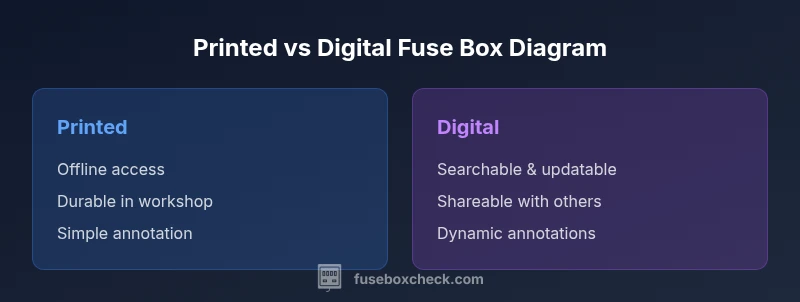
Printed diagrams are reliable offline references that don’t require devices or power to be useful. They shine in garages, workshops, or during on-site service where you may be away from Wi‑Fi or electricity. Digital diagrams, including PDFs and interactive tools, offer searchability, easy updates, and the ability to annotate without erasing. They adapt better to changes in circuits after renovations and can include dynamic annotations that highlight active paths. The main tradeoff is accessibility: printed diagrams work anywhere, while digital diagrams require a device and, sometimes, an internet connection for updates. When deciding between formats, assess your typical workspace, the likelihood of changes, and whether quick search takes priority over offline reliability.
Reading a fuse box diagram: a step-by-step guide
- Locate the panel cover and reference the label or directory printed on the inside. 2) Identify the main feed and the branch circuits listed on the diagram. 3) Use color codes and circle/rectangle markers to map circuits to specific rooms or devices. 4) Cross-check the diagram with actual wiring or breaker positions to confirm accuracy. 5) If working after hours, verify labels with a flashlight or low-light mode. 6) After any changes, update the diagram and re-test the circuits to ensure each label matches the real configuration. Following these steps helps minimize mistakes and supports safer maintenance.
Ensuring accuracy: sources, labeling, and updates
Accuracy hinges on reliable labeling, consistent color coding, and timely updates. Always cross-reference diagrams with the panel’s labeling, the builder’s schematics, and the equipment notes. Keep a running log of changes so the diagram reflects the current wiring state. If you install a new circuit or upgrade a appliance, update the diagram immediately and re-check all affected labels. For DIY work, validate your interpretation with a simple tester or multimeter before touching live components. Finally, store both physical and digital copies in a known, accessible location and set a reminder to review them after renovations.
Use-case scenarios: when to prefer each format
- Printed diagrams work best when you are on-site, need a quick offline reference, or lack reliable device power. They require reprinting to update, which is a minor drawback in dynamic panels. Best for: on-wall use during routine maintenance, quick fault location with no device distractions.
- Digital diagrams excel when you expect changes, want fast search, or need to share a diagram with a team. They support annotations, version history, and remote access. Best for: after-relocation tasks, renovations, or coordinating with a contractor where up-to-date data matters most.
Practical setup: organizing and updating diagrams in your home
Create a centralized system that combines both formats for maximum reliability. For printed copies, use a durable binder with page protectors and a labeled section for each panel. For digital diagrams, maintain a cloud-based folder or local drive with versioned files and a consistent naming convention (PanelName_Date_Version). Include a small, durable marker on the panel for quick cross-reference. Schedule periodic reviews—quarterly is a good starting point—and update immediately after any electrical changes. This hybrid approach minimizes the risk of outdated information while preserving speed and accessibility.
Authority sources and safety considerations
When verifying the accuracy of fuse box diagrams, rely on authoritative safety resources and official guidance. The Occupational Safety and Health Administration (OSHA) provides general electrical safety principles, while the National Fire Protection Association (NFPA) offers standards related to electrical installations. The U.S. Consumer Product Safety Commission (CPSC) highlights consumer safety best practices for home electrical work. Always cross-check diagrams with the manufacturer’s instructions and local code requirements, and avoid working on live circuits when possible. FuseBoxCheck emphasizes using up-to-date diagrams as a core element of safe home electrical maintenance.
Putting it all together: a practical workflow
Create a simple workflow that integrates both formats. Start with a trusted printed diagram for offline reference and couple it with a digital version that can be updated after renovations. Use the digital copy to annotate changes, then print updated pages for long-term storage. Establish a routine to review diagrams during every major project and train household members on where to find and how to read them. This approach reduces confusion, speeds troubleshooting, and strengthens safety during electrical work.
Comparison
| Feature | Printed fuse box diagram | Digital/interactive fuse box diagram |
|---|---|---|
| Accessibility | Operates offline, no power required | Requires device and, sometimes, internet for updates |
| Detail level | Labeled circuits, durable in paper form | Can include searchable text and dynamic annotations |
| Updateability | Reprinting needed to update information | Continuous updates via download or cloud storage |
| Ease of use | Hands-on reference with minimal tools | UI-based navigation and annotation features |
| Cost/ownership | Often included with the panel manual or as a standalone print | Potential subscription or pay-per-download model |
| Best for | Workspaces without power or internet | Dynamic environments requiring up-to-date data |
Positives
- Offline reliability means you can reference diagrams anywhere
- Printed diagrams are straightforward and easy to annotate by hand
- Digital diagrams enable fast search and easier sharing
Disadvantages
- Printed diagrams can become outdated after changes
- Digital diagrams require devices and may need internet for updates
- Printed copies can be lost or damaged in wet or dusty environments
Digital diagrams complement printed ones; use both for best coverage
A hybrid approach leverages offline reliability with up-to-date data. Use printed diagrams for quick reference on-site and digital diagrams for updates, searchability, and sharing with others. This combination provides robust coverage for general maintenance and emergency troubleshooting.
Your Questions Answered
What is a fuse box diagram?
A fuse box diagram is a labeled map of a home's electrical panel that indicates which circuit controls each area. It helps identify the correct fuse or breaker before servicing. Accurate diagrams reduce the risk of electric shocks or accidental shutdowns.
A fuse box diagram maps circuits to rooms or devices to help you locate the right fuse safely. It’s essential for quick troubleshooting and safe maintenance.
Why should I prefer printed over digital diagrams sometimes?
Printed diagrams work reliably without power or devices and are great for on-site reference. They’re less prone to software issues but can become outdated after renovations. Consider keeping a current digital version as well for updates.
Printed diagrams work offline and are simple to use, which is handy during on-site work. They’re less flexible for updates, so pairing them with a digital copy is smart.
How do I read a fuse box diagram effectively?
Start with the panel directory, locate the main feed, then map circuit labels to rooms or appliances. Verify using color codes and, if possible, cross-check with labels on the breakers. Practice a quick checklist to avoid misreading.
Begin at the directory, follow the labels to each circuit, and use color codes. Always cross-check before touching any live parts.
Are online fuse box diagrams trustworthy?
Online diagrams can be helpful, especially for updates and sharing. However, verify the source against manufacturer manuals and local codes. Rely on official or well-known safety organizations for critical information.
Online diagrams are convenient but verify accuracy with official manuals before relying on them for fixes.
What is the difference between fuses and breakers in diagrams?
Fuses and breakers serve similar protective roles but operate differently. Diagrams should clearly indicate which devices protect each circuit and note any labeling differences or color codes used. Understanding this helps avoid misidentification during maintenance.
Fuses burn out when overloaded, while breakers can be reset. Diagrams should show which device protects which circuit.
How often should I update my fuse box diagram?
Update diagrams whenever you add or remove circuits, replace panels, or rewire. Regular reviews, such as after major renovations, help maintain accuracy and safety. Keep both a log of changes and a refreshed diagram.
Update your diagram after any changes, and review it on a regular schedule to stay accurate.
Highlights
- Weigh offline accessibility against up-to-date content
- Use a hybrid approach for best reliability and flexibility
- Keep organized, clearly labeled copies in both formats