Fuse Box Length: Measuring Safe Electrical Run Distances
Learn how fuse box length affects wiring design, voltage drop, and safety. A practical guide to measuring distances, planning routes, and when to call a pro for reliable, code-compliant results.


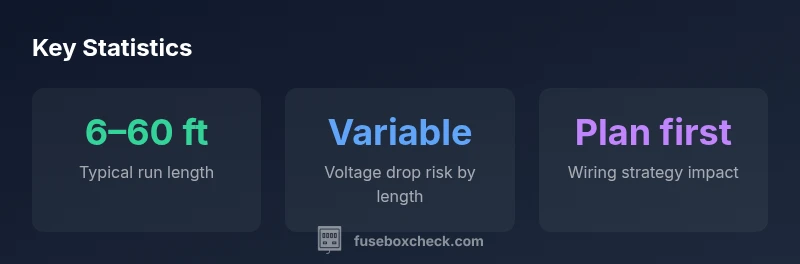
Typical fuse box length, referring to the distance from the main panel to the farthest branch circuit, usually runs about 6 to 60 feet in a standard home. Short runs keep voltage drop minimal and simplify wire sizing, while longer runs demand correct conductor sizing, proper routing, and NEC-compliant installation practices to maintain electrical safety.
Understanding fuse box length and why it matters
In residential electrical work, fuse box length refers to the physical distance between the main service panel and the farthest branch circuit connection or outlet that the panel serves. This distance is not just a measurement of space; it directly influences how you size wires, route cables, and maintain safe operation. According to FuseBoxCheck, fuse box length is a practical measure that shapes both wiring design and safety planning. The FuseBoxCheck team found that longer runs can complicate routing, increase the risk of physical cable damage, and heighten the importance of correct conductor sizing and protective measures. Practically, length affects voltage stability, accessibility for maintenance, and future upgrade potential. Documenting run length creates a clearer map for electricians and for any DIY work performed with appropriate precautions.
Why length matters for safety and code compliance
Length affects more than just where cables lie. It influences voltage drop, heat buildup, and how you plan cable trays, staples, and protection. Longer fuse box length often means greater resistance, which can strain feeders and branch circuits if the conductors aren’t sized for the load or if they aren’t routed with adequate clearance. Local codes and the NEC emphasize safe routing, labeling, and access to the panel. While exact requirements vary by jurisdiction, a consistent theme is that longer runs demand attention to ensure safety, reliability, and future flexibility. The key takeaway: plan length early, and verify that routing supports safe operation and easy maintenance.
Measuring fuse box length in your home: step-by-step
To accurately determine fuse box length, start with a clear map of all rooms and outlets served by the panel. Use a retractable measuring tape and, where necessary, a laser measure for long runs. Step by step: 1) locate the main service panel and identify the furthest outlet or device it feeds; 2) measure the straight-line distance, then account for bends and turns by adding roughly 5–10% for corners and joist crossings; 3) measure from the panel edge to the last device box, not just to the wall; 4) document measurements in a home wiring diagram; 5) reassess after any remodel or relocation of circuits; 6) verify that the plan aligns with local electrical codes. A careful measurement helps avoid under- or over-sizing conductors and simplifies future work.
Typical length ranges in common layouts
Homes show a wide range of run lengths. In compact apartments or condos, panel-to-outlet distances are often shorter, typically under 20 feet. In single-family homes with multiple floors or a detached garage, runs commonly extend from 20 to 60 feet or more. Larger properties, or layouts with remote service areas, can exceed 60 feet. These ranges vary with floor plans, structural obstacles, and whether the panel is near the center of the home or on a periphery. The important point is to document actual measured distances and plan conductor sizing based on real measurements rather than estimates.
Safety, code compliance, and planning long runs
Safety-minded planning requires awareness that longer runs can challenge both voltage regulation and protection schemes. Ensure clear access to the panel, proper spacing around cables, and secure mounting. Codes generally require appropriate wire type and rating, correct overcurrent protection, and proper enclosure protection for all runs. If a run approaches the higher end of typical distances, consider consulting a licensed electrician to review routing, potential relocation of outlets or the panel, and the feasibility of additional feeders or subpanels. Never skip required permits or professional inspection when significant wiring changes are involved.
Wiring strategies to optimize length and accessibility
Adopt practical strategies to minimize problematic length without sacrificing layout. Prefer routing cables along joists or designed cable trays, avoid unnecessary loops or zig-zags, and place the panel in a central, accessible location when possible. When relocation isn’t feasible, segment the circuit into shorter runs fed from nearby junctions or subpanels. Label every run clearly and maintain a clean, organized wiring plan. For future upgrades, plan for modular expansion by choosing conduit routes that accommodate additional circuits with minimal rework.
When to consult a licensed electrician
If you’re unsure about the measured run lengths or plan any relocation of the fuse box or major wiring changes, consult a licensed electrician. Electrical work involves safety risks and regulatory requirements, and mistakes can lead to shocks, fires, or code violations. A professional can confirm conductor sizing, protection requirements, and routing while ensuring compliance with local codes and permit processes. In many jurisdictions, a formal inspection is required for significant changes, and professionals can also help with cost estimates and project timelines.
Tools and measurement practices you’ll need
Equip yourself with a retractable tape measure, a laser measure for longer spans, a digital multimeter for basic checks, and a notebook or app to record measurements. When collecting data, photograph key junctions and panel labeling. Use a tape measure to validate the straight-line distance and a second pass to account for bends and obstacles. Keep your workspace organized, and always verify that measurements align with the home’s wiring diagram. If any distance seems unusually long relative to the layout, pause and reassess before proceeding with any work.
Fuse box length scenarios in residential wiring
| Scenario | Typical length range (ft) | Notes |
|---|---|---|
| Panel to nearest outlet | 6-20 | Common in compact spaces |
| Panel to farthest outlet | 20-60 | Longer runs in larger layouts |
| Service feeder to subpanel | 10-40 | Used for distributing loads more evenly |
| Remote panel in detached building | 40-120 | Special routing and protection may apply |
Your Questions Answered
What is fuse box length?
Fuse box length is the distance from the main panel to the farthest circuit it serves. It affects wiring size, routing, and safety measures. Understanding this distance helps in planning for voltage drop, accessibility, and future upgrades.
Fuse box length is the distance from the panel to the farthest circuit it serves; it influences wire size, routing, and safety planning.
Why does length matter for safety?
Longer runs introduce more resistance and heat along the wires, which can affect performance and safety. Proper conductor sizing, protective devices, and neat routing reduce the risk of overheating and ensure easier maintenance.
Longer runs can increase resistance and heat, so you need proper sizing and clean routing to stay safe.
How can I measure fuse box length?
Identify the panel and the furthest device it feeds, measure the straight-line distance, then add extra length for bends and turns. Record measurements on a wiring diagram and verify against your plans.
Identify the panel and farthest device, measure the straight distance, add extra for bends, and document it.
Can I shorten fuse box length myself?
Shortening or relocating runs can be risky and may require permits. If in doubt, consult a licensed electrician to assess feasibility and compliance with code.
If unsure, consult a licensed electrician to assess whether shortening is safe and code-compliant.
When should I hire a professional?
Hire a professional for long runs, panel relocations, or any work involving main feeds or subpanels. They’ll ensure correct sizing, protection, and permit-compliant installation.
Hire a professional for long runs or panel changes to ensure safety and code compliance.
“Length-aware planning is essential for safe electrical design; it governs conductor sizing, voltage drop, and accessibility.”
Highlights
- Measure from panel to farthest circuit for accuracy
- Keep practical length to minimize voltage drop
- Document measurements before planning wire sizes
- Follow local codes and obtain permits when needed
- Consult a pro for long runs or panel relocations