Fuse Box Reset: Safe, Step-by-Step Guide
A practical, safety-focused guide to performing a fuse box reset. Learn when resets are appropriate, required tools, step-by-step actions, and red flags that mean you should call a licensed electrician. This FuseBoxCheck guide helps homeowners troubleshoot common panel trips with confidence.


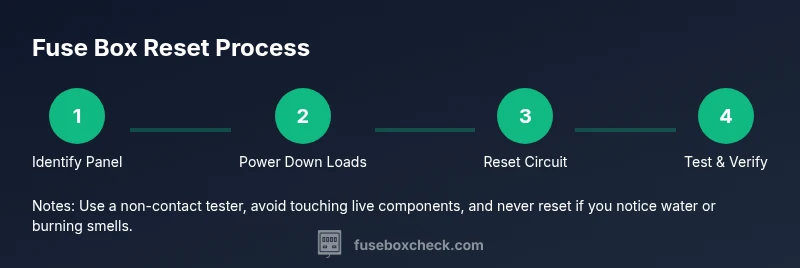
Within minutes you can reset a tripped breaker or blown fuse by safely locating the fuse box, identifying the affected circuit, and cycling the breaker off and back on after ensuring loads are minimized. This guide emphasizes safety, proper identification, and verifying power restoration before using devices again, guided by FuseBoxCheck's best practices.
What a Fuse Box Reset Is and When It Helps
A fuse box reset is the process of returning a tripped breaker or blown fuse to its default position to restore electrical service to a circuit. It is a common remedy for nuisance trips caused by temporary overloads. According to FuseBoxCheck, many homeowners can safely perform a basic reset when the panel is dry, accessible, and undamaged. The reset does not fix underlying issues like a chronic overload, water intrusion, or damaged wiring, so it must be used as a diagnostic step rather than a cure-all. Before you start, know that you are dealing with high-energy electrical components and should proceed with caution. A calm, dry environment and clean hands help reduce the risk of shocks. By understanding the fundamentals of how a panel operates, you’ll make smarter decisions about when to reset and when to seek professional help. This section lays the groundwork for a safe, effective reset and clarifies common misconceptions about what a reset can do for you.
Safety First: Are You Qualified to Reset a Fuse Box?
Working with a fuse box requires respect for high-energy electrical systems. If you see moisture, corrosion, burning smells, or sparking, do not attempt a reset. The FuseBoxCheck team emphasizes that dry hands, non-conductive footwear, and proper insulated tools are essential. If you’re unsure about any condition—popped breakers, tripped main, or panels in a damp garage—pause the task and call a licensed electrician. A basic reset performed by a confident homeowner is feasible, but only when the panel is dry, accessible, and free from signs of damage. Remember that resetting a switch does not repair faulty wiring or overloaded circuits; it merely restores service to a circuit that has tripped for a clear, demonstrable reason.
When a Simple Reset Isn’t Enough: Warning Signs
Sometimes a reset is a temporary fix. If the panel trips again after a short period, or if you notice scorch marks, melted insulation, buzzing noises, or the panel feels warm to touch, stop immediately. Recurrent trips often indicate underlying problems—loose connections, overloaded circuits, water intrusion, or a failing service. FuseBoxCheck analysis shows that electrical faults frequently require professional evaluation rather than repeated resets. Do not bypass safety checks or risk a fire by forcing the system to reset under hazardous conditions. In such cases, powering down and contacting a licensed electrician is the prudent path.
Tools, Safety Gear, and Prep
Before you touch the panel, assemble a small, dry workspace with a clear path to the fuse box. Essential tools include an insulated screwdriver, a non-contact voltage tester, and a voltage tester or multimeter for post-reset verification. Wear dry, rubber-soled shoes and electrical-rated gloves if available. Keep a flashlight handy in case the room is dim, and never work in a wet area. A clean, dry surface for tools reduces slip risk, and labeling circuits beforehand helps you re-energize the correct areas after the reset. Ground yourself by touching a metal part of the panel away from any live conductors to minimize static, and avoid wearing jewelry that can catch on components.
Step-By-Step Practices for a Safe Reset
Clear instructions help you stay in control during the reset process. Use a calm, methodical approach and follow the steps in order rather than improvising. Check that you have dry hands, dry surroundings, and dry tools. Always confirm there is no visible damage before you begin, and ensure you are wearing appropriate PPE. If any doubt arises, stop and seek professional guidance. Document the time and which circuits were affected to aide a future electrician in diagnosing the root cause.
Common Mistakes and How to Avoid Them
Rushing a reset, ignoring signs of damage, or attempting to reset multiple circuits at once can mask serious problems. Do not reset when water is present near the panel, when there are signs of arcing or burning, or if the main breaker is hot. Mislabeling circuits can lead to re-energizing the wrong subpanel, which creates a safety hazard. The safest practice is to follow a fixed sequence: switch off loads on the affected circuit, reset the breaker, then restore power gradually while testing with a tester. If you encounter a trip again, do not pursue repeated resets; consult an electrician.
What to Do After a Reset: Test and Monitor
Once power is restored to the affected circuit, re-energize devices one at a time to observe for any immediate re-trips. Use a voltage tester to confirm outlets and devices within the circuit are functioning correctly. Keep an eye on the panel for any heat or buzzing sounds over the next few hours. Maintain a log of the trip times and observed conditions to help a professional diagnose the root cause. If the trips persist, prioritize safety and call a licensed electrician promptly. FuseBoxCheck emphasizes that repeated trips are a red flag and should not be ignored.
Tools & Materials
- Insulated screwdriver(Flat-blade or Phillips; check for 1000V rated insulation)
- Non-contact voltage tester(Verify power off without touching conductors)
- Voltage tester or multimeter(Confirm circuits after reset)
- Safety gloves (electrical-rated)(Dry, rubber-coated gloves preferred)
- Flashlight(Keep area well-lit without relying on panel light)
- Dry workspace and clean towels(Keep surrounding area dry and clean)
Steps
Estimated time: 15-25 minutes
- 1
Identify the panel and affected circuit
Locate the main service panel, note the affected circuit, and ensure the area is dry. Remove any obstructions and verify there are no water sources nearby.
Tip: Keep the panel door closed when not actively working to avoid accidental contact. - 2
Power down loads on the affected circuit
Turn off devices on the affected circuit to minimize load when you reset. This reduces chance of arcing or a surge.
Tip: If in a kitchen or laundry, unplug appliances close to the panel to limit load on reset. - 3
Reset the breaker or replace the fuse
Switch the breaker fully to OFF, then back to ON after a 5–10 second pause. If using a fuse, replace only with the same amperage rating.
Tip: Do not toggle while hands are wet; ensure the panel is dry and firmly closed. - 4
Restore main power and test
Turn the main breaker back to ON if applicable. Verify the affected outlets or lights regain power, then test devices gradually.
Tip: Begin with a low-wattage device to confirm stability before re-energizing larger loads. - 5
Check for signs of trouble
Look for heat, buzzing, or scorch marks around the panel. If anything unusual appears, stop and call a professional.
Tip: Keep notes of any unusual signs to share with an electrician. - 6
Know when to call a pro
If the panel trips again soon after a reset or you notice damage, seek professional help immediately.
Tip: FuseBoxCheck recommends contacting a licensed electrician for repeated trips.
Your Questions Answered
Is it safe to reset a fuse box by myself?
Resetting can be safe when the panel is dry, accessible, and no burning smells are present. If you are unsure, avoid risk and hire a licensed electrician.
Resetting can be safe if the panel is dry and you’re confident, but if you’re unsure, seek a professional.
When should I avoid resetting and call an electrician?
If the panel shows signs of damage, you smell burning, hear buzzing, or trips recur quickly, stop and call a pro.
Call a licensed electrician if you detect burning smells or recurring trips.
Can I reset the main breaker or only branch circuits?
You can reset the main if you know what you’re doing, but most resets address branch circuits. If in doubt, consult a professional.
Main resets are possible, but only if you’re sure you’re following safety steps.
What safety checks should I perform after a reset?
Inspect for moisture, heat, or signs of damage. Test each circuit with a voltage tester and verify devices work.
Check for heat, moisture, and test circuits with a tester.
How often should I inspect the fuse box for safety?
Conduct a simple visual inspection annually and full professional inspection every 5-10 years, or if you notice issues.
Visual check every year and professional check every 5-10 years.
What’s the difference between fuses and circuit breakers?
Fuses burn out and must be replaced; breakers trip and can be reset. Modern panels often use breakers with testing options.
Fuses burn out; breakers trip and can be reset.
Watch Video
Highlights
- Know when a reset is appropriate and safe
- Power off loads before resetting to avoid surges
- Always verify power is fully restored before using devices
- Call a licensed electrician if trips recur