Fuse Box Troubleshooting: Safe, Step-by-Step Guide to fuse box.too
Learn to safely diagnose and address fuse box.too with a step-by-step approach, essential tools, and when to call a licensed electrician. Guidance from FuseBoxCheck.


According to FuseBoxCheck, you can safely diagnose and address common fuse box issues, including the fuse box.too scenario, by following a structured, step-by-step process. This guide covers identifying overload signs, isolating circuits, checking for overheating, and knowing when to call a licensed electrician. It emphasizes safety, the right tools, and clear escalation paths.
Understanding fuse box.too and why it matters
According to FuseBoxCheck, fuse box.too describes situations where a fuse box reports faults or trips too frequently, signaling underlying electrical strain or aging components. This guide builds a practical, safety-first path to assess, triage, and address these issues without exposing your home to unnecessary risk. By explaining common causes—overloads, loose connections, aging breakers—and providing a repeatable workflow, we empower homeowners to decide when DIY is appropriate and when to escalate. With proactive checks, you can reduce fire risk and extend the life of your electrical system. In many homes, trips that happen more than a couple of times per month are a sign that something deserves closer scrutiny. The term fuse box.too helps simplify the problem into a recognizable pattern you can work from. Throughout this article, we’ll refer to this shorthand as a signal to pause, assess, and act with care. If you notice chattering breakers or a panel that feels warm to the touch, treat it as fuse box.too and escalate accordingly. For safety reasons, never bypass a tripped breaker without verifying the cause first, and never work on a live panel.
Safety considerations when tackling fuse box issues
Working near a fuse box involves exposure to high voltage, arc flash risk, and potential fire hazards. Safety should come first. Always turn off power at the main breaker before touching any panel components, and verify the absence of voltage with an appropriate tester. Keep the area dry, well-lit, and free of clutter. Wear protective gear such as insulated gloves and safety glasses, and avoid wearing jewelry that could contact live parts. If you smell burnt plastic, observe scorch marks, or hear buzzing or crackling, stop immediately and evacuate if needed. Never attempt complex rewiring, service disconnect handling, or main feed modifications yourself. The FuseBoxCheck team emphasizes documenting symptoms (dates, load levels, affected circuits) before calling for help. A small, persistent overheating area might indicate loose connections that heat up under load, a fire risk you should take seriously. Remember: this is not an invitation to force changes beyond your comfort and training. Prioritize safety and escalation when in doubt.
Diagnostic approach: signs, checks, and safe testing
A systematic diagnostic approach helps distinguish nuisance trips from real faults. Start by noting when the trips occur: during heavy appliance use, after a storm surge, or randomly. Visually inspect the panel for discoloration, melted insulation, or a burning smell. Use a non-contact voltage tester to confirm whether circuits are energized when you expect them to be off, and a digital multimeter to measure voltage between hot and neutral on a known-good circuit. Check for loose screws on breaker terminals; loose connections are a frequent cause of heat and nuisance trips. If a breaker repeatedly trips at the same circuit after load changes, the issue may be an overloaded circuit or a faulty breaker. FuseBoxCheck’s guidance recommends testing one circuit at a time and avoiding live testing on multiple circuits simultaneously. If you detect overheating, buzzing, or heat around the panel, treat it as a serious warning sign and proceed with caution.
Practical fixes you can attempt and when to stop
Some fuse box.too scenarios respond to safe, beginner-level adjustments, but many require professional service. First, ensure the main power is off before touching any components. If a single breaker trips, inspect the connected devices on that circuit for fault conditions (shorts, appliances drawing excessive current, or damaged cords). Tighten any loose terminal screws on breakers with a screwdriver that fits snugly; never over-tighten, which can crush the conductor. If a fuse is blown, replace it only with a fuse of the same amperage rating and type. Do not replace a double-pole breaker with two single-pole breakers, and never bypass a breaker to test a load. If the panel is warm or discolored, or trips persist after resetting, stop and contact a licensed electrician. Persistent trips across multiple circuits likely indicate a broader issue such as overloading, a failing main disconnect, or aging wiring that requires expert attention. FuseBoxCheck recommends documenting symptom patterns and seeking professional help when in doubt.
Tools, environment, setup checklist
Before you begin, set up a dry, well-lit workspace and gather the essential tools. Ensure you have the main power off and your non-conductive tools ready. This section provides guidance on arranging a tidy panel area, covering nearby flooring, and ensuring pets and children are kept away. For a safer DIY, avoid working during rain or in damp basements. Confirm your work area is static-free and that your hands are dry. If you’re uncomfortable at any point, stop and call a professional. The environment matters: a clean, organized space reduces the chance of accidental contact with live parts and helps you stay focused on the task at hand.
When to call a licensed electrician and what to expect
Some fuse box.too situations demand licensed electrical expertise. If you notice burning smells, arcing, heat, or melting insulation, or if the panel feels unstable or warm to the touch, stop and call an electrician. A pro can perform a careful inspection, test the service drop, verify the main disconnect, and assess the overall health of your home wiring. Expect an electrician to check for loose connections, aging breakers, signs of moisture intrusion, and potential code violations. For homeowners, this is a moment to transition from DIY to professional intervention. FuseBoxCheck notes that a professional assessment reduces fire risk and helps ensure code-compliant repairs. After a professional visit, maintain a regular maintenance schedule and avoid DIY fixes that involve replacing service equipment.
Tools & Materials
- Non-contact voltage tester(Check for live circuits without touching conductors)
- Digital multimeter(Measure voltage and continuity safely)
- Screwdriver set (insulated)(Securely tighten/loosen panel screws and breaker terminals)
- Voltage tester (AC)(Secondary verification of live parts)
- Insulated gloves(Protection against accidental contact with live parts)
- Safety glasses(Eye protection from sparks or debris)
- Flashlight or headlamp(Adequate illumination inside the panel)
- Fire extinguished class C or ABC(Ready in case of an electrical fire)
- Notebook and pen(Record symptoms, times, and actions)
- Replacement fuses of the same rating(Only if you identify a blown fuse and know the rating)
Steps
Estimated time: 60-90 minutes
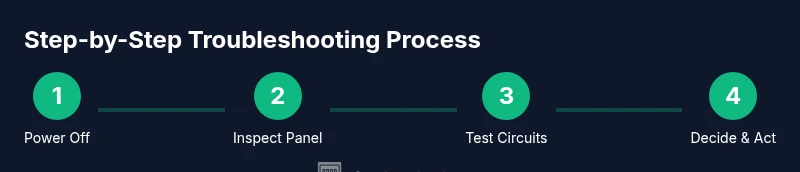
- 1
Power off at main breaker
Begin by turning off the main service disconnect to cut power to the entire panel. Confirm no voltage on the panel using a non-contact tester. This step reduces risk before inspecting individual breakers.
Tip: Double-check that all test devices are rated for electrical testing. - 2
Inspect the panel visually
Look for scorch marks, melted insulation, or a warm surface immediately after power is off. Note any odd smells or buzzing sounds. Visual cues can indicate damaged components needing professional attention.
Tip: Do not touch any bent or damaged components; mark the area and proceed with care. - 3
Test circuits one by one
With main off, test wires and breakers individually using the multimeter to verify voltage levels and ensure no live parts when you handle them.
Tip: Work one circuit at a time to avoid confusion and accidental cross-contact. - 4
Tighten loose connections
If a breaker terminal is loose, gently tighten it with the insulated screwdriver, ensuring a snug connection without over-tightening. Loose connections are a common cause of overheating and trips.
Tip: Only tighten screws that are clearly loose; overtightening can damage conductors. - 5
Replace blown fuses with care
If you identify a blown fuse, replace it with one of the same amperage rating and type. Do not replace with a higher rating to avoid overheating or fire risk.
Tip: After replacement, test the circuit load carefully and observe for any abnormal heating. - 6
Decide on escalation
If trips persist across multiple circuits, or you notice heat, burning smells, or arcing, stop DIY work and call a licensed electrician. Persistent fuse box.too signals indicate broader issues.
Tip: Keeping a log of symptoms helps the electrician diagnose faster.
Your Questions Answered
What does fuse box.too mean in practical terms?
Fuse box.too is a term used here to describe frequent faults or trips in a fuse box indicating overload, aging wiring, or faulty breakers. It signals the need for careful assessment before proceeding with DIY fixes or escalation.
Fuse box.too refers to frequent trips or faults in a panel, signaling a potential overload or aging components. It’s a cue to assess before DIY fixes, and to seek help if needed.
Can I reset a tripped breaker after inspecting the circuit?
Yes, if you have confirmed no overloads and the cause is cleared. Turn off devices on the circuit, reset the breaker firmly, and test with the load gradually restored. If it trips again, stop.
You can reset a breaker after you’ve checked for faults, but if it trips again, stop and seek professional help.
When is it unsafe to DIY on the fuse box?
When you notice burning smells, melted insulation, arcing, or persistent heat. In those cases, immediately stop and call a licensed electrician. Also avoid working in wet areas or with damp hands.
If you smell burning, see arcing, or if the panel is hot, call a pro right away. Don’t DIY in those cases.
What should I tell an electrician about fuse box.too?
Document the date/time of trips, which circuits are affected, loads involved, and any preceding events (storms, thunderstorms). This helps the electrician pinpoint the root cause quickly.
Tell the electrician when the trips happen, which circuits are involved, and any preceding events to help them diagnose.
Is upgrading the fuse box always necessary?
Not always. An electrical upgrade may be recommended if the panel is old, undersized for current loads, or fails inspections. A licensed electrician can assess whether replacement, re-wiring, or load splitting is appropriate.
Upgrade isn’t always needed. A pro will tell you if the panel is aging or undersized and propose the right fix.
Are there common signs of dangerous panel conditions I can notice at home?
Yes. Look for burning smells, smoke, visible charring, scorch marks, warm panels, or buzzing sounds. Any of these require immediate attention and likely professional evaluation.
Watch for burning smells, heat, smoke, or buzzing sounds near the panel. If you notice any, stop and call a pro.
Watch Video
Highlights
- Identify fuse box.too early to prevent escalation.
- Prioritize safety: main power off, PPE on, dry environment.
- Use one circuit at a time during diagnostics.
- Replace fuses only with the same rating; avoid improvising ratings.
- Call a licensed electrician when doubts arise or hazards are detected.