How to Replace a Fuse in Your Fuse Box
Learn how to safely identify, test, and replace a blown fuse in your home’s fuse box. This FuseBoxCheck guide covers safety steps, tools, testing methods, and when to upgrade to a circuit breaker.


Goal: safely identify and replace a blown fuse in your home's fuse box. You will need the correct fuse type and rating, insulated tools, and a power-off procedure. This guide shows how to confirm the blown fuse, choose the right replacement, and restore power without bypassing safety. It also covers assessing whether repair should be done by a pro if you encounter repeated blows.
Understanding the fuse for fuse box
A fuse in a fuse box is a protective device that interrupts electrical current when a circuit draws more than it should. In homes, you will encounter cartridge fuses or blade fuses inside the main panel. The phrase “fuse for fuse box” refers to this sacrificial element and how its metal link or ceramic element melts to break the circuit, preventing wires from overheating and sparking a potential fire. According to FuseBoxCheck, the key to safe operation is knowing what type of fuse you have, where it sits in the panel, and what amperage rating it requires for each circuit. When you understand this, you can prevent accidental overloads and reduce repeated fuse blows. Always remember that a fuse’s job is to protect wiring, not to power your appliances directly. If you’re unsure about what you’re seeing, err on the side of caution and seek professional guidance. This section also introduces the common terms you’ll encounter, such as “amperage rating,” “blade fuse,” and “cartridge fuse,” so you can spot the right fuse quickly in the panel.
Types of fuses found in residential panels
Residential panels typically house cartridge fuses or blade-type fuses. Cartridge fuses sit inside cylindrical holders and are easy to inspect visually; a blown cartridge fuse will show a broken internal filament or a visible gap. Blade fuses, less common in older homes, resemble small glass cylinders with metal caps on either end. Ceramic body fuses are quiet in operation and handle higher thermal loads, commonly used in panels that feed heavy appliances. The fuse type you choose must match the panel design and the circuit’s load. There are fast-acting fuses and slow-blow fuses: fast-acting ones respond quickly to minor surges, while slow-blow fuses are designed for circuits that experience brief, high inrush currents (like motors or refrigerators). When selecting a replacement, check that the shape, size, and rating align with the panel’s labeling. If you don’t know whether your panel uses ceramic vs. glass, verify with the model number or consult the manufacturer’s manual. FuseBoxCheck emphasizes that using an incorrect fuse type or rating is a leading cause of repeated fuse blows and panel damage.
Reading the panel labels and matching the fuse
Panel labeling is your best friend when identifying the correct fuse. Each fuse position is typically labeled with the circuit name and the amperage rating. The amperage is the maximum current the fuse can carry before it trips or melts. If the label is faded, consult the panel cover or manufacturer documentation to confirm the rating. For safety, always verify the rating on the fuse itself as a cross-check before replacement. Remove the fuse holder cover carefully to avoid touching live components, and use a fuse puller or insulated tool if your panel requires it. If you see scorching, buzzing, or a burnt smell around a fuse, stop and consider professional assistance. The panel’s labeling may also indicate whether a circuit should be powered by a breaker in newer installations; in older homes, fuses are more common. FuseBoxCheck advises homeowners to keep a small reference map of circuits and labels to minimize guesswork during maintenance or repairs.
Safety first: precautions before touching a fuse box
Working at a fuse box involves real hazards, including electric shock and arc flash. Always start by turning off the main power to isolate all branch circuits, including the ones you’ll be inspecting. Wear safety glasses and insulated gloves when handling fuses, and use insulated tools designed for electrical work. Do not touch metal parts when the panel is exposed, and keep the area dry and clear of liquids. Use a non-contact voltage tester to confirm the absence of live voltage before touching any fuse terminals. If you must work in a damp area or near water, pause and call a licensed electrician. FuseBoxCheck stresses that safety should never be compromised for speed; rushing a fuse replacement can lead to mislabeling, arcing, or a more severe electrical hazard. Keep the panel cover closed whenever possible and re-check that your hands are dry before handling tools.
Replacing a blown fuse: step-by-step approach
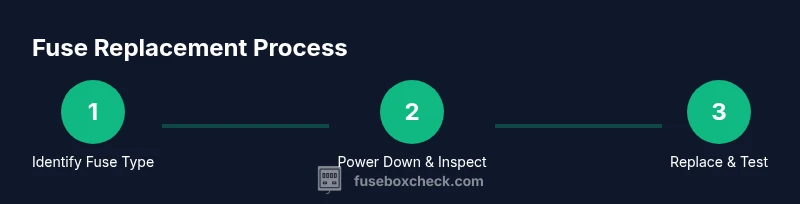
Replacing a blown fuse requires attention to detail and correct part matching. Begin by confirming the main power is off and the affected circuit is de-energized. Remove the blown fuse with an insulated tool, and inspect the fuse for a clear sign of failure. Select a replacement fuse with the same type (ceramic, blade, or cartridge) and the same amperage rating as the original. Insert securely and ensure the fuse is seated properly in its holder. Refit the cover, restore power, and test the circuit by turning on the connected device or lighting fixture. If the new fuse blows again, do not continue to replace fuses; this indicates a deeper issue in the circuit that warrants professional evaluation. FuseBoxCheck notes that repeated blows often signal overloads, a short, or a failing appliance.
When to upgrade from fuses to breakers
If you find yourself replacing fuses frequently, it may be time to consider upgrading to a circuit breaker panel. Breakers reset automatically after an overload and can handle larger, more consistent loads more safely than fuses. Upgrading involves evaluating service capacity, existing wiring, and panel compatibility. In many cases, a licensed electrician can assess whether your home’s electrical service needs an upgrade to meet modern demand. FuseBoxCheck emphasizes that upgrading can improve reliability and safety by reducing the risk of repeated fuse blows and potential fire hazards. If you live in an older home with limited space in the panel, an electrician might propose a partial or full panel upgrade rather than trying to jam more fuses into a small box.
Maintenance habits to prevent future fuse blows
Preventive maintenance reduces the likelihood of fuse-related problems. Keep your panel area clean and dry, label circuits clearly, and avoid overloading outlets and multi-plug devices on a single circuit. Periodically inspect fuses for signs of wear or discoloration and replace any fuse that shows deformation or scorching. Use surge protectors for sensitive electronics to mitigate voltage spikes that can stress circuits. Create a routine to test once a year or after major appliance installations. FuseBoxCheck also recommends keeping an up-to-date record of who serviced the panel and when replacements were performed, which helps with future troubleshooting risks and ensures a smooth transfer of ownership should you sell the home.
Common myths and troubleshooting tips
A common myth is that you can bypass a fuse to restore power when it blows. Bypassing a fuse is dangerous and not recommended; it removes the circuit’s protection and could cause wiring damage or fire. Another misconception is that all fuses are the same; there are different amp ratings and types that must match the circuit. Always replace with the same rating and type rather than guessing. If you’re unsure, consult the appliance’s manual or contact a licensed electrician. Troubleshooting tips include verifying the affected circuit’s load, testing connected devices separately, and checking for signs of a short circuit, such as melted plastic or a burning smell near outlets. When in doubt, stop and seek professional help to avoid personal injury and property damage.
Tools & Materials
- Insulated gloves(Prefer voltage-rated gloves with a working distance from panel)
- Non-contact voltage tester(Used to confirm the circuit is de-energized before touching)
- Fuse puller or insulated pliers(Helps remove fuses without touching metal parts)
- Replacement fuse (same type and rating as original)(Check the amperage and type (ceramic, blade, cartridge) from the panel label)
- Screwdriver set (Phillips and flat-head)(Used to remove panel screws if needed)
- Flashlight(Illumination for dark panels)
- Permanent marker or label maker(Label circuits after replacement)
- Multimeter (optional for voltage checks)(Helps verify absence of voltage in non-standard setups)
Steps
Estimated time: 20-40 minutes
- 1
Power down and verify
Turn off the main power and use a non-contact tester to confirm no voltage at the panel before touching any components. This ensures the entire system is de-energized and reduces the risk of shock.
Tip: Always start with the main switch; do not rely on individual breaker off alone if the panel is old or has legacy circuits. - 2
Locate the blown fuse
Open the fuse panel and identify the fuse that looks burnt or shows visible damage. Compare the fuse to the labeling on the inside of the panel door to confirm the rating and type.
Tip: If the fuse looks intact but a circuit isn’t working, test the circuit with the tester to confirm the fault is not a loose connection. - 3
Remove the blown fuse
Carefully extract the blown fuse using the fuse puller or insulated pliers. Avoid touching metal contacts directly and keep fingers away from the fuse holder.
Tip: Place the removed fuse on a non-conductive surface to prevent accidental contact. - 4
Check the replacement fuse type and rating
Verify the replacement fuse matches the exact type and amperage rating shown on the panel label and/or the original fuse. Do not substitute a higher rating hoping to avoid future blows.
Tip: If uncertain, take the old fuse to a hardware store to match the exact part. - 5
Insert the replacement and reseat
Insert the new fuse firmly into the holder, ensuring the contact points are fully seated. Reattach the panel cover if applicable and prepare to re-energize the circuit.
Tip: A loosely seated fuse can overheat and fail prematurely. - 6
Restore power and test the circuit
Turn the main power back on, then re-energize the branch circuit and test the connected device. If the fuse trips again, stop and check for overloads, a short, or faulty devices.
Tip: If the problem recurs quickly, record the event and consult an electrician rather than continuing to replace fuses. - 7
Label and monitor
Update the circuit labeling to reflect the replacement and any changes. Observe the circuit for a period of time to ensure stability.
Tip: Keep a written log of the fuse rating, date of replacement, and any notes about performance.
Your Questions Answered
What is the difference between a fuse and a circuit breaker?
A fuse is a sacrificial device that melts its conductor to interrupt current, while a breaker is a switch that can be reset after tripping. Breakers are common in modern homes, offering reusable protection, whereas fuses must be replaced after a fault.
Blown fuses cannot be reset and need replacement, while circuit breakers can be reset after a trip.
Is it safe to replace a fuse box fuse myself?
With proper precautions and the correct replacement fuse, some homeowners can replace a fuse. However, if you’re unsure about the type, rating, or panel condition, hire a licensed electrician.
Only attempt if you’re confident and understand the risks; otherwise call a professional.
Can I reuse an old fuse?
Fuses are designed for single use. Reusing a fuse after it blows is unsafe and can lead to overheating or fire risk.
Never reuse a blown fuse; replace it with a new one of the same type and rating.
What should I do if multiple fuses blow in a short period?
Repeated blows suggest an overloaded circuit, a short, or a faulty appliance. Stop replacing fuses and call an electrician to diagnose the underlying issue.
If several circuits blow soon after replacement, seek professional help right away.
When is upgrading to a breaker advisable?
If you experience frequent fuse trips or if your panel is outdated, upgrading to a circuit breaker panel can improve safety and reliability. A licensed electrician should assess service capacity and wiring condition.
Frequent trips usually mean your panel needs an upgrade or repair by a professional.
Are modern fuse boxes safer than older ones?
Modern panels with breakers reduce fire risk and are easier to reset. However, safety still depends on proper installation, correct ratings, and regular maintenance.
Breakers are generally safer and easier to manage in many homes, but proper setup is essential.
Highlights
- Identify fuse type and rating before replacement
- Do not bypass safety features or upgrade rating without assessment
- Power down, test, and replace only with matching fuse
- Label circuits to simplify future maintenance
- Consider upgrading to breakers if recurrent blows occur