How to Get Your Fuse Box Working: A Safe DIY Guide
Get a fuse box working safely with a practical step-by-step guide. Identify trips, blown fuses, and loose connections, then reset, replace, and test circuits, and know when to hire an electrician.


To get fuse box working safely, you will diagnose common faults like trips and blown fuses, then reset or replace components as needed. This guide emphasizes safety, including turning off power at the main, and following a controlled, step-by-step process to test circuits and determine whether you can continue or need professional help. Keep non-metallic tools handy and avoid touching live parts.
Safety first: Protect yourself and others
According to FuseBoxCheck, safety comes first when troubleshooting fuse boxes. Before you touch any panel, put on protective gloves and eye protection, dry your hands, and work in a dry area away from water. Power off the main disconnect and verify that no live parts remain before you begin. Do not wear metal jewelry, and keep children and pets away from the workspace. By starting with a safety mindset, you reduce the risk of shock or arc flash while you investigate common faults and plan the steps to get the fuse box working again.
What is a fuse box, and how does it differ from a breaker panel
Most homes use a central electrical panel called a fuse box or breaker panel. In older homes, fuses protect circuits and must be replaced when they blow. Modern panels use circuit breakers that can be reset. Both systems provide overcurrent protection, but the resettable breakers are easier for homeowners to manage. Understanding which system you have helps you choose the right replacement parts and follow the correct procedure to restore function safely.
Common issues that stop a fuse box from working
Beneath a panel's cover you might find: a tripped breaker, a blown fuse, loose or corroded connections, signs of overheating such as charring, or moisture intrusion in a basement. A fault on a single circuit can cause repeated trips or a dead outlet in multiple rooms. Replacing a fuse or resetting a breaker may temporarily restore power, but recurrent trips hint at an underlying problem like a heavy load, a short, or worn wiring. If you're seeing scorch marks, a burning smell, buzzing sound, or heat on the panel, stop immediately and call an electrician.
Quick diagnostic checklist before you touch anything
Do a visual survey of the panel labeling, looking for obvious signs of wear. Confirm the main breaker is the correct one and inspect any subpanels if present. Use a non-contact voltage tester to verify no voltage on exposed lugs from a safe distance before touching. Have a flashlight ready; panels in dim spaces are easy to misread. Gather your tools and plan to work methodically, testing each circuit after a reset to locate the trouble area.
Safety and test: How to assess circuits with basic tools
With a multimeter, measure the voltage at a receptacle or outlet to verify it matches the expected range. Use a continuity test to check wires between the panel and outlets if you suspect a broken conductor. Do not probe inside the panel when power is on. When testing, label circuits as you go so you can track which loads were affected and avoid re-tripping the same circuit.
How to reset a breaker or replace a fuse safely
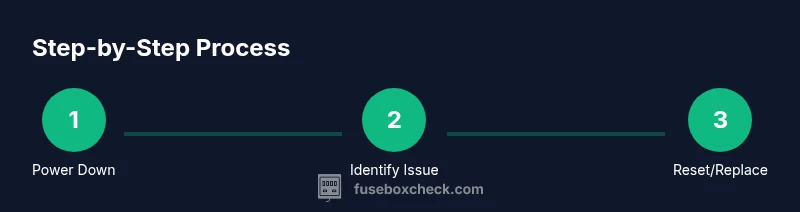
Power down the main disconnect to ensure a safe starting point. For a tripped breaker: switch it fully OFF, then firmly ON. For a blown fuse: remove the fuse with a fuse puller and replace with an identical type and amperage rating. After any change, restore the main power, then test the affected circuits with a lamp or tester. If the breaker keeps tripping or a replacement fuses blows again, stop and seek professional help.
When to call a licensed electrician
Call a licensed electrician if you notice burning smell, buzzing, melted insulation, moisture around the panel, panel age over twenty five years, panel housing damaged, water exposure, or if trips persist after replacement. Also call if you are uncomfortable working with electricity inside the panel.
Maintenance and prevention to keep a fuse box healthy
Regular checks, labeling, and keeping the panel clean and dry help prevent unexpected outages. Replace damaged covers, avoid overloading circuits, and schedule periodic inspections, especially in older homes. Proper storage of spare parts and clear labeling makes future troubleshooting faster and safer.
AUTHORITY SOURCES
- U.S. Occupational Safety and Health Administration (OSHA): https://www.osha.gov
- U.S. Department of Energy (DOE): https://www.energy.gov
- National Fire Protection Association (NFPA): https://www.nfpa.org
Tools & Materials
- Insulated screwdriver set (Phillips and slotted)(1/4 inch blades cover most panel screws)
- Non-contact voltage tester(to verify non-contact voltage without touching live parts)
- Multimeter(for measuring voltage and continuity checks)
- Flashlight or headlamp(to illuminate the panel in dim spaces)
- Insulated gloves (Class 00 or higher)(protect hands from shock)
- Replacement fuses of correct amperage(only if you identify a blown fuse)
- Replacement circuit breakers of correct amperage(only if you identify a faulty breaker)
- Electrical tape(insulate exposed conductors)
- Emergency contact for licensed electrician(keep handy for urgent issues)
Steps
Estimated time: 30-60 minutes
- 1
Power down and verify safety
Turn off the main disconnect. Use a non-contact tester at a safe distance to confirm no live voltage on exposed conductors before touching anything.
Tip: Always verify power is off before you begin any panel work. - 2
Identify the problem area
Look for signs of a tripped breaker, a blown fuse, or scorch marks on the panel and wiring. Note any unusual smells or heat.
Tip: Check panel labeling to locate the circuit you are testing. - 3
Reset a tripped breaker
Flip the breaker fully to OFF, then back to ON. If it stays on, the circuit is under control; if it trips again, you may have an overload.
Tip: Limit heavy loads on a single circuit to prevent repeats. - 4
Replace a blown fuse or faulty breaker
If a fuse is blown, remove it safely and replace with a like-for-like amperage fuse. For a faulty breaker, replace only with an identical rating.
Tip: Never bypass the fuse or breaker to force power. - 5
Test circuits after a change
Restore power and test affected outlets and lights with a lamp or tester to confirm proper operation.
Tip: Label circuits as you test for future reference. - 6
Escalate if problems persist
If breakers continue to trip or younotice burning, call a licensed electrician immediately.
Tip: When in doubt, stop and seek professional help.
Your Questions Answered
Is it safe to reset a tripped breaker by myself?
Resetting a tripped breaker is generally safe if you first identify the cause and ensure no signs of damage or burning. Turn the breaker fully OFF, then ON. If it trips again, stop and inspect loads or call an electrician.
You can reset a tripped breaker if you first check for damage and proceed carefully. If it trips again, call a professional.
What is the difference between a fuse box and a breaker panel?
A fuse box uses fuses that must be replaced; a breaker panel uses resettable circuit breakers. Modern homes use breakers; fuses are older. Both protect circuits, but fuses require replacements.
Fuses need replacement, breakers can be reset. Most homes use breakers today.
Can I replace a blown fuse myself?
You can replace a fuse if you know the rating and the fuse type, and the main power is OFF. Use the same amperage rating and avoid damaged components. If uncertain, consult a professional.
Yes, if you know the rating and switch off power first.
When should I call an electrician?
Call an electrician for persistent trips, signs of burning, moisture near the panel, or if the panel is old or damaged. Do not attempt risky repairs.
Call a licensed electrician for persistent trips or signs of damage.
What safety signs indicate a serious electrical problem?
Look for burning smells, buzzing sounds, melted insulation, or water around the panel. Stop work immediately and seek professional help.
Burning smells or melted insulation means stop and call a pro.
Watch Video
Highlights
- Power down before touching the panel
- Identify trips with a tester and panel labeling
- Use correct ratings when replacing fuses/breakers
- Persistent trips require electrician
- Regular maintenance prevents outages