How to Open a Fuse Box: A Safe DIY Step-by-Step Guide
Learn how to safely open a fuse box with a step-by-step approach, essential safety gear, and tips to avoid common mistakes. FuseBoxCheck shares practical guidance for DIY homeowners.


By the end of this guide, you will safely open a typical home fuse box to inspect fuses, reset a tripped circuit, or locate the panel. You’ll learn when it’s safe to proceed, the exact safety steps to protect yourself, and the essential tools needed. This quick answer sets the stage for the full step-by-step process.
Safety first: assess risk before touching the panel
Opening a fuse box is not a routine chore. The risks range from electric shock to arc-flash hazards when panels are old or damaged. Start by evaluating the environment: is the room dry? Are there any water spots, damp concrete, or metal tools nearby that could bridge a live circuit? Remove liquids and place tools on a non-conductive surface. Ensure you have a clear path to retreat if something goes wrong. Wear PPE: insulated gloves, safety glasses, and sturdy, dry footwear. Consider using a non-contact voltage tester before approaching the panel to confirm there is no live voltage in exposed conductors. If you notice signs of damage, corrosion, burning smells, or buzzing sounds, stop immediately and call a licensed electrician. Remember that even with the main off, some circuits can stay energized. Fuse boxes in older homes may have higher risks or different wiring arrangements, so proceed with caution. FuseBoxCheck’s guidance emphasizes conservative risk management and using the right tools for the task.
Know your panel types: fuse box vs breaker panel
Modern homes may use either a fuse box (older style) or a circuit breaker panel (common today). A fuse box typically contains cylindrical fuses that screw into holders and must be replaced when they blow. Breaker panels use switches that trip instead of burning out. Identifying which type you have is important because the reopening and testing process differs slightly. Look for a label on the inside of the panel door or a diagram on the panel itself that lists circuits and the main disconnect location. If you have an older house with visible fuses, you’ll notice a fuse box with metal fuse holders; newer homes will show a row of toggle switches. Understanding the layout helps you plan safe, compliant actions and avoid unnecessary risks.
Gather the right tools and create a safe workspace
Before you touch the panel, assemble the essentials in a dry, uncluttered space. You should have insulated gloves, safety glasses, a non-conductive flashlight, and screwdrivers matching the panel screws. A non-contact voltage tester lets you confirm the absence of live voltage at accessible parts. Keep a clear workspace free of liquids and code-approved footwear; avoid standing on damp floors. Have the owner’s manual or panel labeling handy to verify component types and ratings. If you have children or pets nearby, secure the area to prevent distractions during the procedure. Adopting these habits minimizes the risk of shocks, burns, or accidental contact with energized parts. FuseBoxCheck’s recommendations stress using purpose-built tools and dry environments for safer work.
Prepare the main power and panel environment
If your panel is in a location that allows for a service disconnect, locate the main breaker or main service disconnect switch. In many homes, turning this off reduces power to all circuits and lowers risk during inspection. Use the appropriate screwdriver if screws secure the panel cover, and maintain a firm grip on the door as you open it to prevent it from swinging back. After turning off the main, wait a few seconds and verify no voltages are present with your tester before proceeding. Check for moisture, corrosion, or signs of arcing around the bus bar and fuse holders. Never bypass safety steps to save time; safety is the priority.
Opening the panel door and inspecting labeling
Carefully unlatch or unscrew the panel door, keeping it supported in your non-dominant hand to prevent it from snapping shut. Read the labeling inside the door or on the panel front to identify which fuses or breakers control critical circuits (like the main lights, HVAC, and kitchen appliances). If the door has a diagram, follow it to locate the correct fuse or breaker. Use the flashlight to inspect the condition of fuse holders and breaker faces; look for signs of wear, burn marks, or loose connections. Do not touch exposed metal parts; use your voltage tester to ensure the area is safe before handling any components. Close the door slowly when you’re finished inspecting, ensuring the latch engages securely.
Handling fuses and breakers: maintenance and resets
When you find a blown fuse, replace it with a fuse of the same type and amperage rating—never install a higher rating to bypass a fault. For breakers that have tripped, switch the breaker fully to the OFF position and then back to ON. If a panel seems warm, if you smell burning, or hear buzzing, discontinue work immediately and call a licensed electrician. After replacing or resetting, recheck labeling and verify each circuit’s status with the tester. Finally, re-secure the panel cover, restore power, and observe that circuits return to normal operation. Keep a spare fuse pack and a small screwdriver for future maintenance.
Common mistakes and how to avoid them
Rushing through steps or skipping the main power shutoff is a common mistake. Failing to wear PPE or disregarding moisture hazards increases the risk of shock or arc flash. Using the wrong fuse type or attempting to force a fuse into a mismatched holder can cause damage. Never work on a live panel; always confirm de-energization. If you’re unsure of a label or the panel has signs of damage, stop and seek professional help. Document the steps you took and the circuit statuses to share with an electrician if needed. FuseBoxCheck emphasizes deliberate, methodical work rather than quick, risky actions.
When to call a professional and codes
Local electrical codes dictate when a licensed electrician is required, especially for service panel replacement, rewiring, or repairs involving hazardous conditions. If any panel shows signs of corrosion, moisture, or improper wiring, do not proceed. Additionally, if you’re renting a residence or your home is older, codes may require permits for certain tasks. Keeping records of inspections and repairs helps with future resale and safety audits. FuseBoxCheck recommends consulting a licensed professional for complex issues or uncertain conditions, and always follow local regulations.
Tools & Materials
- Non-contact voltage tester(Verify de-energization before touching any conductors)
- Flat-head screwdriver(Needed for some panel screws)
- Phillips screwdriver(Use with screws on panel cover)
- Insulated rubber gloves(Electrical protection; ensure fit and no tears)
- Safety glasses(Eye protection from sparks or debris)
- Flashlight(Bright, focused light for dim panels)
- Owner’s manual / panel diagram(Helpful for labeling and ratings)
- Dry, non-conductive footwear(Keep feet dry and grounded)
Steps
Estimated time: 15-25 minutes
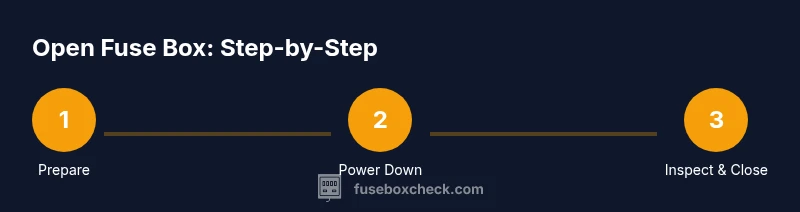
- 1
Prepare and inspect workspace
Before touching the panel, clear the area, dry the surface, and gather PPE. Put on insulated gloves and safety glasses, then confirm there is no moisture or liquid nearby. Use a non-contact tester to verify no live voltage near the panel before proceeding.
Tip: Keep your stance stable and hold the panel door with one hand so it won’t swing while you work. - 2
Identify panel type and main disconnect
Check labeling inside the panel to determine if you have a fuse box or a circuit breaker panel and locate the main disconnect. Confirm the label corresponds to critical circuits you may need to power down first. If the panel lacks a main, identify the largest breaker and note its position.
Tip: If labeling is unclear, photograph it from a safe distance for later reference. - 3
Power down safely
If there is a main disconnect, switch it OFF to de-energize most circuits. After flipping, wait a few seconds and re-check with your voltage tester to ensure no live conductors are exposed. Keep others away from the panel during this step.
Tip: Avoid touching bare conductors even with the main off; assume a small chance of residual energy. - 4
Open panel door securely
Carefully unscrew or unlatch the panel door, supporting it so it won’t snap closed. Maintain distance between your body and internal components and avoid placing fingers near bus bars. Use a flashlight to illuminate the interior and verify the components that require attention.
Tip: Do not prop the door open with tools that could slip and touch live parts. - 5
Inspect fuses and breakers
Look for blown fuses and tripped breakers. Do not touch live parts; use the tester as needed and refer to the labeling for the purpose of each fuse or breaker. If you must replace a fuse, use the same type and rating; if a breaker trip occurs, reset after confirming the circuit danger is cleared.
Tip: Never mix fuse types or ratings; mismatches can cause fire hazards. - 6
Close panel and re-energize
Re-seat the panel cover and secure it, then restore power by turning the main disconnect back ON or by re-energizing individual circuits if required. Check that circuits return to normal operation and test via a simple load check (lights, outlets). Close the door fully and ensure the latch is secure.
Tip: Document any changes and monitor for unusual behavior after re-energizing.
Your Questions Answered
Is it legal to open a fuse box yourself for basic tasks?
In many regions, homeowners may perform basic tasks on their own fuse box, such as resetting a breaker or replacing a blown fuse. Local codes vary, so check your area’s regulations and consult a licensed electrician for anything beyond routine maintenance.
Yes, homeowners often can perform basic tasks, but always check local codes before proceeding and call a licensed electrician for anything beyond routine maintenance.
Should I always turn off the main breaker before opening the panel?
Yes. Turning off the main disconnect reduces the risk of shock and arcing. If your panel lacks a main disconnect, power down individual circuits when safe to do so and seek professional guidance for complex tasks.
Turn off the main breaker before opening the panel to reduce shock risk. If there isn’t a main disconnect, avoid working on live circuits.
What should I do if I smell burning or see arcing inside the panel?
If you detect burning smells or arcing, stop immediately and do not attempt further inspection. Evacuate if necessary and call emergency services or a licensed electrician right away.
If you smell burning or see sparks, stop and call a professional—don’t try to fix it yourself.
What tools are essential for opening a fuse box?
Key tools include insulated gloves, safety glasses, a non-contact voltage tester, a flashlight, and the correct screwdrivers for your panel. Keep a dry workspace and refer to the panel diagram.
You’ll need insulated gloves, safety glasses, a voltage tester, a flashlight, and the right screwdrivers.
How do I know if I have a fuse box or a breaker panel?
A fuse box uses replaceable fuses that screw into holders; a breaker panel uses switches that trip. The labeling inside the door or on the panel will indicate the type and circuit layout.
Look for fuse cartridges or a row of breakers; labels show which is which and where the main disconnect is.
What safety steps should I follow after opening the panel?
Double-check that all tools are removed, the panel cover is secured, and power is restored safely. Test critical circuits and monitor for any unusual signs. If you’re unsure, consult a professional.
Secure the cover, restore power carefully, and test circuits. If unsure, contact an electrician.
Can I replace a blown fuse with a higher-amperage fuse?
No. Replacing a fuse with a higher-amperage rating can cause overheating and fires. Always use a fuse with the exact rating specified for that circuit.
Never replace a fuse with a higher rating; use the exact rating specified.
Watch Video
Highlights
- Plan safety first and prepare the workspace
- Identify panel type and main disconnect before opening
- Turn off power and verify absence of voltage
- Replace fuses with matching ratings; reset breakers properly
- Call a professional for complex issues or uncertain conditions