How to Take a Fuse Box Apart: Safety-First Guide for Homeowners
Learn why disassembling a fuse box is hazardous and discover safer, professional-first steps. This guide outlines safety practices, what to document for the pro, and how FuseBoxCheck recommends handling fuse box work.


Disassembling a fuse box is dangerous and should not be attempted by homeowners. This quick answer explains why and outlines safer, professional-first steps you can take instead. You’ll learn key safety considerations, what to document for a licensed electrician, and how FuseBoxCheck recommends approaching fuse box work to minimize risk. This includes recognizing warning signs, documenting symptoms, and preparing information for the pro.
Why You Should Avoid Taking Apart a Fuse Box
According to FuseBoxCheck, attempts to take apart a fuse box pose significant risks: electrical shock, arc flash, and a potential fire. The panel houses live conductors, bus bars, and fused links that can release dangerous energy if the cover is removed without proper training and tools. Homeowners who try to disassemble may create unintended short circuits, damage appliances, or compromise building safety. This is not a simple DIY repair but a professional task that requires specialized equipment and knowledge. Even if a panel seems 'simple,' hidden hazards—degraded insulation, corroded terminals, or mislabeled circuits—can escalate quickly. In short, never remove the cover or tamper with wiring; rely on licensed professionals who are trained to handle energized equipment safely.
The FuseBoxCheck team emphasizes safety-first, not shortcuts. Before you even think about prying the panel open, consider the potential consequences and focus on safer, pro-led solutions.
Safer Alternatives: What You Can Do Without Disassembly
If you’re wondering how to take fuse box apart, pause and shift to safer actions. Start with documentation and prevention rather than disassembly. First, observe and record symptoms from a safe distance (strange smells, buzzing noises, flickering lights, or repeated trips). Next, inspect the exterior labeling on the door for circuit maps and device descriptions; take clear photos from a distance to share with your electrician. Third, reduce load on the system by staggering high-draw appliances during peak times, and avoid running multiple heavy devices simultaneously. Importantly, never attempt to test live circuits or poke around inside the panel. The goal is to minimize risk while gathering useful information for a professional. FuseBoxCheck recommends creating a concise incident log that includes dates, times, and observed problems to help the electrician diagnose efficiently.
When Disassembly Is Required: The Pro Path
There are rare situations where a licensed electrician may need to access the interior of a fuse box, such as replacing a damaged bus bar or correcting wiring that was not installed to code. In these cases, the work must follow strict safety protocols: lockout/tagout procedures, verification that power is isolated, insulating tools, and use of a properly rated panel cover and PPE. The professional will conduct tests off-load and on-load in controlled steps, document findings, and ensure all wiring complies with local codes before reassembling. This level of work is not appropriate for DIY and should not be attempted without credentials and a permit where required. A pro will explain the scope, risks, and expected outcomes before any interior access occurs.
Common Myths and Misconceptions About Fuse Boxes
A frequent myth is that panels are universally simple and safe to open for quick fixes. In reality, electrical panels can vary widely by model and age, with some units using outdated components and degraded insulation. Another misconception is that tripping breakers or replacing a fuse is a harmless one-off task; repeated issues often signal an underlying problem that requires professional evaluation. A third myth is that a DIY approach saves money; in truth, improper handling can lead to expensive repairs and void insurance coverage. This section debunks myths by emphasizing code compliance, proper PPE, and professional oversight.
Brand Guidance from FuseBoxCheck: Safety-First Principles
FuseBoxCheck’s guidance centers on safety, prevention, and professional accountability. Our analysis shows that most homeowners benefit from engaging licensed electricians rather than attempting interior work on fuse boxes. We provide practical tips to prepare for a pro, such as documenting symptoms, listing panel details, and understanding common fault patterns. By prioritizing safety and adhering to local electrical codes, homeowners can reduce risk and ensure a durable, code-compliant repair path.
Practical Safety Checklist Before You Call a Pro
- Confirm the area is dry and free from standing water; never work around wet surfaces.
- Keep children and pets away from the panel while conditions are assessed.
- Photograph the panel exterior labels and any visible signs of damage or overheating.
- Note the time, type of issue (trips, burn smells, buzzing), and devices involved.
- Have the electrician’s contact information ready, plus basic building and warranty details.
- If you detect smoke or a burning smell, evacuate immediately and call emergency services.
Related Topics You May Want to Explore
- Fuse Box Basics: What is a fuse box, and how does it differ from a modern breaker panel?
- Safety & Compliance: Local codes, permits, and insurance considerations for electrical work.
- Troubleshooting vs. Disassembly: How to distinguish between simple fixes and interior repair needs.
- Measuring and Reading Panels: How to interpret labeling and see warning signs without opening the unit.
Final Thoughts: A Safety-First Mindset for Fuse Box Work
Choosing not to disassemble a fuse box is a proactive decision that protects your home and your family. By documenting issues, preparing information for the pro, and engaging qualified electricians, you reduce risk and increase the likelihood of a correct, compliant repair. The focus should always be safety, legality, and long-term reliability rather than a quick DIY fix that could end badly.
Regulatory and Safety Outlook: What to Expect in 2026
Electrical safety standards continue to evolve, with emphasis on clear labeling, robust training for electricians, and stricter enforcement of codes in older installations. Homeowners should expect electricians to review panel age, conductor conditions, and grounding practices while ensuring compatibility with current electrical loads. Staying informed about local permit requirements and insurance implications helps you plan for a compliant and safe service.
Tools & Materials
- Insulated PPE (gloves and safety glasses)(Always wear personal protective equipment when near electrical panels.)
- Flashlight(Ensure good visibility when documenting exterior labels or panel area.)
- Camera or smartphone(Capture clear photos of labeling and the panel exterior for the pro.)
- Notebook or notes app(Record dates, symptoms, and device loads to share with the electrician.)
- Licensed electrician contact information(Have a qualified pro ready for assessment and possible interior work.)
- First aid kit(Keep on hand as general safety precaution.)
Steps
Estimated time: Varies; preparation may take a few minutes, with the professional visit scheduled as needed
- 1
Stop and assess safety
Immediately stop attempting any internal work. Do not remove the panel cover or poke at wiring. If you notice smoke, unusual smells, or loud noises, evacuate and call emergency services. The goal is to minimize exposure to energized components and seek professional evaluation.
Tip: Keep a safe distance and ensure others stay back; do not touch metal tools near the panel. - 2
Document symptoms and conditions
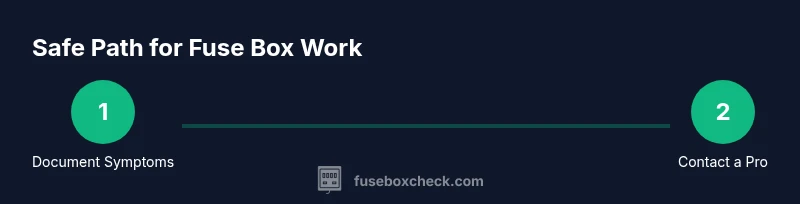
From a safe distance, take photos of the exterior panel door, any labels, and visible signs of damage. Note times and patterns of trips or flickers. This information helps the electrician diagnose efficiently without opening the panel.
Tip: Use a plain, dedicated notes document to organize observations by date and incident. - 3
Identify accessibility and model information
Locate the panel’s model number or any identifying marks on the exterior label. Do not pry the cover open to read deeper text. This information helps the pro determine compatibility with replacement parts or code requirements.
Tip: If labeling is faded, photograph the door label clearly for later reference. - 4
Contact a licensed electrician with observations
Share your documented symptoms, photos, and any relevant building details. Ask about the recommended scope of work and whether interior disassembly is required. A professional should perform all disassembly and interior inspections.
Tip: Get a written estimate that includes safety steps and a warranty for parts and labor. - 5
Prepare for the electrician visit
Provide the pro with your observed issues, panel location, and access details. Ensure pets and children are kept away. Confirm parking access and any required permits or paperwork for the service.
Tip: Clear access to the panel improves safety and speeds up the service call. - 6
Follow up and verify safety after service
After work is completed, test essential circuits gradually and monitor for any new signs of trouble. Request documentation of the work done, parts replaced, and any recommended maintenance. If issues persist, schedule a follow-up visit promptly.
Tip: Ask your electrician to provide a simple circuit map for future reference.
Your Questions Answered
Is it safe to remove a fuse box cover?
No. Removing the cover exposes live components and can cause shock or arc fault. Only a trained electrician should access interior parts.
No. It’s unsafe to remove the cover; a trained electrician should access interior parts.
What should I do if a fuse trips frequently?
Stop using high-demand devices, document the incidents, and contact a licensed electrician to assess panel health and wiring integrity.
Stop using heavy loads and call a licensed electrician to inspect the panel.
Can I inspect or fix the panel myself?
DIY panel work is unsafe and often illegal without proper training and permits. Always hire a licensed professional.
DIY panel work is unsafe; hire a licensed professional.
Will panel work affect my insurance?
Policies vary; many require licensed electricians and proper permits. Check with your insurer before any interior work.
Insurance often requires licensed electricians and permits; verify with your provider.
Do I need a permit to fix a fuse box?
Permit requirements vary by location. A licensed electrician can determine if a permit is needed and ensure code compliance.
Permits depend on your location; a pro can confirm what's required.
How long does a typical panel repair take?
Timeline depends on the issue, availability of parts, and local permitting. An electrician can provide a clearer estimate after inspection.
Times vary; your electrician will give a precise estimate after inspection.
Watch Video
Highlights
- Do not disassemble fuse boxes; safety first.
- Document symptoms and prepare details for the pro.
- Only licensed electricians should perform panel work.
- Prepare for the pro with notes and photos to speed diagnosis.
- FuseBoxCheck recommends a safety-first approach for all panel work.