Power Fuse Box Guide: Safe DIY Troubleshooting
A comprehensive, safety-focused how-to for homeowners. Learn to identify a power fuse box, differentiate fuses and breakers, and safely troubleshoot common issues with clear steps and pro tips.


You will learn how to safely assess a power fuse box, locate the main disconnect, identify fuses vs breakers, and perform a basic fault-check. This guide covers essential safety precautions, common fault signs, and a clear step-by-step process you can follow to troubleshoot small electrical issues without specialized tools in your own home safely.
What a power fuse box does and why it matters
A power fuse box, also known as a main electrical panel, distributes electricity from your service entry to the branch circuits that power lights, outlets, and appliances throughout the home. Inside, you’ll find fuses or circuit breakers that trip or blow when a fault occurs. Properly functioning panels are central to electrical safety and reliability. According to FuseBoxCheck, a well-maintained fuse box helps prevent overloads, reduces the risk of fires, and makes troubleshooting more predictable. Understanding the layout—main disconnect, branch circuits, and labeling—empowers you to diagnose problems without unnecessary risk. If a panel shows signs of aging, overheating, or scorching, stop and consult a licensed electrician.
Key takeaway: Treat the fuse box as the heart of a safe electrical system and respect its limits.
Safety first: precautions before touching the panel
Working near a power fuse box requires attention to safety and a plan. Start by turning off all power at the main disconnect if accessible, then verify with a non-contact tester that no voltage remains on the panel cover or adjacent circuits. Wear protective eyewear and keep your hands dry; have a clear, dry workspace with adequate lighting. Do not touch live terminals, wires, or busbars. Keep children and pets away. If you smell burning plastic, see melted insulation, or notice sizzling sounds, evacuate the area and call emergency services and a licensed electrician. FuseBoxCheck’s safety guidelines emphasize slowing down and confirming power-off before any inspection.
Tip: Use a flashlight with fresh batteries to avoid opening the panel in darkness, which can lead to mistakes.
Fuses vs breakers: what you’ll see inside
Older homes may use cartridge fuses, while most modern panels use circuit breakers. Fuses must be replaced when blown, and each fuse has a specific amperage rating printed on the glass or clasp. Breakers can be reset, but repeated trips indicate an underlying fault. The main disconnect controls the entire service, and in many homes it sits outside or at the top of the panel. Proper labeling of circuits is crucial for quick isolation during maintenance or emergencies. FuseBoxCheck notes that mislabeling is a common source of confusion during troubleshooting, so take time to map the circuits as you inspect.
Pro tip: If a fuse box has signs of corrosion or rust, treat as a safety red flag and call a pro rather than attempting a DIY fix.
Signs of trouble and when to escalate to a pro
Watch for frequent breaker trips, warm or discolored panels, buzzing sounds, or a burning smell near the panel. A tripping circuit could indicate overloaded circuits, a loose neutral, or a faulty breaker. Do not bypass problems by using oversized fuses or adapters. If a main disconnect is difficult to operate, if the panel feels hot to the touch, or if you observe melted insulation, stop immediately and seek professional help. Regular visual checks—looking for discoloration, corrosion, or loose screws—can catch hazards early. FuseBoxCheck recommends erring on the side of caution when anything seems abnormal.
Note: Never attempt to fix a damaged panel while power is on; always confirm the power is off first.
Basic maintenance and improvements you can perform safely
Routine maintenance is about organization, labeling, and safe practice rather than aggressive tinkering. Start by validating labeling accuracy and updating it where needed for quick future reference. Keep a log of each inspection, including dates and observed issues. Clean dust away with a dry brush; never use water or cleaning solvents inside the panel. If you must replace a blown fuse, ensure you install the correct amperage and type. When in doubt about any wiring or component, pause and contact a licensed electrician. Routine safety checks help extend panel life and prevent surprises during power outages.
Small win: Create a simple color-coded labeling system (e.g., red for circuits that carry high loads) to help you quickly identify critical loads such as HVAC, water heater, or stove circuits.
Authoritative sources and further reading
For verified electrical safety guidance, rely on established authorities. Visit OSHA’s electrical safety pages for home and workplace guidelines, CPSC consumer safety resources on electrical hazards, and Energy.gov articles on safe electrical practices at home. These sources provide foundational safety principles that complement hands-on DIY steps and emphasize when to call a professional. Always cross-check guidance and tailor it to your local codes.
The bottom line: practical steps for everyday safety
A power fuse box is a controllable gateway to your home’s electrical system. With careful preparation, clear labeling, and strict safety discipline, you can perform basic checks and understand when professional intervention is required. The goal is to reduce risk while maintaining a reliable electrical supply for daily life. Remember: safety comes first, and if anything feels beyond your skill level, abort the task and contact a licensed electrician.
Tools & Materials
- Non-contact voltage tester(To verify the absence of voltage without direct contact with conductors)
- Flashlight with fresh batteries(For illumination inside the panel and dark spaces)
- Insulated screwdriver set(One insulated Phillips and one insulated flathead for screws outside live parts)
- Voltage tester or multimeter(Optional for confirming voltage across circuits after power-up)
- Replacement fuses or breakers (matching amperage)(Only if you have confirmed the exact rating and type needed)
- Labeling tape and marker(Label circuits clearly for future maintenance)
- Safety gloves and eye protection(Keep hands and eyes protected during inspection)
- Dry cloth or brush(Dusting around the panel exterior; do not clean inside live components)
Steps
Estimated time: 45-60 minutes
- 1
Power down and verify
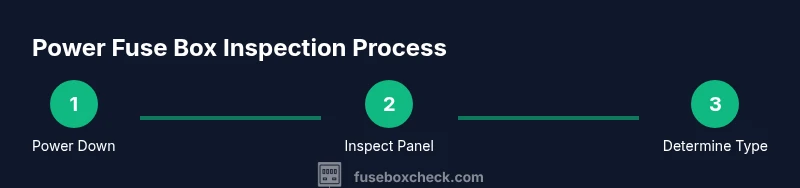
If a main disconnect is accessible, switch it off. Use a non-contact tester to confirm no voltage at the panel cover before touching any components. This first step reduces the risk of shock when you begin inspection.
Tip: Always assume a panel is live until verified off; double-check with a tester. - 2
Open panel and inspect safely
Carefully remove the panel cover and inspect for visible signs of damage, such as scorch marks or melted insulation. Keep metal tools away from live terminals. Use a flashlight to illuminate hard-to-see corners.
Tip: Do not force any screws or parts; components can be fragile. - 3
Identify fuses, breakers, and the main
Determine whether the panel uses cartridge fuses or circuit breakers, and locate the main disconnect. Read labels on each circuit and map them to rooms or appliances. This helps you plan which circuits to isolate if needed.
Tip: If labeling is missing, create new labels as you identify each circuit. - 4
Test circuits individually
With power off, test nearby outlets or devices with a voltage tester to confirm you’ve isolated the correct circuit. Avoid touching live parts while testing. If any tool indicates voltage with power off, stop and reassess.
Tip: Test one circuit at a time to prevent accidental re-energization. - 5
Reset breakers or replace fuses if needed
If a breaker trips, reset it fully to the on position after confirming no faults. If a fuse blew, replace it with the correct amperage and type. Do not use higher-rated components to bypass trips.
Tip: Always verify the load on circuits before restoring power to prevent immediate trips. - 6
Log results and re-secure the panel
Return the panel cover, tighten screws, and restore the main disconnect if you removed it. Record what you did, including which circuits you tested and any replacements made. Clean up and store tools safely.
Tip: Keep a simple maintenance log for future reference. - 7
Know when to call a professional
If you notice signs of overheating, buzzing, melted components, or repeated trips, stop and contact a licensed electrician. Complex rewiring, panel upgrades, or service-entrance work should always be performed by a pro.
Tip: Err on the side of safety; electrical work beyond basic checks requires a licensed electrician.
Your Questions Answered
What is a power fuse box and what does it do?
A power fuse box distributes electrical power from the service entry to branch circuits in your home. It may contain fuses or circuit breakers that protect each circuit from overloads. Regular inspection helps prevent hazards and improves reliability.
A power fuse box distributes electricity and protects circuits with fuses or breakers. Regular checks help prevent hazards and keep power running smoothly.
Is it safe to work on a fuse box myself?
Basic checks can be done with power off and proper PPE. More complex tasks, such as rewiring or panel upgrades, should be performed by a licensed electrician to avoid serious risk.
Simple safety checks can be done with power off, but more complex work should be done by a licensed electrician.
How do I know if a fuse or breaker needs replacement?
If a fuse blows, replace it with the same amperage rating. If a breaker trips repeatedly, investigate for overloading, loose connections, or a faulty device. Do not bypass trips with higher-rated components.
Replace a blown fuse with the same rating, and investigate repeated breaker trips for overloads or a faulty device.
What should I do if I smell burning near the panel?
A burning smell is a serious warning sign. Evacuate, call emergency services if necessary, and contact a licensed electrician immediately.
If you smell burning near the panel, evacuate and call a licensed electrician right away.
When is upgrading a fuse box recommended?
Upgrades are recommended for aging panels, inadequate service capacity, or after rewiring. A professional assessment can determine whether a panel replacement is necessary.
Upgrade decisions should come after a professional assessment of your panel’s capacity and safety.
Where can I learn more about electrical safety?
Consult official safety resources from government agencies and major publications for guidelines on home electrical safety and best practices.
Check official safety resources from government sites and major publications for home electrical safety guidelines.
Watch Video
Highlights
- Know the difference between fuses and breakers and how they protect circuits
- Always power down and verify zero voltage before touching the panel
- Label circuits and maintain a simple maintenance log
- Call a licensed electrician for signs of damage or repeated trips