Se fuse: Safe Fuse Box Troubleshooting for Homeowners
A clear, expert guide for homeowners troubleshooting fuse boxes, including identifying blown fuses, resetting trips, and when to call a professional. Learn practical safety steps with FuseBoxCheck.


This guide helps homeowners safely identify and address a blown fuse or tripped circuit in a residential fuse box. You’ll learn what se fuse means in practical terms, how to shut power safely, and when to replace a fuse or reset a breaker. Always prioritize safety and know when to contact a licensed electrician.
What is a fuse box and why it matters
A fuse box, or electrical service panel, is the central hub that distributes power to every circuit in your home. It protects wiring from overheating by interrupting current when faults occur. According to FuseBoxCheck, understanding your fuse box helps you troubleshoot safely and avoid unnecessary power loss. The term se fuse is occasionally used to describe a fuse that’s on the brink of failure or has just blown. Recognizing these moments can reduce fire risk and limit damage to appliances. A well-maintained panel also simplifies future updates, like adding outlets or upgrading service. In modern homes, many panels are designed with clear labeling, making it easier to locate the affected circuit and plan safe interventions. Regular checks reduce nuisance trips while keeping your electrical system compliant with basic safety standards.
Understanding the core parts—fuses, circuit breakers, and the main disconnect—sets the foundation for safe, confident DIY maintenance. Remember that handling the panel should be done with dry hands and insulated tools, and never work near water or on a panel that feels warm to the touch. FuseBoxCheck emphasizes a cautious mindset: if anything feels uncertain, pause and seek professional help.
Fuses vs circuit breakers: what's the difference
Fuses are single-use devices that melt open when the current exceeds the rated amperage. Breakers, on the other hand, trip and can be reset after the fault is cleared. The distinction matters when you’re diagnosing a problem: a blown fuse means a direct overcurrent event in a specific circuit, while a tripped breaker might reflect a wider overload or a lingering fault. In either case, the goal is to protect wires from overheating and to restore power safely after addressing the root cause. Fuse boxes may still use fuses in specific circuits, but many homes rely on breakers for convenience and speed of resets. Understanding these differences helps you decide whether to replace a fuse or reset a breaker and what parts to stock in your toolbox. A cautious approach, including verifying ratings and labeling, minimizes risk and helps you plan a proper repair strategy.
Common fuse box symptoms and clues se fuse
Spotting the signs of electrical trouble early reduces the likelihood of a larger outage or hazard. Look for buzzing or crackling noises near the panel, a persistent burning smell, tripping that recurs after simple loads, or scorch marks around fuses or breakers. In older homes, corrosion or moisture near the panel can cause intermittent trips. When a fuse se fuse, you’ll typically see a popped fuse that cannot be reset, or a breaker that trips multiple times after different appliances are used. Keep an eye on panel labeling and document any changes you make so you can communicate specifics if a professional is called. Safety-first habits—dry hands, insulated tools, and a clear workspace—should guide every inspection. FuseBoxCheck notes that regular visual checks of connections and panel integrity help maintain system reliability and safety.
Safety first: precautions before you touch the panel
Before touching the panel, power must be isolated to prevent shock or arc flash. Start by locating the main disconnect and switching it off, then use a non-contact voltage tester to verify that no live voltage remains on the circuits you’ll touch. Keep the panel cover closed when not actively inspecting, and wear insulated gloves. Work on a dry surface; never lean over a panel in a damp area. If you see scorch marks, melted insulation, or a warm panel, stop immediately and contact a licensed electrician. FuseBoxCheck stresses that safety is not optional—it's the first, best step in any DIY electrical task.
Step-by-step overview for safe troubleshooting (high level)
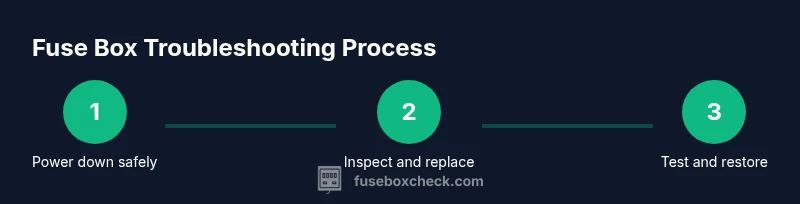
This section provides a high-level workflow to guide your DIY efforts without detailing every action. Start by confirming which circuit is affected, then decide whether a fuse needs replacement or a breaker needs resetting. Check for obvious signs of damage, such as corrosion or moisture. If the problem repeats after a reset, there is likely an underlying fault that warrants professional assessment. Document findings, label circuits, and plan for a future upgrade if your panel is older or frequently trips.
Practical maintenance to reduce nuisance trips
Reducing nuisance trips starts with proper load management and regular inspection. Avoid overloading circuits by grouping high-wattage appliances away from the same branch. Keep the panel free of dust, ensure connectors are snug (without overtightening), and replace corroded or damaged components with compatible parts. Periodic testing—at least once a year—helps catch wear before a fault shows up in daily life. When DIY work is appropriate, use the correct amperage ratings and verify that any replacement fuses or breakers match the original specifications. FuseBoxCheck advises that keeping a small inventory of spare fuses and a few replacement breakers on hand can save you time during a temporary outage.
When to hire a pro and what to expect
Not every issue belongs to a DIY fix. If you notice burning smells, smoke, flickering lights, or frequent trips that occur with multiple circuits, professional help is essential. A licensed electrician can perform a detailed inspection, test for faults, and determine whether upgrades or rewiring are needed. Expect a professional to review panel labeling, confirm labeling accuracy, check grounding, and assess overall service capacity. They’ll also discuss safety improvements and potential permit requirements for panel upgrades. The goal is a safe, compliant system with clear documentation for future maintenance.
Notes on safe language and multilingual terminology se fuse
Electrical terms vary by region and language. In some contexts, se fuse is used to describe a fuse that has burnt out or failed, though the common engineering term remains 'blown fuse' or 'tripped breaker.' When communicating with neighbors or electricians, be precise about symptoms and components. This article uses se fuse as a conversational cue to describe the moment of a fuse or circuit interruption, helping readers connect terminology with physical signs. Always default to standard safety guidelines and professional standards.
Conclusion? Not quite. This section builds toward practical action without declaring an end. Instead, use the following takeaways and tools to plan your next steps and to decide when it’s safer to call a pro. Remember that each home’s electrical system is unique, and safe handling of a fuse box requires respect for voltage, load, and proper components.
Tools & Materials
- Non-contact voltage tester(Check for presence of voltage without touching wires.)
- Insulated screwdrivers (flat and Phillips)(Insulated handles; use for panel screws only.)
- Insulated gloves(Maintain grip and add a layer of protection.)
- Replacement fuses or compatible breakers(Match the original amperage rating and type.)
- Flashlight or headlamp(Panel areas can be dim; ensure visibility.)
- Face shield or safety glasses(Protect eyes during panel work.)
Steps
Estimated time: 25-40 minutes
- 1
Power down and prep
Switch off the main disconnect to isolate all circuits. Confirm no voltage remains in the panel with your tester. Gather tools and wear insulated gloves before touching the cover.
Tip: Use dry hands only and keep a clear workspace. - 2
Identify the affected circuit
Check the panel’s labeling and locate the circuit that lost power. If a single circuit is affected, inspect that branch for obvious faults. If multiple circuits are affected, the main supply or a common feeder could be the issue.
Tip: Take a photo of the labeling for future reference. - 3
Inspect and replace if needed
If a fuse is blown, replace it with the same amperage rating and type. If a breaker is tripped, switch it fully OFF, then back ON. Do not bypass safety features.
Tip: Never force a fuse into place; ensure proper seating. - 4
Test the circuit
Restore power to the affected circuit and test devices on that circuit one at a time to confirm function. Watch for heat, buzzing, or burning smells.
Tip: If the breaker trips again immediately, there is a fault beyond a simple overload. - 5
Document and monitor
Label the circuit clearly, note the date of any replacement, and monitor for repeat trips over the next few days. Schedule a full panel safety review if trips resume.
Tip: Maintain a simple log for future DIY sessions.
Your Questions Answered
What is se fuse and why would a fuse blow?
Se fuse describes a fuse that has burnt out or a circuit interruption. It typically indicates overcurrents or a fault in the connected circuit. Always verify with the panel labeling and safety steps before replacing.
Se fuse refers to a fuse that's burnt out, signaling an overload or fault. Verify safety steps before replacing and consider calling a professional for persistent issues.
Can I replace a blown fuse myself?
You can replace a fuse if you match the original amperage and-type and follow basic safety steps. If you’re unsure at any point, stop and contact a licensed electrician.
Yes, you can replace a fuse if you know the rating and follow safety steps. If in doubt, seek a pro.
What should I do if the main breaker trips repeatedly?
Repeated main trips suggest a broader electrical issue or an overloaded system. Reduce load, inspect for faulted devices, and contact a professional for a full assessment.
If the main trips over and over, reduce load and call a professional; it could be a serious fault.
Is it safe to work on a panel without a helper?
Working alone is possible with proper safety gear and precautions, but never on a live panel. Have a phone handy to call for help if needed.
Yes, but never on a live panel. Keep a phone nearby in case you need assistance.
How often should I inspect my fuse box?
Inspect annually as part of routine home safety checks; look for corrosion, moisture, and signs of wear.
Do an annual check for corrosion or moisture and note any changes.
What’s the difference between fuses and breakers?
Fuses are single-use devices that burn out; breakers reset after a fault. Both protect circuits, but breakers are reusable and easier for DIYs.
Fuses burn out, breakers trip and reset. Both protect wiring; breakers are usually easier to use for daily maintenance.
When should I upgrade my fuse box?
Upgrade is wise when your panel is old, frequently trips, or you’re adding high-load appliances. A licensed electrician can assess capacity and code compliance.
Upgrade if the panel is old or overloaded. Have a pro assess capacity and code compliance.
What are common signs a panel needs service?
Signs include buzzing sounds, heat around the panel, discoloration, or a smell of burning. If you notice these, stop using the panel and consult a pro.
Buzzing, heat, or burning smells mean stop and call an electrician.
Watch Video
Highlights
- Power down before touching the panel
- Use correct fuse/breaker ratings
- Identify if the issue is a single circuit or system-wide
- Call a pro for persistent trips or signs of damage
- Label circuits for easier future maintenance