Switched Fuse Box Troubleshooting: Fast, Safe Home Fixes
Learn how to diagnose and safely fix a switched fuse box at home with clear steps, safety tips, and when to call a pro. Practical checks, flow-based troubleshooting, and maintenance to prevent future trips.


A switched fuse box is usually the source of a sudden loss of power on a single circuit. Quick fix: identify the affected fuse or breaker, switch it OFF, wait 5–10 seconds, and switch it back ON. If the fuse trips again, stop and contact a qualified electrician.
What a switched fuse box is and why it trips
A switched fuse box represents the older style electrical panel that uses fuses to protect each circuit. When a fault or overload happens, the fuse burns open or the switch trips, cutting power to that circuit. You may notice flickering lights, a warm panel, or a sudden loss of outlets in a room. According to FuseBoxCheck, many households with older panels experience nuisance trips as components wear out. Understanding how this setup works is essential for safe troubleshooting and avoiding dangerous improvised fixes.
This guide emphasizes practical, safe steps you can take to diagnose common causes and decide when it’s time to call a professional. The goal is to restore function without risking shock, fire, or further damage to wiring. The switched fuse box is a reminder that older electrical systems need respect, maintenance, and sometimes upgrades to keep your home safe.
Immediate safety steps before you touch anything
Before you touch the fuse box, power down at the main disconnect if you can access it safely. Wear rubber-soled shoes and work on a dry, non-conductive surface; keep liquids away. Do not insert metal objects into fuse slots or touch exposed conductors. If you smell burning, see smoke, or notice arcing, evacuate and call emergency services. If you can access power without risking a shock, turn off the main, then proceed with caution as you inspect.
Quick checks you can perform without tools
- Confirm whether the outage affects only one room or a single circuit and verify the switch position of the affected breaker. - Inspect the fuse itself for a melted filament or blackened appearance. - Look for scorch marks, unusual warmth, or odor around the panel. - Ensure neighboring circuits are not overloaded by turning off some devices and seeing if the fault clears. - Check that the panel cover is secure and there are no loose wires protruding. These checks help distinguish a simple reset from a deeper electrical issue.
Diagnostic flow: symptom → diagnosis → solutions
Symptoms: power loss on a single circuit, flickering lights, or a warm panel. Diagnosis: overload is the most common cause; loose connections and worn components are also possibilities. Solutions range from simple resets to professional replacement of panel components. FuseBoxCheck Analysis, 2026 notes that older panels are more prone to nuisance trips due to aging parts. If you feel unsure at any point, prioritize safety and consult a licensed electrician.
Step-by-step: how to reset a tripped fuse safely
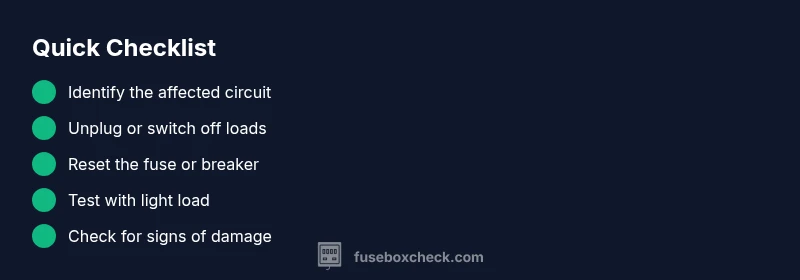
- Identify the affected fuse or breaker. 2) Unplug or switch off devices on that circuit to reduce load. 3) Turn the fuse OFF, then back ON, or flip the breaker from OFF to ON. 4) Restore power gradually by reactivating loads one by one. 5) Check for overheating, burn marks, or smells. 6) If the problem recurs, stop and call a professional. 7) Document what happened for future reference.
Tip: If anything smells burnt or you see scorch marks, stop immediately and shut off power at the main before calling a pro. If the panel feels hot to touch, do not handle further.
Safety tips and mistakes to avoid
- Do not bypass safety features or use makeshift fixes to the fuse box. - Never insert conductive tools into live parts. - Always dry hands, avoid working alone, and keep children away. - Avoid repeatedly resetting a fuse if it trips quickly; repeated trips may indicate a hazard. - If you’re unsure, stop and call a licensed electrician. Safety should come first to prevent shock or fire hazards.
Prevention and maintenance to avoid future trips
- Schedule a professional panel inspection if you have an old fuse box or frequent trips. - Distribute high-draw appliances across multiple circuits to reduce overload. - Keep a simple log of trips, noting times and devices in use. - Replace worn fuses and consider upgrading to a modern circuit breaker system when appropriate. - Regularly check for signs of wear, corrosion, or overheating, and address them promptly.
This proactive approach helps prevent repeated trips and improves overall home electrical safety.
When to call a professional and what to expect
If a fuse box trips repeatedly, emits heat, or shows signs of damage, contact a licensed electrician immediately. A professional can perform a safe assessment, test circuits, and determine whether the panel requires replacement or rewiring. In many cases, upgrading the panel to modern standards is a wise safety investment. The FuseBoxCheck team recommends prioritizing professional evaluation when uncertainty or risk is present.
Steps
Estimated time: 30-45 minutes
- 1
Identify the affected fuse
Look for a fuse that is burnt or a breaker in the OFF position. Confirm the circuit it protects by checking the panel labeling. Do not touch other circuits.
Tip: Use a flashlight and read labels carefully. - 2
Power down loads on that circuit
Unplug or switch off devices on the affected circuit to reduce the expected load before resetting.
Tip: Start with the largest appliances first. - 3
Reset the fuse or breaker
Turn the fuse fully to OFF and back to ON, or flip the breaker from OFF to ON in a single smooth motion.
Tip: Wait 5–10 seconds after turning OFF before turning ON. - 4
Test the circuit with a light load
Lightly reintroduce devices on the circuit, monitoring for re-tripping or warmth.
Tip: If it trips again, stop immediately. - 5
Check for signs of damage
Inspect for scorch marks, melted insulation, or a warm fuse box area after restoration.
Tip: If you see damage, shut off power and call a professional. - 6
Document and schedule next steps
Note which devices were running and the result of the reset; plan a panel assessment if trips persist.
Tip: Photos of the panel help a pro diagnose faster.
Diagnosis: Circuit trips or fuse blows when turning on a load
Possible Causes
- highOverloaded circuit from high-power appliances sharing a single fuse
- mediumLoose or corroded fuse holder or connections
- lowAging or damaged fuse(s) or panel components
Fixes
- easy unplug other devices on the circuit and reset the fuse
- mediumMove high-draw appliances to separate circuits and reduce load
- mediumInspect for loose connections and tighten (only if comfortable and powered down)
- hardReplace worn-out fuse box components or upgrade the entire panel
Your Questions Answered
What is a switched fuse box and how does it differ from modern panels?
A switched fuse box uses fuses to protect circuits, whereas modern panels typically use circuit breakers. Fuses can blow and require replacement, while breakers are resettable. Older homes may still rely on fuse boxes, which can be less forgiving during faults.
A switched fuse box uses fuses to protect circuits; when a fuse blows, power to that circuit stops. Modern panels use breakers that reset after trips.
Why did my fuse trip after turning on a light or appliance?
Trips usually indicate an overload, a short, or a faulty fuse/connection. If multiple devices were on the circuit, unplug some and reset. If it repeats, there may be a deeper issue.
Most trips are due to overload or a fault. Remove some devices and try again; if it keeps tripping, get a pro to inspect.
Can I reset a fuse box myself?
You can reset a simple, confirmed-tripped fuse after ensuring the area is safe and loads are minimized. If you’re unsure, or if it trips again, contact a licensed electrician.
You can reset a known-tripped fuse if the area is safe; if in doubt, get a professional.
When should I upgrade my fuse box?
Consider upgrading if the panel is old, repeatedly trips, or lacks modern safety features. A panel upgrade improves safety and reliability and is often recommended by professionals.
Upgrade is wise if the panel is old or frequently trips; it enhances safety and reliability.
Is it safe to inspect a fuse box myself?
Only if you can completely power down and avoid touching live parts. Wear insulating gear and follow local codes. If any doubt exists, stop and call a professional.
Inspecting a fuse box can be risky; only proceed if you can power down safely and have proper training.
Do I need a permit to work on a fuse box?
Permit requirements vary by location. In many cases, major electrical work or panel upgrades require inspection and permits from local authorities.
Permit needs depend on your area; major work usually requires inspection and permits.
Watch Video
Highlights
- Identify the specific tripped fuse before resetting.
- Avoid overloading circuits by spreading out appliances.
- Watch for signs of wear or overheating on the panel.
- Recurring trips require professional evaluation.
- Regular maintenance can prevent future trips.