What to Do If a Fuse Disconnects in the Fuse Box
A practical, safety-first guide for homeowners dealing with a fuse that disconnects. Learn immediate steps, diagnostic flow, step-by-step fixes, and prevention tips to restore power safely.


Steps to take when a fuse disconnects: first, switch off power to the affected circuit at the main panel and unplug heavy loads. If the fuse still trips, reset the fuse or breaker with the panel cover in place. If it continues or you notice signs of damage, call a licensed electrician. Never work on a live panel.
Understanding what to do if a fuse disconnects
A fuse disconnects to protect wiring from overcurrent. When a fuse in your fuse box disconnects, it usually means the circuit drew more current than the fuse rating can safely handle, or there is a fault somewhere in the circuit. For homeowners, the immediate goals are safety and restoring power without creating a fire hazard. Start with the simplest checks and follow a logical sequence. Throughout this guide, we’ll use the phrase what to do if a fuse in the fuse box disconnects to anchor your actions and ensure you’re following a repeatable process. According to FuseBoxCheck, a cautious, methodical approach reduces risk and speeds up resolution. Keep in mind that older fuse boxes may use fuses that require careful handling and replacement with the same rating. This is not a one-and-done moment—treat every trip as a sign to inspect, not a green light to force power back on.
In many homes, a single circuit that trips or a whole-panel disconnect signals a loading or wiring issue. Staying calm and following a plan helps you avoid unsafe workarounds. If you’re unsure about any step, pause and move to safer options. FuseBoxCheck emphasizes safety first and encourages readers to seek professional help when needed. The goal is to identify the cause without creating new hazards, and to prevent future trips with smart maintenance.
Immediate safety steps you should take
When a fuse disconnects, safety should come first. Before touching the panel, ensure the area is dry, you’re wearing dry footwear, and you have adequate lighting. Do not try to “reset” a panel that smells of burning or shows signs of scorching. If you see melted insulation, buzzing sounds, or a heat haze around the panel, back away and call emergency services if there is an immediate danger.
Turn off power to the affected circuit at the main breaker or service disconnect. If there’s a labeled main switch, switch it off to isolate the panel from the house. Keep others at a safe distance and do not touch exposed conductors. After de-energizing, use a non-contact voltage tester to verify that no voltage is present before you proceed with any inspection. Remember: working on a live panel is a serious risk and should be avoided unless you’re trained and equipped to do so.
If you know which circuit is involved and it’s safe to do so, unplug heavy loads on that circuit to reduce the load when you test or replace a fuse. After verifying power is off, you can open the panel to inspect the fuse and connections. The overarching rule is simple: if you’re unsure about the state of the panel, seek professional help rather than guessing.
Common causes of fuse disconnections
There are several common reasons a fuse might disconnect, and recognizing them helps you decide on the right next steps. The most frequent cause is an overload on a circuit—an appliance or multiple devices on one circuit draw more current than the fuse is rated to handle. A second frequent issue is a loose or corroded fuse holder or terminal connection, which can create resistance and heat that cause trips. Faulty appliances on the circuit, damaged wiring, or a short circuit are other possibilities that warrant careful testing and, often, professional evaluation. Moisture in the panel or signs of overheating are critical red flags that demand immediate attention. By mapping symptoms to likely causes, you can avoid unnecessary replacements and move toward a solid fix.
If a single circuit trips while others remain powered, focus your checks on that circuit first. If multiple circuits trip or the panel shows scorch marks, the situation is more serious and professional help is warranted.
Diagnostic flow: how to identify the cause
The diagnostic flow below helps you move from symptom to solution without guessing. Start with safe, simple checks and progressively address more complex possibilities. The goal is to confirm whether the issue is a loading problem, a wiring fault, or a component failure within the fuse box. Always document what you test and observe to inform yourself or a pro.
Symptom → Diagnosis → Solutions
- Symptom: Fuse trip on a single circuit or whole panel. Likely causes: overload, loose connection. If the symptom persists after load redistribution, proceed to inspection of the fuse and wiring.
- Diagnosis: If plugging in heavy loads causes immediate trips, your circuit is overloaded or the fuse is undersized. If the fuse trips with no load, there may be a short or a loose/worn connection.
- Solutions: Redistribute loads, replace the fuse with the correct rating, reseat connections, and inspect for signs of damage. If there’s heat, burning smell, or visible damage, stop and call a professional immediately.
This flow aligns with best practices recommended by FuseBoxCheck and emphasizes safety and methodical checks. If you’re unsure at any step, do not proceed further and contact a licensed electrician to perform a professional inspection.
Safe fixes you can try (before calling a pro)
Before attempting any repair, ensure the main disconnect is off and there’s no moisture around the panel. The following fixes are designed for safe, straightforward actions and should be done with the panel closed whenever possible to minimize exposure to live parts.
- Redistribute the load: If the affected circuit powers multiple high-draw devices (tools, space heaters, or hair dryers), move one or more devices to a different circuit. This reduces current on the problem line and may prevent further trips.
- Replace or reseat the fuse: If you find a blown fuse or a loose fuse holder, replace the fuse with the correct rating or reseat the fuse so it sits snugly in its holder. Ensure the fuse type (cartridge vs. plug fuse) matches what the panel requires.
- Inspect for signs of damage: Look for melted insulation, scorching, or an odor of burnt plastic. If you notice any of these signs, stop and call a professional immediately.
- Test gradually: After replacements, switch the main disconnect back on and energize the circuit gradually by turning on on the affected branch. Monitor for any immediate trips and be prepared to cut power again if needed.
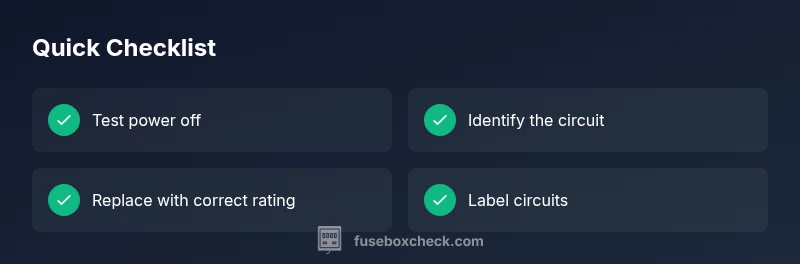
- Document and label: After restoration, label circuits and note any unusual findings. Good labeling helps you troubleshoot faster next time and reduces risk during future maintenance.
If these steps fail to resolve the issue or if you observe damage, heat, or burning, do not continue; call a licensed electrician. Complex issues inside the panel or deteriorating wiring require professional handling to ensure ongoing safety and code compliance.
Prevention and maintenance tips to avoid future trips
Preventive maintenance reduces the likelihood of future fuse trips and extends the life of your electrical system. Regular checks can catch issues early and keep your home safer. Start with organization and labeling: ensure every circuit is clearly labeled so you can quickly identify the source of a trip. Space out heavy loads across multiple circuits and avoid running several high-draw devices on a single outlet or extension cord. Schedule a professional panel inspection every few years, especially if your home is older or has undergone electrical renovations. Keep the panel area dry and clean, and replace aging fuses or breakers before they fail. Finally, use surge protectors for sensitive electronics and avoid overloading power strips—these practices help prevent nuisance trips and protect your wiring from heat buildup.
Steps
Estimated time: 30-45 minutes
- 1
Power down safely
Switch off the main breaker and, if accessible, the affected circuit. Put on safety glasses and insulated gloves. Confirm the panel is de-energized using a non-contact tester before proceeding.
Tip: Always assume a live panel until tested; mark yourself as cautious. - 2
Identify the affected circuit
Check the panel labeling to identify which circuit was active when the fuse tripped. If there is no clear label, note which devices were in use and isolate them one by one to locate the load on that circuit.
Tip: Take a photo of the panel labeling for future reference. - 3
Inspect the fuse and connections
With power off, open the panel and inspect the fuse and its holder. Look for a blown fuse, signs of corrosion, or loose terminals. Do not remove conductors beyond what is necessary to view the fuse.
Tip: If the fuse sits loosely, reseat it firmly; if damaged, replace with the exact rating. - 4
Replace and reseat
Replace a blown fuse with a new one of the same rating and type. If you have a breaker, you may reset or replace it according to the panel manufacturer’s instructions. Ensure the fuse or breaker is seated snugly and aligned correctly.
Tip: Use the correct fuse type and rating; never substitute a higher rating to avoid nuisance trips. - 5
Test the circuit
Close the panel, restore power at the main, then gradually restore power to the affected circuit. Observe whether the fuse or breaker trips again under a controlled load. If it trips, stop immediately and reassess.
Tip: Plug in one device at a time to monitor the circuit’s response. - 6
Know when to escalate
If the circuit continues to trip after fixes, or you notice heat, burning smell, or signs of damage, stop and call a licensed electrician. Do not attempt complex repairs yourself.
Tip: Keep emergency contact handy and do not delay professional help for safety reasons.
Diagnosis: Fuse disconnects or trips repeatedly on one circuit or panel
Possible Causes
- highOverload on the circuit due to heavy appliances or multiple devices
- mediumLoose or corroded fuse holder or terminal connections
- mediumFaulty or failing appliance on the circuit
- lowDamaged wiring or insulation in the circuit or panel
- lowShort circuit or ground fault in the wiring
Fixes
- easyTurn off power at the main breaker and test with a non-contact voltage tester before touching the panel
- easyUnplug loads on the affected circuit and redistribute to other circuits; then reset the fuse/breaker
- easyInspect the fuse or breaker and seating; replace with the correct rating if blown; ensure all connections are snug
- mediumIf the issue recurs or you notice heat, burning smell, or scorch marks, stop and call a licensed electrician
Your Questions Answered
Why does a fuse disconnect when a circuit is overloaded?
A fuse is a safety device. When current exceeds its rating, the fuse heats up and the element melts or trips, cutting power to the circuit to prevent wiring damage. Overloads are the most common reason for a disconnect.
Fuses trip on overload to protect the wiring; reduce the load or redistribute devices to fix it.
Is it safe to replace a blown fuse myself?
Only if the panel is de-energized and you use a fuse of the correct type and rating. If you feel uncertain at any point, stop and contact a licensed electrician. Working on a live panel can be dangerous.
Only replace fuses if you’re confident and power is off; otherwise call a pro.
What’s the difference between a fuse and a breaker?
A fuse is a one-time safety device that must be replaced after a fault. A breaker can be reset after tripping and is designed for longer-term use. Both protect circuits from overcurrent.
A fuse melts and must be replaced; a breaker can be reset after tripping.
When should I call a licensed electrician?
If multiple circuits trip, you notice burning smells, scorch marks, or the panel is old or damaged, call a licensed electrician. Do not continue attempting fixes that feel uncertain.
Call a licensed electrician if several circuits trip or you see damage.
Can moisture affect fuse box trips?
Yes. Water or moisture can cause short circuits or corrosion, increasing the risk of nuisance trips or electrical fires. Dry the area and seek professional inspection if moisture is present.
Water in a fuse box is dangerous; dry the area and call a pro.
What can I do to prevent future trips?
Distribute heavy loads across multiple circuits, upgrade aging panels when needed, and schedule regular electrical inspections. Keeping the panel area clean and dry also helps prevent trips.
Spread out heavy loads and get regular panel checks to prevent trips.
Watch Video
Highlights
- Pause and isolate power before inspection
- Use correct fuse ratings and verify seating
- Call a professional for persistent or severe issues
- Label circuits and maintain the panel for future trips