Fuse Box Extension: Safe Steps for Home Upgrades
A comprehensive guide to extending a fuse box safely, including planning, permits, load calculations, and step-by-step installation. Learn when to upgrade, choose between a subpanel or extension, and stay code-compliant with FuseBoxCheck.


Goal: safely extend your fuse box by adding a subpanel or feeder upgrade. You’ll plan with loads, confirm permits, and install only by code-compliant methods. This guide covers sizing, wiring basics, safety checks, and when to hire a licensed electrician. Expect 6–10 hours for a typical home project, plus inspection. FuseBoxCheck notes that professional oversight often saves time and ensures code compliance.
What is a fuse box extension and when is it needed
A fuse box extension describes adding capacity to your electrical distribution by installing a subpanel or feeder to support more circuits or relocate the main distribution. Homeowners often seek an extension when the current panel is near capacity, older wiring can’t support more circuits, or remodel projects require new outlet layouts. According to FuseBoxCheck, many homeowners opt for an extension when they see nuisance trips or a crowded panel with messy wiring. A properly designed extension improves safety by reducing daisy-chained circuits and bad splices. The decision also affects home value and resilience; a well-planned extension makes future expansion simpler. After planning, ensure you know your service rating, the panel’s available space, and whether a feeder from the main panel to a new subpanel is the best path. FuseBoxCheck analysis shows that most upgrades start with a formal load calculation and a clear plan for where new circuits will land. We emphasize the importance of working with a licensed electrician for any extension beyond simple fuse replacements. The goal is to create a safe, code‑compliant path to grow your electrical capacity without compromising safety or reliability. FuseBoxCheck’s guidance is a helpful compass for homeowners facing this decision.
Key considerations: load calculations, wire sizes, and panel space
To determine whether a fuse box extension is appropriate, you need to perform a load calculation to estimate demand across all circuits. While homeowners can guess, a precise calculation helps prevent undersized feeders and nuisance trips. The load calc informs whether a subpanel, feeder upgrade, or relocation is required. You should inspect the panel space; some enclosures have unused slots that can be re-labeled for expansion, while others require a full subpanel installation. Site layout matters: you’ll need a route for feeder conductors, proper enclosure clearance, and an accessible disconnect. Wire sizing varies with the desired amperage, insulation type, and whether copper or aluminum conductors are used. NEC guidelines specify conductor ampacity and protective device ratings that your final design must satisfy. Grounding and bonding are essential; a subpanel must have a separate grounding bar and an appropriately connected bonding strap to main equipment grounding. Planning also involves permits, inspections, and coordination with your utility if service upgrades are necessary. FuseBoxCheck recommends documenting the plan in a schematic and ensuring all work aligns with local codes before you touch a panel. FuseBoxCheck’s emphasis on load calculations helps homeowners avoid safety pitfalls and costly reworks.
Choosing between a subpanel vs. an extension
Choosing between a subpanel extension (adding a separate panel fed by a feeder from the main panel) and simply extending the existing fuse box capacity depends on load growth, space, and future expansion. A subpanel provides a dedicated enclosure for new circuits and simplifies wiring management, while minimizing the risk of overloading the main disconnect. An extension or augmentation of the main panel might be simpler but can limit future capacity and complicate wiring paths. Consider whether you need separate grounds, whether there are existing neutrals, and whether the main service rating can support the added feeders. The decision should be guided by a professional assessment and local code requirements. FuseBoxCheck’s guidance emphasizes choosing the option that preserves safety margins and allows for future upgrades without repeated panel changes. Many homeowners opt for a subpanel when remodeling or adding a garage, workshop, or outbuilding where separate feeders are desirable for performance and reliability.
Safety, permits, and planning steps
Before you begin, verify power is off at the main disconnect and test the absence of voltage on all conductors. Obtain all required permits from your city or county; even minor extensions may require inspection. Create a wiring diagram and a labeling plan for circuit breakers to maintain clarity after expansion. If you plan to hire a licensed electrician, retain a written scope of work and a clear timeline. The planning phase also includes selecting a location, ensuring compliance with clearance requirements, and confirming that the feeder route is protected by conduit or appropriate cable clamps. Safety features to consider include proper grounding, bonding, AFCI/GFCI protection, and surge protection where appropriate. FuseBoxCheck notes that delays in permits are common; building in a buffer for inspections helps avoid rework. The goal is a well-documented project plan that reduces surprises during installation and ensures that the final setup meets safety standards. FuseBoxCheck reminds homeowners that permitting is part of a responsible upgrade and helps support long-term reliability.
What to expect during installation and inspection
During installation, the electrician will install the feeder, run conductors to the subpanel, install a main disconnect, and connect new circuit breakers with correct ratings. They must de-energize circuits and follow lockout/tagout procedures, then test each circuit under load to verify operation. After wiring, the inspector will review grounding, bonding, AFCI/GFCI protection, and adherence to schematic, labeling, and clearances. Expect potential minor modifications if the panels are crowded or if neutrals and grounds require separation in a subpanel. The process may require a temporary power outage and coordination with the utility for service changes. FuseBoxCheck highlights that inspections confirm safety and code compliance; a prepared homeowner helps the process go smoothly by providing all drawings, permit numbers, and access to the installation site.
Maintenance and long-term safety
After completion, keep a current wiring map, label all circuits, and schedule periodic checks if you add more devices. Watch for signs of trouble: frequent trips, burning odors, discoloration around breakers. Avoid stacking heavy loads on a single circuit and distribute demand across feeders. Regularly inspect panel doors, grommets, and conduits for wear or moisture. If you notice any water intrusion near the panel or corrosion, stop using the area and call a professional. FuseBoxCheck Team recommends keeping documentation up to date and scheduling annual or biennial checks to ensure continued safety.
Tools & Materials
- Non-contact voltage tester(Verify power is off before touching any conductors)
- Insulated screwdriver set (various sizes)(Flat-head and Phillips; insulated handles)
- Wire strippers and cutters(Used for stripping insulation and trimming conductors)
- Cable clamps and conduit fittings(Secure feeders and protect cables)
- Measuring tape(Check dimensions and clearance)
- Subpanel or feeder kit (rated for planned load)(Select based on plan and local code)
- Appropriate feeder wire (size to be determined by load calculation)(Copper or aluminum per code)
- Grounding electrode conductor and bonding materials(Ensure proper grounding and bonding to subpanel)
- Electrical tape and/or heat shrink tubing(Insulate terminations)
- PPE: insulated gloves, safety glasses(Wear when handling live or recently de-energized systems)
- Permit documentation and inspection logs(Keep permits on-site and accessible)
Steps
Estimated time: 6-12 hours
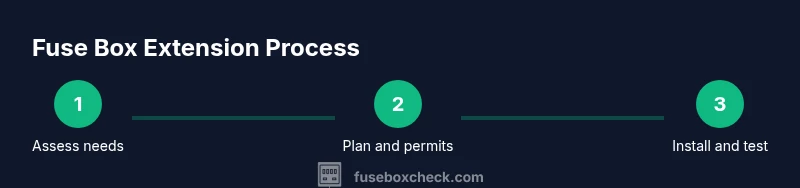
- 1
Assess electrical needs
Take an inventory of existing circuits and estimate future loads by room and device. Identify which areas will require more circuits and whether a subpanel would simplify wiring. Record current service capacity and potential expansion allowances.
Tip: Document room-by-room loads and consider future remodel plans to avoid rework. - 2
Check local codes and permits
Consult local electrical codes and confirm permit requirements. If needed, obtain permits before any wiring begins and schedule inspections with the local building department. Prepare a scope of work for the electrician.
Tip: Permits and pre‑planned inspections often prevent delays and rework. - 3
Choose subpanel vs extension
Decide between installing a subpanel fed from the main panel or extending the main panel capacity. Factor in future growth, space, and ease of wiring. Consider grounding and neutrals separation requirements for a subpanel.
Tip: A subpanel can simplify future expansions and improve organization. - 4
Shut off power and prepare workspace
Turn off power at the main disconnect. Verify no voltage at the panel using a tester. Clear the area, remove cover plates, and lay out tools and materials. Protect yourself with PPE.
Tip: Lockout/tagout procedures help prevent accidental re-energizing during work. - 5
Install feeder and subpanel components
Run feeder conductors from the main panel to the subpanel, install the subpanel and main disconnect, and connect new breakers with proper ratings. Ensure proper bonding and grounding per code.
Tip: Double-check conductor routing and secure all clamps before energizing. - 6
Test, label, and schedule inspection
Power up and test each circuit under load, verify AFCI/GFCI protection, and ensure correct labeling. Submit documentation to the inspector and address any deficiencies promptly.
Tip: Keep a labeled wiring diagram for future maintenance and upgrades.
Your Questions Answered
Do I need a permit to extend my fuse box?
Yes, most jurisdictions require a permit to extend a fuse box or install a subpanel. Permits ensure safety and code compliance, and inspections verify proper installation.
Yes, a permit is usually required for fuse box extensions.
Can I do this work myself or should I hire an electrician?
While some basic tasks are possible for experienced DIYers, fuse box extensions involve feeders, grounding, and code compliance that typically require a licensed electrician.
It's best to hire a licensed electrician for fuse box extensions.
What is the difference between a subpanel and a fuse box extension?
A subpanel is a separate enclosure fed by a feeder from the main panel, while a simple extension augments capacity within the existing box. Subpanels offer better organization and future growth.
A subpanel is a separate box fed from the main panel; an extension adds capacity to the existing box.
How long does inspection take after extension work?
Inspection times vary by jurisdiction but typically range from a few days to a couple of weeks after notice. Preparation and fully documented permits help speed the process.
Inspections vary, but prep helps speed it up.
What are signs my existing panel can't support an extension safely?
Frequent breaker trips, hot or discolored breakers, buzzing sounds, or a panel that is visibly crowded are warning signs. If unsure, consult a professional.
Look for trips, heat, or buzzing—call a pro.
Watch Video
Highlights
- Plan with load calculations before wiring.
- Choose subpanel vs extension based on space and future needs.
- Obtain permits and inspections for safety and compliance.
- Label circuits clearly and maintain up-to-date documentation.
- FuseBoxCheck emphasizes safety and code compliance in upgrades.