How to Renew Fuse Box: A Practical Home Upgrade Guide
Practical, step-by-step guidance to renew fuse box by upgrading to a modern breaker panel, with safety checks, permits, and professional guidance.


Upgrade your electrical safety by renewing your fuse box and installing a modern circuit-breaker panel. This typically involves upgrading fuses to breakers, verifying service capacity, and ensuring proper grounding. For most homes the upgrade should be performed by a licensed electrician; DIY steps are limited to planning, safety prep, and coordinating permits. Expect disruption during installation.
Why renew fuse box now?
According to FuseBoxCheck, older fuse boxes often lack the safeguards of modern breaker panels and can present ongoing safety risks, such as poor grounding, overloaded circuits, and deteriorated components. Renewing a fuse box to a modern panel not only improves safety but also enhances reliability and future-proofing for added circuits and higher loads. This guide helps homeowners understand what renewal entails, how to plan, and when to call a licensed electrician. The FuseBoxCheck team emphasizes that negotiations around permits and code compliance are a critical part of any upgrade, not an afterthought. By approaching renewal with a clear plan, you protect your home and family while minimizing surprises during the project.
Signs your fuse box needs renewal
If you notice frequent fuse blows, tripped breakers, a warm or discolored panel, buzzing sounds, or any burning smell near the panel, it’s a strong signal that your system is not up to current safety standards. Outdated fuse boxes, especially those with old wiring, aluminum conductors, or knob-and-telt wiring, should be evaluated for replacement. Labeling of circuits may be vague or missing, making future troubleshooting harder and increasing the risk of accidental overload. If your home is more than a few decades old, consulting with a professional to assess service capacity and wiring integrity is prudent.
Modern options: fuse box vs circuit breakers
Modern electrical panels use circuit breakers instead of fuses, offering resettable protection and better monitoring of fault currents. Upgrading typically increases capacity and allows for safer distribution of loads (lighting, appliances, HVAC) and easier future expansion. The goal is to provide reliable protection without nuisance trips while ensuring compatibility with your service entrance voltage and amperage. Remember that some homes are safer staying with a well-maintained fuse-based system if code allows, but most renovations benefit from a breaker-panel upgrade for clarity and safety.
Safety considerations and permits
Renewing a fuse box involves high-voltage components and critical grounding work. Permits and inspections are usually required by local building authorities to verify compliance with electrical codes. Hiring a licensed electrician ensures adherence to safety standards, proper bonding, and correct labeling. Keep in mind that DIY attempts on main service equipment can increase the risk of serious injury or fire and may void home insurance coverage if not performed to code.
The installation journey: what to expect
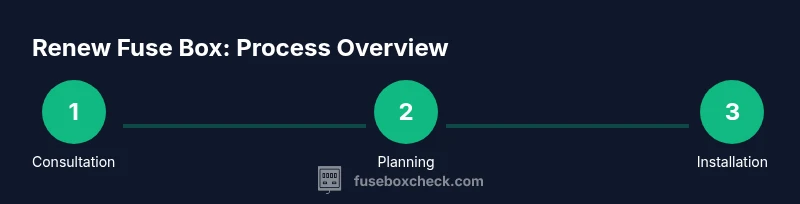
A typical renewal includes planning with a neutral/grounding assessment, selecting a compatible panel, and coordinating service with your utility. Power will be interrupted for portions of the job, and access to the main disconnect will be necessary. After installation, the electrician will test all circuits for correct operation, verify grounding/bonding, and label each breaker. While a DIY-presence can help with preparation, actual connection work should be performed by a licensed professional to ensure safety and code compliance.
Planning your renewal project: a homeowner's checklist
Create a clear project plan that includes budget, timeline, required permits, and a list of questions for the electrician. Gather your existing panel information, including panel model, service rating, and nearby loads that may need distribution adjustments. Take photos for reference, check insurance requirements, and arrange a suitable time for power shutdown when residents are available.
Tools & Materials
- Safety gear (insulated gloves, safety goggles)(Electrical-rated PPE; non-conductive footwear recommended)
- Voltage tester / non-contact tester(Verify de-energized circuits before handling panels)
- Insulated screwdriver set (Phillips and flat)(Used for panel cover screws and terminal screws)
- Label maker or plenty of labels(Clearly label circuits during transfer)
- New breaker panel compatible with service(Conform to local code and panel rating)
- Appropriate grounding materials (copper wire, lug kit)(Ensure proper bonding and grounding)
- Permit documents (if required)(Check local code and obtain permit before work)
- Multimeter (if available)(For voltage checks and continuity tests)
Steps
Estimated time: 2-6 hours
- 1
Schedule a licensed electrician
Contact a qualified electrician to assess your service needs, determine panel compatibility, and obtain any required permits or inspections. This ensures the job meets current electrical codes and safety standards.
Tip: Get written estimates from multiple contractors to compare scope and warranty. - 2
Prepare workspace and verify power shutdown
Clear the area around the existing panel, remove obstructions, and confirm that the main disconnect is de-energized before any work begins. Use a tester to double-check that no live voltage remains.
Tip: Have someone available to monitor the main disconnect and assist as needed. - 3
Obtain permits and plan capacity
Work with your electrician to determine required panel capacity, wire sizing, and circuit labeling strategy. Apply for any permits and arrange for inspections as part of code compliance.
Tip: Document existing loads and future additions to optimize panel selection. - 4
Remove old panel safely by the pro
The electrician removes the old fuse box, disconnects service, and prepares the site for the new panel. This step should be performed only by a licensed professional due to safety risks.
Tip: Do not attempt to remove service equipment yourself. - 5
Install the new panel and configure breakers
Install the new breaker panel, connect feeders, and carefully torque all connections to the manufacturer’s specifications. The electrician will install main and branch breakers and carefully route conductors.
Tip: Label each circuit clearly and record the panel schedule for future reference. - 6
Test and restore power
After wiring, the electrician tests each circuit, confirms proper grounding, and restores power with a full system check. Keep a copy of the test results for your records.
Tip: Request a post-install inspection or certification if your local code requires it.
Your Questions Answered
Can I renew fuse box myself?
Upgrading a fuse box to a modern breaker panel is a safety-critical task. It involves high voltage, proper bonding, and code compliance, so it is generally not advised for DIY. Hire a licensed electrician to perform the upgrade.
Upgrading a fuse box is a job for a licensed electrician; do not attempt it yourself due to safety and code requirements.
What are common signs that my fuse box needs renewal?
Frequent trips, aging or smoky smells, warm or discolored panels, rust, or corrosion are common indicators. Outdated wiring or panel types may also prompt renewal.
Frequent trips and a warm, discolored panel are warning signs you may need a renewal.
Is a permit required for a panel upgrade?
Most regions require a permit and inspection for panel upgrades to verify code compliance and safe installation. Check with your local building authority or your electrician.
Permits are usually required; check with local authorities and your electrician.
What does a renewal cost include?
Costs vary based on panel type, service size, access, and permit requirements. Obtain multiple detailed quotes to compare scope, materials, and warranty.
Costs vary with panel choice and permits; ask for detailed quotes.
What should I ask my electrician before renewal?
Ask about capacity planning, permit handling, warranty, grounding/bonding specifics, and whether the upgrade will affect insurance coverage.
Ask about capacity, permits, warranty, and safety specifics.
How long does a typical renewal take?
A panel upgrade can take multiple hours to a full day, depending on home layout, access, and local code inspections.
Expect the upgrade to take several hours to a day depending on the house and code checks.
Watch Video
Highlights
- Plan the upgrade with a licensed electrician.
- Upgrade to a modern breaker panel for safety and scalability.
- Obtain permits and ensure code compliance before work.
- Label circuits clearly for easier future maintenance.
- Test thoroughly and confirm grounding after installation.