Blow Fuse Troubleshooting Guide
Urgent, practical guide to diagnosing and safely fixing a blown fuse in your home fuse box. Learn quick checks, safety steps, and when to call a professional from FuseBoxCheck.


A blown fuse is usually caused by an overloaded circuit or short, and the quickest fix is to identify the affected circuit, unplug excess loads, and reset the correct fuse after ensuring safe conditions. If the fuse continues to blow, stop and seek professional help. Follow this step-by-step guide for safe diagnostics and action.
Understanding what it means to blow a fuse
When a fuse blows, it interrupts power to prevent wiring damage and fire risk. In a typical home panel, a single fuse protects a branch circuit. If you find your lights go out or a receptacle dies after using a high-wattage device, you may have blown a fuse. The term can apply to old-style fuses or modern fuse boxes with replaceable fuses. According to FuseBoxCheck Team, these events highlight the importance of safe electrical care and regular inspection to avoid repeated blows. A blown fuse is not a badge of failure; it’s a protective mechanism that has done its job. Recognize the symptoms early: flickering lights, a warm panel, or a tripped door switch.
Safety first: immediate steps when you suspect a blown fuse
Your first move should be safety-driven. If you can do so safely, switch off devices on the affected circuit and unplug them. Do not touch exposed metal parts inside a panel. Turn off the main breaker if you must, and keep a fire extinguisher rated for electrical fires nearby. Always assume live parts may be present and avoid water. FuseBoxCheck emphasizes staying calm and following a safety checklist before any investigation.
Common causes of a blown fuse and how to spot them
Overloads happen when multiple high-watt devices draw power on one circuit. A short occurs when hot and neutral wires touch or insulation breaks down. A faulty or mismatched fuse can also blow if it's worn or not rated for the circuit. Moisture in a socket or damaged cords can lead to arcing and a blown fuse. By understanding these causes, you can quickly narrow down the likely source and act accordingly.
How to inspect safely without live work
Begin by visually inspecting the panel for any signs of damage, burning smell, or melted plastic. Check the area around outlets for scorch marks or moisture. If you must handle a fuse, use the proper insulated tools and keep the area dry. Label circuits so you know which appliance belongs to which fuse, reducing trial-and-error. Remember, never bypass a fuse or limit safety tests to a single fix. FuseBoxCheck recommends a measured approach to avoid escalating risk.
Prevention and maintenance to reduce future fuse blows
Preventing blow fuses relies on good habits: distribute loads across circuits, replace worn cords, and avoid daisy-chaining extensions. Use plug-in surge protectors for sensitive electronics and organize home power use by scheduling high-wattage tasks during off-peak hours. Periodically inspect the panel for corrosion, loose connections, or signs of overheating. A small investment in maintenance now saves trips to the panel later.
When to call a professional and what to expect
If the fuse keeps blowing after you’ve redistributed loads and checked for obvious faults, or if you notice burning, buzzing sounds, or melted components, stop and call a licensed electrician. Professionals can perform in-depth testing with moisture meters and insulation resistance tests to identify hidden faults. The FuseBoxCheck Team notes that urgent electrical care is critical for safety and code compliance, particularly in older homes with outdated panels.
Steps
Estimated time: 30-60 minutes
- 1
Ensure safety and identify symptom
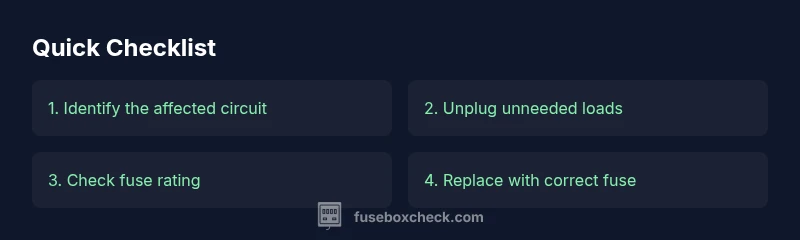
Turn off the affected circuit at the main breaker if safe to do so, then verify which devices lost power and note any burning smells or heat. Do not touch the exposed conductors in the panel. This step isolates risk before you proceed.
Tip: Keep a non-contact voltage tester on hand to confirm dead outlets. - 2
Power down and unplug devices on the circuit
Unplug or switch off all devices on the affected circuit to reduce load. Leave the main breaker off until you’re ready to test. This helps determine if an overload caused the fuse to blow.
Tip: Label the circuit in your panel for future reference. - 3
Check the fuse rating and replace if needed
If you have replaceable fuses, inspect the fuse for any signs of damage and replace with a fuse of the correct rating for that circuit. Do not replace with a higher rating to cover a fault.
Tip: Use the manufacturer’s rated fuse and keep spare fuses of the same type. - 4
Reset the circuit and test gradually
With the panel cover closed, switch the main breaker back on and selectively reintroduce loads one at a time to see if any trigger a blow again. If it holds, gradually reintroduce devices while monitoring heat.
Tip: If the fuse trips again, stop and call a professional. - 5
When in doubt, seek professional help
Persistent blows indicate deeper electrical faults that require licensed electricians with diagnostic tools. Do not attempt in-depth testing beyond basic checks.
Tip: Document symptoms and load patterns for the electrician.
Diagnosis: Frequent fuse blows or a panel trips after plugging in a device
Possible Causes
- highOverloaded circuit from excessive load on a single fuse
- highShort circuit from damaged wiring or a faulty appliance
- mediumFaulty fuse or improper rating
- lowMoisture intrusion or damp conditions in sockets
Fixes
- easyDistribute load; unplug unneeded devices on the affected circuit
- easyInspect and remove suspected faulty appliance; check cords and plugs
- mediumReplace fuse with correct rating and inspect panel for signs of damage
- easyAddress moisture or water intrusion; dry area and fix leaks before testing again
Your Questions Answered
What does it mean when a fuse blows in my home?
A blown fuse usually signals an overload or short circuit on that branch. It’s a protective measure to prevent wiring damage. Investigate the affected circuit and loads before resetting, and never bypass safety devices.
A blown fuse means the circuit protected by that fuse is overloaded or has a short. Check the loads and safety devices, then reset if safe.
Is it safe to reset a blown fuse after removing loads?
Only reset if you’ve identified and removed the cause of the overload or fault. If the fuse trips again, stop and call a professional. Do not operate a panel with exposed conductors.
Reset only after removing the overload; if it trips again, call a pro.
Can a faulty appliance cause repeated fuse blows?
Yes. A damaged appliance can draw excess current or short internally, blowing the fuse repeatedly. Test by unplugging suspect devices and observing whether the fuse still trips.
A faulty appliance can cause repeated blows; unplug devices to test.
When should I contact a licensed electrician?
Call a licensed electrician if fuse blows persist after basic checks, if you smell burning, or see smoke or melted components. Electrical work can be dangerous and may require code-compliant fixes.
If blows continue or you smell burning, call an electrician.
What’s the difference between fuses and circuit breakers?
Fuses contain a metal link that melts when overheated, breaking the circuit. Breakers trip automatically by sensing excess current and can be reset. Both protect wiring, but breakers are reusable and more common in modern panels.
Fuses burn out; breakers trip and can be reset. Both protect the wiring.
Watch Video
Highlights
- Distribute electrical load to prevent overloads.
- Never bypass fuses or safety equipment.
- Use correct fuse rating and inspect for wear.
- Document circuits to simplify maintenance.
- Call a licensed electrician if problems persist.