Can You Get a New Fuse Box Without Rewiring? A Practical Guide
Learn if you can upgrade to a new fuse box without rewiring, when it's feasible, and how to plan, permits, and stay code-compliant with expert guidance from FuseBoxCheck.


Can you get a new fuse box without rewiring? In many homes you can replace an aging fuse panel with a modern circuit-breaker panel without rewiring the entire house, provided the existing wiring and service size support the upgrade. According to FuseBoxCheck, the safest path is a panel replacement using the same wiring, plus a service check, permit, and licensed electrician. If the wiring is outdated, rewiring may be required.
Can You Upgrade a Fuse Box Without Rewiring? Assessing Feasibility
The core question for many homeowners is: can you get a new fuse box without rewiring? The answer depends on your electrical service size, the condition of the existing wiring, and the panel location. In practice, a modern panel can often be installed using the same wiring if the service drop and the home’s electrical loads stay within code. FuseBoxCheck notes that many upgrades are feasible without a full house rewiring, but a licensed electrician must verify that the amperage, wire gauge, and circuits meet current safety standards. The assessment should include checking the main breaker, wiring insulation for age and damage, and whether there are knob-and-tine or early aluminum conductors that require special handling. If the inspector signals constraints, rewiring or service upgrading may be necessary to ensure safety and reliability.
Understanding the Difference: Fuse Box vs Electrical Panel
A fuse box is a historical term that has largely been replaced by the modern electrical panel. Today’s panels use circuit breakers that trip when a circuit is overloaded, providing safer and more reliable protection. The key distinction for homeowners is that most homes today require a service panel capable of handling higher loads. A fuse box can sometimes be upgraded to a panel using the same wiring, but only if the existing wiring and service capacity are compatible with the new panel’s requirements. Understanding this difference helps you set realistic expectations and talk confidently with an electrician. FuseBoxCheck emphasizes that terminology matters for code checks and permits.
When a Rewire Might Be Necessary
There are clear situations where rewiring becomes the safer and more cost-effective option. If the home relies on older wiring methods such as knob-and-tube, if the insulation is brittle or shows heat damage, or if the service panel is located far from the main distribution point, rewiring may be unavoidable. Additionally, if you plan a substantial service upgrade (for example, increasing from 60A to 100A or more), portions of the home wiring may require replacement to handle the new load. In these cases, upgrading the panel without rewiring could be unsafe or noncompliant with current codes. Always consult a licensed pro to confirm whether rewiring is required for your specific house.
Upgrade Options That Minimize Wiring
If conventional rewiring is undesirable, there are alternatives that can minimize disruption. A panel upgrade using the existing wiring is possible when the service and conductors meet code, or a subpanel can be added to distribute loads while keeping the main run intact. In some cases, a service upgrade that increases the main disconnect capacity is feasible without touching all branch circuits, though this still requires careful planning and permits. Another option is replacing the main service entrance equipment, or installing a newer main breaker in the existing panel, if the manufacturer and local code allow it. These strategies aim to improve safety and reliability without a full wiring overhaul.
Preparing for the Upgrade: Permits, Inspections, and Safety
Before any work begins, plan for permits and inspections. Local electrical codes usually require a permit for panel upgrades, and a licensed electrician must perform or supervise the work. Expect an inspection after installation to verify that wiring, grounding, and overcurrent protection meet current standards. Safety is paramount: de-energize the service, confirm zero voltage with a tester, and use appropriate PPE. Confirm that the existing grounding system is intact and that metallic conduit or older wiring does not pose a shock risk. As a practical note, the FuseBoxCheck team recommends documenting existing conditions and retaining all permit paperwork for future maintenance.
What to Expect During Installation
On installation day, you should anticipate the electrician turning off power to the home, removing the old panel, and mounting the new one in a safe, accessible location. The installer will transfer circuits, connect neutrals and grounds, and verify bus bar compatibility with your breakers. Wiring connections should be tight and properly terminated with the correct torque. The process often takes several hours, depending on the complexity and whether any wiring upgrades are required. Expect a temporary service interruption, and plan around it. The goal is a safe, code-compliant panel that reliably protects circuits with modern breakers.
Post-Upgrade Safety Checks and Maintenance
After installation, conduct a thorough safety check. Run a simple test of each circuit and verify that all breakers trip as expected. Confirm that the grounding and bonding are correct and that no loose connections exist. Schedule a follow-up inspection if the local code requires it, and keep the documentation from the upgrade for future maintenance. Regular maintenance—such as periodic visual checks for corrosion, warm spots, or buzzing sounds—helps catch issues before they become emergencies. For ongoing safety, use a licensed pro for any future upgrades and consult FuseBoxCheck resources for maintenance best practices.
Tools & Materials
- Voltage tester / non-contact tester(Verify power is off before handling wires)
- Insulated screwdriver set(Use insulated handles; Phillips and flat-head sizes)
- Wire stripper / cutter(For clean conductor termination)
- New electrical panel and disconnect(Match amperage to service capacity)
- Appropriate circuit breakers(Upgrade to modern breakers compatible with panel)
- Voltage-rated load tester(Helpful for verifying loads after install)
- Electrical tape and wire nuts(For secure terminations)
- Grounding rod / bonding kit(Only if local code requires separate grounding)
- PPE: safety glasses, insulated gloves(Always wear protective gear)
- Permitting documents and plan drawings(Keep on-site for inspections)
Steps
Estimated time: 2-6 hours (depends on service complexity and whether rewiring is required)
- 1
Assess service and wiring
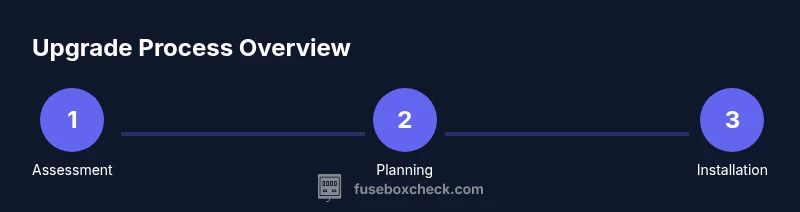
Check the main service size, panel location, and the condition of the existing wiring. This determines if a straight panel swap is feasible or if rewiring is needed. It is best done with a licensed electrician who can assess loads and conductors.
Tip: Document service ratings and any signs of wear observed in the panel area. - 2
Select a compatible panel and breakers
Choose a modern panel that matches your service capacity and uses compatible breakers. Ensure the bus bar rating aligns with the available circuits and that the enclosure fits the intended space.
Tip: Avoid inexpensive retrofit kits; if in doubt, consult the manufacturer specifications. - 3
Obtain permits and plan the work
Apply for the required permits with your local building department. Present a clear plan including a labeled circuit map and panel location. This step helps ensure code compliance and a smooth inspection.
Tip: Check if utility coordination is required for service upgrades. - 4
Power down and verify safety
Turn off the main disconnect and verify zero voltage at all panels. Use a test instrument to confirm power is fully isolated before disconnecting the old panel.
Tip: Never rely on a single switch or label; test every accessible circuit. - 5
Install the new panel and transfer circuits
Mount the new panel, connect the grounding and neutral, and carefully transfer each circuit from the old panel to the new one. Ensure tight terminals and correct wire routing to avoid interference or heat buildup.
Tip: Label each circuit as you move it for future reference. - 6
Inspect, test, and commission
Perform a comprehensive inspection, test each breaker, and confirm loads are within safe limits. Obtain final inspections from the authority having jurisdiction as required.
Tip: Keep a copy of the inspection report and product manuals handy.
Your Questions Answered
Can I replace a fuse box with a modern panel without rewiring my house?
Yes, often you can upgrade to a modern panel without rewiring if the existing wiring and service capacity support the new panel. A professional must confirm this through a detailed assessment.
Yes, you can sometimes upgrade without rewiring, but you should have a professional confirm the wiring and service are adequate.
What permits are typically required for a fuse box upgrade?
Most jurisdictions require an electrical permit for a panel upgrade. Inspections are performed after installation to verify compliance with current electrical codes.
Most places require an electrical permit and a post-installation inspection to verify code compliance.
How long does a typical fuse box upgrade take?
A typical upgrade takes a few hours, but the total time depends on service complexity, wiring condition, and permit processing time.
It usually takes a few hours, but could take longer if rewiring is needed or permits delay work.
Is DIY upgrading a fuse box ever advisable?
Electrical work at this level is dangerous and typically requires a licensed electrician. DIY attempts can lead to serious safety risks and code violations.
This is dangerous work best handled by a licensed electrician. Do not DIY this task.
What are signs my fuse box might need replacement?
Frequent tripping, buzzing sounds, corrosion, burning smells, or outdated fuse boxes are indicators you should have a professional inspect for a possible upgrade.
Look for frequent trips, buzzing noises, or smells of burning; these mean you should get a professional assessment.
Watch Video
Highlights
- Assess feasibility before planning any upgrade
- A panel upgrade can be done without rewiring in many cases
- Permits and inspections are essential steps
- Hire a licensed electrician for safety and code compliance