Can You Put a New Fuse Box on Old Wiring? A Safe Upgrade Guide
Learn when a modern fuse box can replace old wiring, what safety steps are required, and how to plan an upgrade with permits and professional help from FuseBoxCheck.


Upgrading a fuse box on old wiring is possible only if the service and conductors meet current code limits. In many cases, you’ll need panel replacement or rewiring, a permit, and a licensed electrician. According to FuseBoxCheck, verify service amperage, wire size, and panel enclosure compatibility before proceeding for safety.
Can You Put a New Fuse Box on Old Wiring? Key Truths
The short answer: it's sometimes possible, but only if the old wiring, service capacity, and local codes permit it. A newer panel still needs adequate amperage and appropriate wiring to that panel. In many homes with 60- or 100-amp services, a simple swap to a modern fuse box is not feasible without upgrading the service conductors. The FuseBoxCheck team emphasizes that you must verify the service size, conductor gauge, and the enclosure’s compatibility with modern disconnects before any purchase. If any of these elements fall short, the safer path is a full panel replacement or a rewiring plan that brings the house up to current NEC requirements. The key point: upgrading is not a way to bypass old wiring limits. It is a safety- and code-driven decision that, in some cases, requires bypassing the old fuse box altogether in favor of a modern breaker panel tied to upgraded service.
This overview helps you understand the conditional possibilities and guides your next steps toward a compliant outcome. Remember: never rely on appearances or anecdotes; consult a licensed electrician to perform the load calculation and verify grounding, bonding, and surge protection requirements are met.
When It Works: Conditions for a Safe Upgrade
Upgrading a fuse box on old wiring can work under specific conditions. First, the service size must be adequate for the planned load; many modern homes require at least a 100- to 200-amp service. Second, the branch conductors feeding the panel should be sized to carry the anticipated load with an appropriate margin. Third, the existing panel enclosure must be compatible with a modern disconnect and adhere to current safety standards. If any of these criteria fail, upgrading the panel without broader changes is unlikely to be a safe or code-compliant path. In such cases, a service upgrade or full rewiring may be the safer option. FuseBoxCheck recommends conducting a precise load calculation and confirming grounding and bonding are designed for the new configuration. If your home uses aluminum conductors, or if there are signs of aging insulation, more extensive work may be required. Finally, ensure there is clear access to the panel and that all work complies with local amendments to national electrical code.
Risks and Why DIY Is Not Recommended
Working on an old electrical system carries significant hazards. Old wiring can hide insulation breakdown, corroded terminals, or undersized feeders that can overheat under modern loads. Replacing a fuse box without addressing underlying wiring or service limitations can create hidden failures, shocks, or fire risks. Even tasks that feel straightforward—disconnecting power, routing new feeders, or mounting a panel—can require precise torque on lugs, proper bonding to the grounding system, and correct conduit or cable routing to avoid moisture or physical damage. Professional electricians bring load calculations, code familiarity, and insurance coverage to the job, reducing your risk and ensuring the upgrade stands up to inspections. FuseBoxCheck consistently notes that skipping essential steps or underestimating the complexity of service upgrades often leads to costly rework and safety hazards. If you’re unsure about any step, pause and call an expert.
Permits, Codes, and Professional Help
Permits are a critical part of any major electrical upgrade. Local building departments determine which upgrades require permits, inspections, and approved schematics. Expect a formal inspection process that verifies grounding, bonding, conductor sizing, and the integrity of the service entrance. A licensed electrician should perform the calculation, select an appropriately rated panel, and install the new wiring and panel components. In addition to safety, this path improves insurance coverage and compliance with NEC rules, which evolve over time. The process typically includes submitting plans, scheduling inspections, and ensuring that any work in feasible proximity to water lines or living spaces adheres to code requirements. If your area allows, discuss energy efficiency and surge protection upgrades during planning to future-proof the installation.
How to Choose a Panel and Wiring Path
Selecting the right panel involves matching the service rating to the expected load, ensuring enough spaces for circuits, and confirming compatibility with current disconnect types. A panel designed for 100- to 200-amp service may be required, and the enclosure must accommodate the planned plan for grounding and bonding. The routing of feeders matters: keep feeders clear of moisture, heat sources, and potential physical damage; separate neutrals and grounds where code requires; and plan cable routes that minimize bending radius and stress on terminations. If you’re replacing an older fuse box with a breaker panel, ensure the new panel’s bus bar design is compatible with the breakers you intend to install. Finally, consider future needs like EV charging or additional circuits and ensure there is room for expansion.
Planning the Upgrade: Permits, Scheduling, and Testing
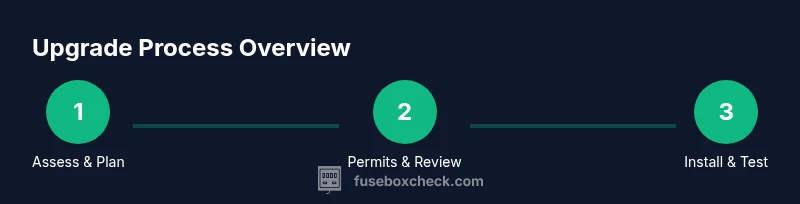
A comprehensive upgrade requires careful planning beyond the moment of installation. Schedule an assessment with a licensed electrician to confirm the existing service can support the upgrade, identify any rewiring needs, and obtain the necessary permits. The planning phase should include a clear scope of work, an expected sequence of tasks, and a pre-inspection checklist. This helps prevent unexpected delays and ensures the inspector can verify all safety requirements after completion. After installation, the electrician will perform a series of tests to confirm proper grounding, bonding, and operation under load. Label circuits and document the changes for future maintenance. Safety should be your primary concern at every step.
Cost, Timelines, and Long-Term Maintenance
Costs for upgrading a fuse box in an older home vary widely based on service size, wiring condition, and local labor rates. Factors that influence cost include whether a full rewiring is required, the amount of labor to reroute conductors, and the complexity of the panel installation. While it’s tempting to pin a price on the job, the safest approach is to obtain multiple written estimates after a professional assessment. Likewise, timelines depend on the scope of work and permitting processes; some upgrades can be completed in a single day for straightforward cases, while others may span days or weeks if re-routing or trenching is required. Once completed, schedule routine maintenance to monitor heat, connections, and signs of wear.
Maintenance and Future-Proofing
The upgrade not only addresses current needs but also sets you up for the next decade of home reliability. Plan for periodic inspections and arc-fault or ground-fault protection where appropriate. Labeling circuits, documenting changes, and maintaining clean, dry panel space will help ensure safe operation over time. Consider adding surge protection and evaluating dual-function devices to minimize future changes. Finally, keep a maintenance log and schedule annual checks on the service entrance to catch issues early. A well-planned upgrade reduces future work and helps protect your home against electrical hazards.
Quick Reference: What to Do Next
- Confirm if your local code requires permits for the upgrade.
- Have a licensed electrician perform a load calculation and a safety assessment.
- Ensure the new panel is appropriately rated and has enough circuit spaces.
- Plan wiring routes that comply with NEC guidelines and local amendments.
- Schedule inspections to close the permit and verify compliance.
Tools & Materials
- Non-contact voltage tester(Essential for verifying live circuits before handling any panel.)
- Digital multimeter(Use to verify voltage and load on service conductors.)
- Insulated screwdriver set (Phillips and flat)(Insulated for safety at panel work.)
- Wire strippers and cutters(For trimming and prepping new conductors per code.)
- UL-listed cable connectors and electrical tape(Secure splices and provide insulation where needed.)
- PPE: safety glasses, gloves, long sleeves(Protect against shocks, arcs, and debris.)
- Flashlight or headlamp(Better visibility inside the panel and work areas.)
- Measuring tape and marker(Plan and document routing and clearances.)
Steps
Estimated time: 4-8 hours
- 1
Verify power is off at the main disconnect
Locate the main service panel and switch off the main disconnect. Use a non-contact tester to confirm no voltage on feeds. Confirm all subpanels are de-energized before touching any conductors.
Tip: Double-check with two testers or a second method to avoid surprise re-energization. - 2
Inspect the existing service rating and wiring gauge
Open the panel and identify the main breaker rating. Determine the feed conductor size and material. Look for signs of aging, corrosion, or damage that would affect a safe upgrade.
Tip: Note aluminum wiring; it often requires special connectors and anti-oxidant compound. - 3
Check local code requirements and permits
Contact your local building department to learn permit requirements and inspection steps. Gather code references and confirm what drawings or schematics are needed for approval.
Tip: Document your plan before submitting permits to minimize delays. - 4
Decide between upgrade of service or full rewiring
Based on assessment, choose whether to upgrade the panel and service, or to rewire portions for safety and capacity. Consider long-term needs like EV charging or high-demand appliances.
Tip: If in doubt, prioritize safety and code compliance over speed. - 5
Select a panel that matches service capacity
Choose a panel rated for the existing service and intended load, with space for circuits and proper disconnect type. Ensure compatibility with your main breaker and grounding system.
Tip: Avoid panels with insufficient spaces or mismatched breakers. - 6
Run feeders or reroute wiring as needed
Install or re-route feeders from the service to the new panel, keeping conductors in protected channels and away from heat sources. Size conductors correctly and maintain separation of neutrals and grounds where required.
Tip: Label each conductor and keep a clean, accessible route. - 7
Mount, connect, and bond the panel
Mount the new panel, connect main lugs, bond the grounding electrode conductor, and connect branch circuits. Verify all lugs are tight to manufacturer torque specs.
Tip: Do not rush connections—loose lugs are a common failure point. - 8
Restore power and perform safety tests
Turn on power gradually and test each circuit for proper operation. Check for abnormal heat, arcing, or unusual noises. Schedule a formal inspection after testing.
Tip: Have a helper ready to shut off power if something goes wrong.
Your Questions Answered
Is it legal to replace only the fuse box without rewiring the entire home?
Legality depends on local codes and the home's service. In many cases, a fuse box replacement must occur with upgrades or rewiring to meet current NEC standards. Always verify permit requirements and inspections with your local authority.
In many places, you may need more than a simple fuse-box replacement; permits and code-compliant upgrades are often required.
What are the signs that indicate I should not upgrade without rewiring?
Signs include frequent breaker trips, heat or burning smells near panels, outdated wiring insulation, or aluminum conductors. These indicate potential safety risks and the need for a comprehensive assessment.
Frequent trips or smells near the panel suggest you should stop and consult a pro for a full assessment.
Can I do the upgrade myself to save money?
Electrical panel upgrades involve high-risk work that can cause shock or fire. Most jurisdictions require licensed electricians for this work, and DIY is not recommended.
This is one job best left to a licensed electrician for safety and code compliance.
How long does a typical upgrade take?
Timelines vary by complexity, permitting, and rewiring needs. A straightforward panel swap with no rewiring can be relatively quick, while service upgrades or rewiringExtension work can take longer.
Times vary; it could be a single day or extend over several days depending on scope.
What permits are typically required for this upgrade?
Most areas require electrical permits and a post-installation inspection. Your electrician can handle the permit application and coordinate with the local inspector.
Permits and a final inspection are usually required by the local building department.
What maintenance helps keep the new panel safe?
Schedule regular inspections, keep the panel area dry and free of dust, label circuits, and update safety devices as needed.
Regular checks and labeling keep the system safe and easy to manage.
Watch Video
Highlights
- Assess safety first before any upgrade.
- Upgrading on old wiring requires code-compliant planning.
- Permits and professional evaluation protect you and your home.
- Choose a panel that matches service capacity and future needs.
- Label circuits and document changes for future maintenance.