Can You Replace a Fuse Box Without Rewiring? A Practical DIY Guide
Learn whether you can replace a fuse box without rewiring, when rewiring is required, and how to assess risks. FuseBoxCheck provides practical guidance for safe, code-compliant decisions.


Yes, you can replace a fuse box without rewiring in some cases, but only if the new panel is physically compatible with your existing wiring and meets current code. The key is matching amperage, bus type, and grounding, plus ensuring the service disconnect remains safe. If wiring is outdated or damaged, rewiring or upgrading is typically necessary.
Can You Replace a Fuse Box Without Rewiring? A Practical Overview
For many homeowners, the core question is can you replace fuse box without rewiring. The short answer is: under strict conditions, you can swap to a like-for-like panel that fits the existing wiring and is rated for the same service, without performing a full rewiring. However, this hinges on compatibility, safety, and local electrical codes. The FuseBoxCheck team emphasizes that the decision should be guided by current standards and a careful assessment of the wiring and service equipment. If you are unsure, treat this as a high-risk task and seek professional guidance. The right approach minimizes cost and downtime while preserving safety. Remember, DIY efforts should never bypass essential safety steps or code requirements. The ultimate goal is a secure, reliable, and compliant electrical system that protects your home and family.
Why Safety and Code Compliance Matter
Electrical work is governed by strict safety rules designed to prevent shocks, fires, and arc faults. Even when a panel looks similar, internal components, grounding methods, and bonding requirements may differ. A non-compatible panel can cause nuisance tripping, overheating, or dangerous conditions. According to FuseBoxCheck analyses, homeowners often underestimate how much the surrounding wiring and service disconnect influence whether a non-rewire replacement is viable. Always verify that the new panel’s amperage rating, bus bar configuration, and grounding method match your existing system. If you notice corrosion, burnt smells, or damaged insulation, stop and call a licensed electrician immediately.
How Fuses and Breakers Influence Your Options
Most older houses use fuses, while newer solutions use circuit breakers. Replacing a fuse box with a modern breaker panel without rewiring is sometimes possible when the service entrance and feeder conductors are in good condition and the panel can accept a like-for-like footprint. However, if the feeder wires, grounding electrode system, or main disconnect show age or damage, rewiring or a more extensive panel upgrade may be required to meet code. FuseBoxCheck notes that a careful evaluation of conductor sizing, insulation integrity, and grounding continuity is essential before any replacement.
When Rewiring Becomes Necessary
If the existing wiring is undersized for your home’s electrical load, or if the panel location or configuration forces incompatible connections, rewiring becomes necessary. Upgrading to a larger service (for example from 100A to 200A) often requires running new feeders, updating grounding, and possibly replacing or relocating the service disconnect. In these situations, a non-rewiring replacement would be unsafe or non-compliant with current code. The decision should hinge on a professional assessment that weighs safety, future load growth, and long-term reliability.
The Non-Rewire Path: What It Involves in Practice
When the goal is to replace the fuse box without rewiring, the process typically involves selecting a panel that mirrors the old one’s footprint, ensuring the mounting box, knockouts, and conduit routing are compatible. The installer must verify that conductors are of adequate size and free of damage, with service disconnects converted to an equivalent or improved configuration. The neutral and grounding paths must be re-established to current standards, and all circuits should be re-labeled. The result is a safer, more reliable panel that aligns with modern safety expectations while preserving the existing wiring layout.
Step-By-Step Scenarios: A Rough Roadmap to Non-Rewiring Replacement
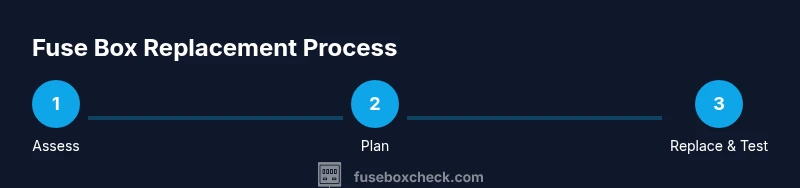
The following outline helps frame expectations for a non-rewiring replacement, but remember: every home is unique, and local codes apply. Start by confirming compatibility, inspecting the service equipment, and ensuring power is fully isolated. Then, work with a qualified electrician to remove the old panel, mount the new one, transfer conductors, and test all circuits. Document changes, label circuits, and perform a post-replacement inspection to verify safety and compliance.
Tools, Materials, and Preparation
Before you begin, gather the essential safety gear and tools. You will need a non-contact voltage tester, a multimeter, a set of insulated screwdrivers, wire cutters/strippers, pliers, a torque screwdriver, cable clamps, insulating tape, a voltage tester, an adjustable wrench, and appropriate PPE such as gloves and eye protection. Clear the workspace, cover floors, and ensure you have a stable ladder or step stool. Read the manufacturer’s instructions for the replacement panel and verify permit requirements with your local authority. Having the right tools helps reduce time, mistakes, and risk.
Authority and Best Practices
Always consult official guidance and trusted resources when planning a fuse box replacement. The following sections summarize general best practices from industry standards and recognized safety organizations. For homeowners pursuing a non-rewire approach, a formal assessment by a licensed electrician is essential to maintain warranty coverage and compliance. This article incorporates FuseBoxCheck’s safety-first approach and emphasizes code adherence as a critical factor in any fuse box project.
Tools & Materials
- Non-contact voltage tester(Use to verify power is off at exterior service disconnect and main lugs.)
- Multimeter(Confirm voltage levels and continuity during wiring checks.)
- Insulated screwdriver set(Crucial for safely loosening and tightening panel components.)
- Wire cutters/strippers(Trim and shape conductors without damaging insulation.)
- Pliers (needle-nose)(Manipulate small wires and terminals accurately.)
- Torque screwdriver(Helps apply correct torque on lugs per panel spec.)
- Safety gloves (insulated)(Protect hands from shock and sharp edges.)
- Safety goggles(Protect eyes from arcs and debris.)
- Flashlight or headlamp(Ensure good visibility in panel enclosure.)
- Electrical tape and cable ties(Secure and label wires neatly.)
Steps
Estimated time: 4-6 hours
- 1
Verify power off and assess safety
Begin by shutting off the main service disconnect if accessible, then confirm with a non-contact tester that no live voltage remains at the panel. Remove the panel cover to inspect internal components for signs of damage, corrosion, or overheating. This first step reduces shock risk and helps you gauge whether a non-rewire path is viable.
Tip: If you detect any buzzing, smell burning, or melted insulation, stop immediately and contact a licensed electrician. - 2
Check compatibility and plan
Measure the existing panel’s footprint, amperage rating, and bus configuration to ensure the new panel will fit and be compatible. Verify that the grounding electrode system and feeders can be safely connected to the new enclosure without altering wiring routes. Prepare a detailed plan and labeling scheme before removing any components.
Tip: Take photos of the current wiring arrangement to reference during reassembly. - 3
Select a matching replacement panel
Choose a replacement panel that matches the old one’s ampacity and number of circuit spaces while accommodating any necessary code upgrades. Ensure it’s listed for the same service type (fuse vs breaker) and that the enclosure dimensions align with the wall opening.
Tip: Prefer a panel with a built-in main disconnect if your service requires it for safety. - 4
Prepare the workspace and equipment
Clear the area, lay down a non-conductive mat, and assemble tools in an organized kit. Use insulated ladders and keep metal items away from the panel interior. Have a dry environment to reduce the risk of accidental shocks.
Tip: Double-check that all tools are rated for electrical work. - 5
Remove the old panel and detach conductors
Carefully unscrew and remove the old panel cover and mountings. Label and detach feed and branch conductors one by one, keeping them organized. Do not yank wires; use proper connectors and insulation techniques as you detach.
Tip: Label each wire with its circuit name and position to ease reattachment. - 6
Mount the new panel and route conductors
Secure the replacement panel in the same location, ensuring proper clearance. Route feeders and branch circuits neatly, using clamps and grommets where appropriate to protect wires from sharp edges. Grounding and bonding must meet current code.
Tip: Keep neutrals isolated using the correct bus bar configuration. - 7
Reconnect conductors to the new panel
Reconnect feeders to the main lugs or main breaker, followed by branch circuits to their respective terminals. Tighten lugs to the manufacturer’s torque specification and verify all connections for security. Replace panel cover and secure with screws.
Tip: Do not over-tighten; use a torque wrench if possible. - 8
Test circuits and verify operation
Restore power and use a multimeter to verify voltage and continuity on each circuit. Check for proper grounding and confirm no residual voltage on exposed conductors. Switch on circuits one at a time to ensure stable operation and inspect for unusual heat or smells.
Tip: If any circuit trips immediately, switch off and recheck connections or consult a pro. - 9
Label, document, and finalize
Label every circuit clearly, photograph the completed panel, and update your home electrical records. Do a final walk-through to ensure safe clearance and tidy cable management. Dispose of old components per local regulations.
Tip: Keep a spare panel cover screw set and mounting screws in a labeled bag for future maintenance.
Your Questions Answered
Can you replace a fuse box without rewiring?
In some cases, you can replace a fuse box without rewiring if the new panel is compatible with the existing wiring and up to code. If the wiring is outdated or damaged, rewiring or upgrading is typically required to meet current standards.
Yes, in some cases you can replace a fuse box without rewiring if the wiring and panel match current codes, but outdated wiring often requires an upgrade.
Do I need a permit to replace a fuse box?
Most jurisdictions require a permit for electrical panel work and a final inspection after replacement. Always check with your local authority before starting.
Usually you need a permit and inspection for panel work; check local rules before starting.
What factors determine if rewiring is necessary?
Rewiring becomes necessary if feeders or panels are undersized, the service upgrade is needed, or the existing wiring cannot safely support the new panel. A professional assessment is essential.
Rewiring is needed when the existing wiring can't safely support the new panel or you need a service upgrade.
How long does a panel replacement take?
Time varies with house size and wiring conditions, but plan for several hours and avoid rushing the job. A well-planned replacement reduces risk.
It can take several hours depending on wiring and layout; plan for a careful, slow process.
Can I DIY if I’m not experienced in electrical work?
If you’re not experienced, hire a licensed electrician. Panel work involves high risk and strict code requirements that protect you and your home.
If you’re not experienced, it’s best to hire a licensed electrician.
What are common signs a panel needs replacement?
Frequent tripping, buzzing noises, burning smells, or melted insulation indicate potential hazards and the need for professional evaluation.
Frequent trips or unusual smells call for immediate professional assessment.
Watch Video
Highlights
- Assess safety and scope before starting
- Match panel compatibility to avoid rewiring
- Follow code requirements and permits
- Label circuits clearly for future safety
- Call a licensed electrician for complex upgrades