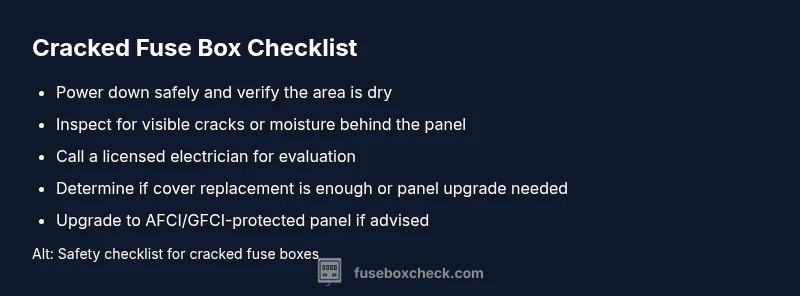
Cracked Fuse Box: Urgent Troubleshooting and Safe Fix
Spot a cracked fuse box, assess the risks, and follow a safe, step-by-step guide for diagnosis and repair. Learn when to call a pro and how to prevent future issues.


Most often a cracked fuse box results from physical impact or aging plastic, which can compromise insulation. Do not touch exposed conductors. If safe, shut off power at the main and avoid using the circuit until repaired. Schedule a professional replacement or panel upgrade to meet current safety codes; do not attempt DIY rewiring.
What a cracked fuse box signals and why you should act now
A cracked fuse box is not just a cosmetic issue. It signals potential insulation damage and exposure to live parts, which can lead to electric shock, arcing, or overheating. When the enclosure is compromised, dust, moisture, or debris can irritate or bridge circuits, increasing the risk of short circuits and fire. If you notice a visible crack in the cover, discoloration around the panel, or a warm or humming sensation near the box, treat it as a safety emergency. According to FuseBoxCheck, aging enclosures and moisture intrusion are common culprits that elevate danger over time, especially in partially exposed basements or damp utility rooms. Cracks can hide deeper cracks within the panel or degrade the integrity of the insulation system, making a routine service trip more hazardous than it appears on the surface. The safest approach is to minimize interaction with the panel and prepare for professional assessment. The presence of a crack should never be ignored or dismissed as normal wear.
Key takeaway: a cracked fuse box raises red flags about insulation integrity, moisture exposure, and potential arcing risk. Addressing it promptly minimizes the chance of a dangerous electrical event. FuseBoxCheck’s analysis highlights that proactive replacement is often required to restore safety and code compliance.
Immediate safety steps you must take
Safety must come first when a fuse box is cracked. If you can do so safely, begin by cutting power to the affected area at the main breaker or main service disconnect. Do not touch any exposed metal or wiring; avoid using metal tools near the panel. Keep children and pets away and ensure the room is dry and well-ventilated. Do not attempt to seal or tape cracks or bypass protective covers with DIY fixes. Moisture and damaged insulation can travel into the panel and create a surprise arc or short. If you see burning smells, smoke, or hear buzzing, evacuate and call emergency services. After shutting off power, use a non-conductive barrier (e.g., a proper panel cover) only if you have the correct replacement part and are trained to install it safely; otherwise wait for a licensed electrician. The goal is to keep the home safe while experts evaluate the extent of the damage and determine whether a full panel replacement is necessary.
Tip: never work inside a live panel. If you’re uncertain about any step, stop and call a professional. The FuseBoxCheck team emphasizes that a professional evaluation is the least risky path when a fuse box is cracked or damaged.
Common causes of cracks in fuse boxes and how they worsen
Cracks in a fuse box usually come from a combination of aging components, environmental exposure, and load stresses. Plastic enclosures become brittle with heat and UV exposure, especially in sunny or heated spaces. Impact from accidental bumps, furniture shifts, or cleaning activities can create initial fractures that propagate with vibration. Moisture intrusion — from leaks, high humidity, or basement dampness — further weakens plastics and corrodes internal components. Over time, repeated overloading of circuits or poor ventilation around the panel triggers overheating, which accelerates plastic fatigue and accelerates crack growth. A crack can also reside behind the faceplate and remain hidden, masking more serious internal damage such as scorched bus bars or loose connections. If a panel cover is cracked but the interior looks intact, you still face risk because a minor crack can widen during a surge or damp day.
FuseBoxCheck insight: cracks are rarely purely cosmetic, and visible damage often signals deeper problems that warrant professional inspection to prevent electrical hazards and preserve code compliance.
Diagnostic flow for cracked fuse box problems
This section outlines a practical path to determine how serious a cracked fuse box is without jumping into complex wiring work. Start by identifying the symptom: visible cracks, warmth, buzzing, or tripped breakers near the panel. Next, assess potential causes: physical damage or aging plastic (likely high likelihood), moisture intrusion (high), loose connections (medium), or overheating from excessive load (medium). For each, consider the safest path to fixes: power down and call a pro; replace a damaged cover if you have the right parts; or upgrade the panel for safety and future-proofing. If the crack is confined to the outer cover and the interior shows no burn marks, a professional evaluation is still recommended to ensure that insulation remains intact and no moisture is present behind the faceplate. Always verify that the main service is de-energized before any in-person inspection. If this doesn’t work, follow up with a certified electrician for a full assessment and panel replacement as needed.
Note: a systematic diagnostic flow helps prevent unnecessary DIY interventions that could endanger you or your home. FuseBoxCheck’s framework emphasizes safety, compliance, and clear next steps when a cracked fuse box is detected.
Step-by-step repairs and why DIY is risky
Repairing a cracked fuse box is not a casual DIY task. The safest and most reliable route is professional replacement or panel upgrade by a licensed electrician. In many regions, code requires qualified installation for any panel work, and improper handling can void insurance coverage. The most common path is replacing the damaged panel or its cover with OEM parts and upgrading aging wiring as needed. If a professional confirms that a full replacement is unnecessary, they may seal the area with a properly rated, non-conductive cover and discharge the affected circuits under controlled conditions. Throughout this process, the installer will perform insulation checks, verify proper clearance around the panel, test for arcing potential, and ensure the grounding and bonding are correct. Don’t push for a quick fix or temporary patch; a cracked fuse box is a symptom of potential structural and electrical risks that can escalate rapidly in a storm or flood.
Practical approach: document the damage, isolate the area, and schedule a professional assessment as soon as possible. DIY attempts can lead to unintended consequences and insurance complications. FuseBoxCheck’s stance is clear: when in doubt, bring in a professional for safety and long-term reliability.
Prevention tips to extend fuse box life
Prevention starts with regular maintenance and environmental control. Keep the area around the fuse box dry, clean, and free from moisture or standing water. Schedule periodic inspections, especially after severe weather or a home renovation that affects electrical loads. Protect the panel from physical impact by keeping furniture away and using a sturdy, properly installed cabinet or enclosure. Label circuits and maintain a clear space around the panel to facilitate quick, safe access in an emergency. Consider upgrading to a modern service panel with AFCI and GFCI protection to reduce fire risks and improve fault detection. If your home shows signs of aging electrical infrastructure, plan a panel upgrade rather than patching cracks, which often worsen over time. Regular maintenance and timely upgrades lower the risk of a catastrophic failure and help you stay compliant with local electrical codes. FuseBoxCheck’s guidance highlights that prevention is cheaper than repair and crucial for family safety.
What to expect during professional replacement and post-service safety
When a licensed electrician arrives, expect a thorough safety briefing, a shutoff of the main service, and a careful inspection of the entire panel area. The process typically involves removing the cracked cover, testing the insulation behind the panel, and verifying grounding and bonding. If the panel is outdated or damaged beyond repair, the technician will recommend a full replacement with a modern, code-compliant unit. After installation, expect a series of safety tests, including continuity checks and arc-fault/GFCI protection verification. The service may require a permit depending on your location. After completion, you’ll receive documentation for insurance and code compliance, and a verify-the-readings step ensures your home is safe to restore normal usage. The FuseBoxCheck team recommends keeping the documentation handy for future maintenance and upgrades.
Conclusion? Not quite—the next steps you should take
This guide provided a practical, safety-first approach to handling a cracked fuse box. The key is recognizing the risk, taking immediate safety precautions, and engaging a qualified professional for evaluation and replacement as needed. By understanding common causes and a clear diagnostic path, you can reduce the chance of a hazardous event and ensure your home remains compliant with electrical standards. FuseBoxCheck’s verdict is clear: do not ignore a cracked fuse box; schedule a professional assessment promptly and implement recommended upgrades to protect your home.
Steps
Estimated time: 2-6 hours
- 1
Power down safely
If safe, locate and switch off the main breaker to stop all current flow to the panel. Confirm no visible arcing or signs of heat before proceeding.
Tip: Use a non-contact voltage tester to verify dead circuits before handling the panel. - 2
Assess the scene
Check for moisture, water intrusion, or obvious external damage. Clear the area of clutter and ensure dry footing and hands before any inspection.
Tip: Document the damage with photos for insurance or contractor reference. - 3
Call a licensed electrician
Explain the crack and any symptoms (warmth, buzzing, or smells). A professional will determine whether a cover replacement suffices or a full panel upgrade is needed.
Tip: Do not attempt wiring or internal repairs yourself. - 4
Prepare for the visit
If the pro green-lights an inspection, clear access to the panel, turn off loads if advised, and provide any prior inspection notes or photos.
Tip: Have your home insurance and permit details handy. - 5
Professional replacement
The electrician may replace the cracked panel or upgrade to a new system with proper grounding and AFCI/GFCI protections.
Tip: Verify warranty terms and obtain a written repair plan. - 6
Post-install safety check
Ensure all circuits are labeled, test for proper operation, and confirm no unusual heat or smells after restoration.
Tip: Keep the panel area dry and uncluttered to ease future maintenance.
Diagnosis: Visible crack or damage to fuse box cover or panel with signs of overheating or moisture
Possible Causes
- highPhysical damage from impact or aging plastic
- highMoisture intrusion from leaks or high humidity
- mediumOverheating due to overloaded circuits or poor ventilation
- lowLoose or corroded connections inside the panel
Fixes
- easyShut off power at the main and avoid touching exposed conductors; schedule a professional inspection
- mediumReplace the cracked cover with an approved OEM part if you have proper parts and training
- hardUpgrade or replace the entire panel to meet current electrical codes
- mediumAddress moisture sources and environmental factors to prevent future damage
Your Questions Answered
Can I fix a cracked fuse box myself?
No. A cracked fuse box is a serious electrical hazard. DIY repairs can expose you to shock and violate local codes. Always consult a licensed electrician for inspection and replacement if needed.
It's not safe to fix a cracked fuse box yourself; contact a licensed electrician for assessment and repair.
What are the signs that a cracked fuse box is dangerous?
Visible cracks, warm or buzzing panels, burning smells, or frequent breaker trips indicate danger and require immediate professional evaluation.
Look for warmth, buzzing sounds, or smells; these mean you should call a pro right away.
Is a cracked fuse box covered by home insurance?
Coverage varies by policy. Document the damage and consult with your insurer after a professional assessment to determine eligibility for claims.
Coverage depends on your policy; get a professional report and check with your insurer.
How long does a professional replacement take?
A typical panel replacement may take a few hours on-site, depending on access, code requirements, and whether upgrades are needed.
Most panel replacements take a few hours, but it varies with code checks and wiring upgrades.
What can I do now to protect my home from damage?
Keep the area dry, avoid loading circuits excessively, and schedule a safety inspection. Label circuits for quick shutoffs in emergencies.
Keep things dry, limit loads, and label circuits so you can shut off power quickly if needed.
Should I upgrade to a modern panel?
If your panel is old or frequently trips, upgrading to a modern, code-compliant panel with AFCI/GFCI protection is recommended for safety and reliability.
Upgrading to a modern panel often improves safety and reduces future risk.
Watch Video
Highlights
- Power down safely and call a pro for a cracked fuse box.
- Cracks often indicate deeper moisture or overheating risks.
- DIY repairs are risky; professional replacement is usually required.
- Prevent future cracks with proper ventilation, protection, and maintenance.