What to Do If Your Fuse Box Is Crackling: An Urgent Troubleshooting Guide
A practical, safety-first troubleshooting guide for crackling fuse boxes. Learn immediate actions, diagnostic flow, and when to call a professional to prevent fires.


Crackling from a fuse box is a serious safety warning. Immediately prioritize safety: if you can do so safely, switch off the main breaker and unplug nearby devices; do not touch exposed wiring. Contact a licensed electrician right away. This quick guide outlines the safest first steps and when to seek help.
What crackling fuse box sounds indicate
Crackling, popping, or sizzling noises coming from a fuse box or electrical panel is not normal. These sounds can signal arcing, loose connections, overloaded circuits, or moisture ingress—risks that can lead to electrical fires if ignored. If you’re asking what to do if fuse box is crackling, the answer starts with urgent safety and turning off power where feasible. According to FuseBoxCheck, crackling is a red flag that should trigger an immediate safety mindset and a professional assessment. In most homes, the safest first response is to minimize load and avoid opening the panel to inspect inside unless you are a trained electrician.
Immediate safety actions you should take now
Safety comes first. If you can reach the main breaker safely, switch it off to cut power to the entire panel. Do not touch any metal parts, wires, or the breaker while it’s energized. Keep children and pets away and avoid using extension cords or adding loads to other outlets. If you notice burning smell, smoke, or if the panel is warm to touch, evacuate the area and call emergency services. After power is off, do not attempt repairs or disassembly. This is a high-risk situation that warrants professional evaluation, not DIY tinkering. The FuseBoxCheck team emphasizes strict adherence to safety protocols in these moments and recommends documenting observations for the pro to review.
Likely causes of crackling and risk level
Several causes can produce crackling in a fuse box, from loose lattice connections to overloaded circuits or moisture intrusion. A loose neutral or hot lug can arc and generate heat, while an overloaded bus or a failing breaker can crackle under load. Moisture exposure from leaks raises the risk of short circuits. Electrical arcing is dangerous, and reliability diminishes when components age. In terms of risk level, loose connections and arcing are high-risk scenarios, while nuisance crackling due to minor overloads can be medium risk, pending professional confirmation. FuseBoxCheck analysis highlights that most crackling events relate to deterioration or improper loading, underscoring the need for professional inspection.
Diagnostic flow: symptom to diagnosis to solution
Symptom: Crackling sounds in or near the fuse box. Causes: [{"cause":"Loose connection or arcing","likelihood":"high"},{"cause":"Overloaded circuit","likelihood":"medium"},{"cause":"Moisture intrusion","likelihood":"low"}] Fixes: [{"fix":"Power down safely and restrict access; do not open the panel if you’re not trained.","difficulty":"easy"},{"fix":"Have a licensed electrician inspect and tighten/replace any compromised components.","difficulty":"medium"},{"fix":"If moisture is present, the panel must be dried and resealed before re-energizing.","difficulty":"hard"}]}
Step-by-step: how to safely address the most common cause
- Power down safely: If you can reach the main breaker safely, switch it off and unplug nearby devices. Do not handle inside the panel.
- Preserve evidence and stay clear: Keep a safe distance, observe for signs of burning, heat, or smells, and note which circuits were in use.
- Call a licensed electrician: Explain you heard crackling, describe smells or heat, and provide panel location and any observed events.
- Provide context to the pro: List any recent electrical work, moisture exposure, or new heavy loads (air conditioner, space heater).
- Do not attempt DIY fixes: Do not tighten lugs, replace breakers, or bypass safety features.
- After service: Follow the electrician’s instructions for restoring power and testing circuits. Tip: Have the pro inspect for panel aging and code-compliant wiring to prevent future crackling.
When professional help is necessary
Crackling is rarely safe to ignore. If crackling persists after turning off power or if you notice burning smells, smoke, or warmth, call emergency services and evacuate. Even without immediate danger signs, crackling is a warning sign that a licensed electrician must diagnose and repair. DIY fixes can worsen arcing and place your home at greater risk. The professional will typically test with a multimeter, tighten or replace faulty lugs, verify ground and neutral integrity, and assess whether the panel or service entry needs replacement. Your safety is non-negotiable.
Safety tips, mistakes to avoid, and when to stop
- Do not open the panel or touch internal components if you’re not trained.
- Avoid using the panel as a power strip: shut off breakers before plugging in large loads.
- Do not attempt to reseal or waterproof a panel yourself; moisture inside is a serious hazard.
- If in doubt, stop and call a pro; do not wait for a routine inspection to address crackling.
- Keep a fire extinguisher rated for electrical fires accessible and ensure working smoke detectors are in place.
Aftercare: prevention and monitoring
After the repair, request a full panel health check. Ensure all breakers and lugs are tightened to manufacturer torque specs and that clearance around the panel is maintained for heat dissipation. Schedule annual safety checks and test your GFCIs and AFCIs regularly. Monitor for any recurrence of crackling, warm spots, or odd smells, and log observations to discuss with your electrician at the next service. Regular maintenance helps prevent future crackling and improves overall electrical safety in your home.
Steps
Estimated time: 60-120 minutes
- 1
Power down safely
Safely switch off the main breaker if accessible without touching live parts. Unplug nonessential loads if you can do so safely.
Tip: If you cannot reach the main breaker safely, evacuate and call for help immediately. - 2
Limit exposure and assess hazards
Keep distance from the panel, look for smoke, heat, or burnt smells, and avoid opening the door.
Tip: Do not use metal tools near the panel while it’s crackling. - 3
Call a licensed electrician
Explain the crackling, any smells, and observations; arrange for an on-site inspection.
Tip: Have a clear path for access and note any recent electrical work. - 4
Document observations
Take photos and write down time, symptoms, and load conditions before the visit.
Tip: This helps the electrician diagnose faster. - 5
Follow professional guidance for power restoration
Only restore power under the electrician’s instructions and after any repairs are completed.
Tip: Never re-energize a panel until it’s verified safe. - 6
Prevent future crackling
Schedule regular safety checks, avoid overloading circuits, and keep the area dry.
Tip: Install smoke and electrical safety detectors for early warnings.
Diagnosis: Crackling sounds from fuse box
Possible Causes
- highPowerful arcing due to loose hot lug
- mediumOverloaded circuit causing excessive current
- lowMoisture ingress or water exposure
Fixes
- easyPower down safety and isolate power to the panel; do not touch live components.
- mediumSchedule professional inspection to tighten or replace compromised components.
- hardRepair moisture intrusion and reseal panel as directed by pro.
Your Questions Answered
Is it safe to touch a crackling fuse box?
No. Crackling can indicate arcing or a dangerous fault. Do not touch the panel or wires. If it’s safe to shut off power, do so, then call a licensed electrician.
No. Crackling indicates a potential arc fault; avoid touching the panel and call a licensed electrician right away.
What causes crackling sounds in a fuse box?
Common causes include loose connections, overloaded circuits, and moisture inside the panel. Arcing from loose lugs is especially hazardous and requires professional assessment.
Causes include loose connections, overloads, and moisture. Arcing is dangerous and needs a professional inspect- tion.
Can I reset a fuse or breaker to stop crackling?
No DIY reset should be attempted when crackling is present. Resetting can restart the fault or hide a hazard. Call an electrician for a controlled, safe repair.
No, don’t reset. Cracking often means an active fault that needs a professional repair.
When should I call emergency services for a crackling fuse box?
Call emergency services if you smell burning, see smoke, or notice heat near the panel. If there’s immediate danger, evacuate and get help.
If you smell burning or see smoke, call emergency services and evacuate.
What information should I share with the electrician?
Describe what you heard, smelled, or observed, when the crackling started, and any recent electrical work or leaks. Share photos if possible.
Tell the electrician what you heard and smelled, when it started, and any recent electrical work.
Can a crackling fuse box mean a bigger electrical issue?
Yes. Crackling can indicate underlying problems that affect the whole service panel. A professional assessment is essential to determine scope and safety.
It can indicate bigger issues; a professional assessment is essential.
Watch Video
Highlights
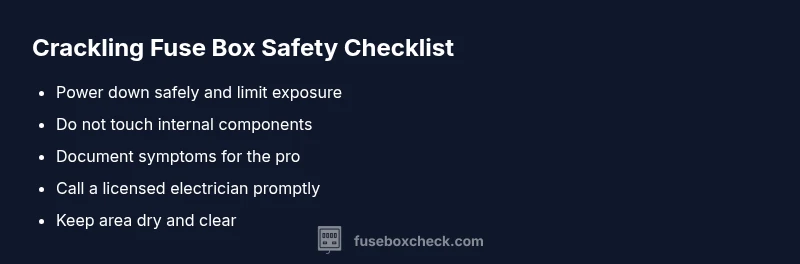
- Power down safely and limit exposure.
- Crackling is a high-risk signal requiring professional inspection.
- Do not touch the panel or attempt DIY fixes.
- Document symptoms to aid the electrician and prevent recurrence.