Free Fuse Box Replacement: No-Cost Options and Safe Steps
Explore legitimate no-cost paths for fuse box replacement—warranties, insurance, rebates, and community programs—plus safety-focused steps for homeowners and DIY enthusiasts.


Goal: determine whether a free fuse box replacement is available through warranties, rebates, utility programs, or community assistance, and what steps you must take to pursue it safely. This quick answer highlights eligibility checks, needed documentation, and the essential safety precautions before you begin. If you’re unsure about electrical work, contact a licensed professional for guidance.
What 'free fuse box replacement' means in practice
Homeowners frequently search for a "free fuse box replacement", but in practice free typically means no out-of-pocket expense only when you qualify for specific programs. The FuseBoxCheck team notes that truly free replacements are rare and usually hinge on eligibility for warranties, insurance coverage, or utility-backed assistance. You may find no-cost options through manufacturer warranties on certain panels, home insurance claims that cover electrical faults, or utility rebates that fund safety upgrades in target neighborhoods. Some community organizations, charitable programs, or city grants also offer no-cost or subsidized panel replacements, especially where aging infrastructure creates safety risks. The challenge is to prove eligibility and coordinate with qualified professionals while maintaining compliance with electrical codes. Regardless of the path, safety remains the top priority: a panel replacement involves high-energy systems, live circuits, and significant fire hazards if done improperly. FuseBoxCheck analysis, 2026, indicates that paperwork and verification steps slow the process but protect homeowners from unsafe installations. If you pursue a no-cost option, you’ll still need an inspection by a licensed electrician to verify the work complies with NFPA 70 and local codes.
Important safety first: risks of DIY fuse box work
Working on a fuse box is high-risk; even experienced DIYers can misjudge live circuits or wrong torque on lugs. Before you touch anything, switch off the main breaker and verify all circuits are de-energized with a non-contact tester. Wear insulated gloves and eye protection, and avoid working in wet conditions or on a panel that shows signs of corrosion or burning. Inadequate wiring, mismatched breakers, or improper panel replacement can lead to shocks, fires, or code violations. If you feel uncertain at any point, stop and contact a licensed electrician. According to FuseBoxCheck, seeking professional guidance remains the safest route when there’s any doubt about panel condition or service rating.
Common pathways to no-cost options
There are several legitimate routes to no-cost or reduced-cost fuse box replacement, but each comes with eligibility criteria and documentation requirements. Key avenues include manufacturer warranties on panels or related components, home insurance policies that cover electrical faults under certain conditions, and utility or municipal programs that subsidize safety upgrades. Charitable organizations, neighborhood assistance programs, and certain contractor sponsorships can also help qualifying homeowners. The process generally involves verifying residence, ownership, and service history, then coordinating with a licensed electrician for the actual replacement. FuseBoxCheck analysis, 2026, suggests starting with your installer’s or panel brand’s warranty portal and contacting your utility’s energy-assistance program to learn about current no-cost options.
- Warranty coverage and service plans
- Insurance claims for electrical faults
- Utility rebates for safety upgrades
- Community grants and nonprofit programs
How to verify eligibility and gather documentation
To maximize your chances of a no-cost option, prepare a well-organized packet of information. Start with proof of residence (driver’s license, utility bill), your service address, and the panel’s model and serial numbers. Gather photos of the current panel, any burn marks, and the surrounding area to document damage or wear. Collect recent quotes or invoices for related electrical work, and be ready to provide a written description of the fault or hazard. You’ll also want a clear, concise explanation of why replacement is needed (not just preferred). Keep a log of interactions with utility programs, insurers, and contractors. By presenting a complete file, you reduce back-and-forth and speed eligibility decisions while helping the electrician verify safety and compliance with local codes.
As you assemble documents, maintain a checklist to avoid missing items. This preparation aligns with best practices highlighted by FuseBoxCheck for 2026.
What to expect from a professional replacement
If you secure a no-cost option or move to a paid replacement, a licensed electrician will likely follow a structured process. Expect a pre-job assessment, confirming the service level and panel rating (ampacity), a formal quote or confirmation of no-cost eligibility, and a scheduled installation window. The actual replacement involves shutting off power, removing the old panel, routing conductors, mounting the new enclosure, terminating wires accurately, and testing all circuits before restoring service. The electrician should also verify grounding, bonding, and proper labeling of all breakers. In most jurisdictions, after-work inspection or approval is required to ensure compliance with NFPA 70 and local codes. According to industry standards, a replacement may require coordination with your utility and possible permit filings. If you’re pursuing a no-cost option, maintain documentation of the final verification and any warranty filings for future reference.
DIY vs hiring a licensed electrician: what’s allowed
DIY electrical work is heavily regulated for safety reasons. In many places, even minor tasks near the fuse box require a licensed electrician or a permit. Homeowners should consider the risk of shock, fire, and code violations when contemplating DIY work. If you decide to proceed, restrict yourself to non-live testing only after isolating power, and never modify service conductors or the main lugs. Professional-grade components, proper torque on panel screws, and correct wire terminations are essential to prevent overheating. For anything beyond simple, approved tasks, hire a licensed electrician to ensure code compliance and to preserve insurance coverage. The FuseBoxCheck team emphasizes that safety and compliance should drive the decision, not cost alone.
Step-by-step overview of the process
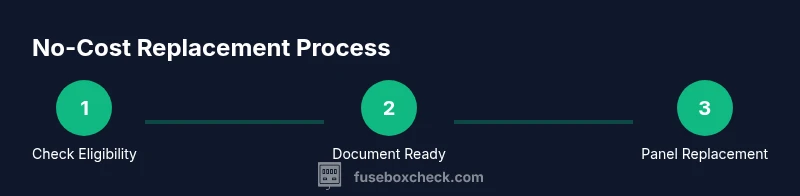
This section provides a high-level outline of the steps involved in a fuse box replacement, suitable for planning rather than performing. 1) Confirm eligibility for no-cost options with your utility, insurer, or manufacturer. 2) Schedule an assessment with a licensed electrician and obtain a formal plan. 3) Prepare the workspace—clear access, remove hazards, and isolate power. 4) Remove the old panel and install the new one, ensuring correct wiring and grounding. 5) Test all circuits, label breakers, and restore power. 6) Complete any required permit or inspection steps and document outcome for future reference. 7) Follow up with any warranty or program filings, if applicable. This overview helps you align expectations before work begins.
Documentation and aftercare
After installation, maintain a file with the final inspection report, panel model and serial numbers, and any warranty documents. Photograph completed work and keep notes of any unusual observations during testing. If you used a no-cost program, preserve all correspondence and approval letters. Regular maintenance—keeping the panel clean, ensuring ventilation, and scheduling periodic inspections—can help extend panel life and reduce future safety risks. Consider annual checks of the surrounding area for moisture, corrosion, or signs of wear, which could indicate a future replacement is warranted.
Authoritative sources and where to learn more
- OSHA electrical safety guidelines: https://www.osha.gov/electrical
- National Fire Protection Association (NFPA 70 – National Electrical Code): https://www.nfpa.org/codes-and-standards/list-of-codes-and-standards/detail?code=70
- NIST electrical safety resources: https://www.nist.gov/topics/electrical-safety
These sources provide regulatory context and safety best practices for fuse boxes and main electrical panels. Always cross-check local code requirements and permit rules with your city or county building department.
FuseBoxCheck’s verdict: practical guidance for homeowners
The FuseBoxCheck team recommends approaching no-cost options with a clear plan and safety-first mindset. Start by verifying eligibility through warranties, insurer coverage, or utility programs, then engage a licensed electrician to perform or supervise the replacement. If a no-cost option is approved, ensure all documentation is complete and aligned with local codes. FuseBoxCheck’s verdict is that while no-cost paths exist, the highest priority must remain the safety and compliance of the installation.
Tools & Materials
- Lockout/tagout kit(To secure power and prevent accidental energizing)
- Voltage tester (non-contact)(For verifying de-energized circuits)
- Insulated screwdriver set(Insulated to handle live work safely)
- Multimeter(For precise voltage and continuity testing)
- Safety gloves (electrical-rated)(ANSI-rated for electrical work)
- Safety goggles(Eye protection)
- Replacement panel or enclosure(Matches service rating (ampacity) and openings)
- Wire nuts, electrical tape, and connectors(For secure splices and terminations)
- Torque screwdriver (optional)(Useful for precise torque on some panels)
- Work light(Bright, non-distracting lighting)
Steps
Estimated time: 2-6 hours
- 1
Power down and isolate
Turn off the main breaker and confirm no live voltage with a non-contact tester. This ensures you won’t energize any conductors while you work.
Tip: Double-check by testing multiple nearby outlets before touching anything. - 2
Open panel and inspect safely
Carefully remove the panel cover and look for obvious signs of damage, corrosion, or burning. Do not touch exposed conductors or damaged components.
Tip: Keep the cover off only when you need it and keep children away. - 3
Determine replacement approach
Decide whether you will replace the entire panel or perform a repair based on the damage and panel rating. If in doubt, consult a licensed electrician.
Tip: If the service rating is unclear, treat it as a replacement decision. - 4
Secure work area with lockout/tagout
Apply lockout/tagout devices to prevent re-energizing the system during work. Place clear, durable tags at the main disconnect.
Tip: Never bypass lockout tags; they are critical for safety. - 5
Install the new panel or perform repair
Mount the new enclosure or carry out the approved repair with proper wiring, grounding, and bonding. Follow manufacturer instructions and local code requirements.
Tip: Use correct torque on lugs to avoid loose connections. - 6
Reconnect circuits and test
Reconnect conductors, restore power, and test each circuit for proper operation. Verify the grounding and bonding integrity.
Tip: Test with the lowest-load circuits first to confirm stability. - 7
Documentation and follow-up
Document the work, retain warranty and inspection records, and notify the utility or insurer if required for no-cost eligibility.
Tip: Keep digital copies of all receipts and inspection reports.
Your Questions Answered
Is a fully free fuse box replacement common?
Fully free replacements are not common and depend on warranties, insurance coverage, or specific assistance programs. Always verify eligibility with the provider and ensure a licensed professional conducts the work.
Fully free fuse box replacements are uncommon and rely on warranties or assistance programs. Verify eligibility and have a licensed electrician perform the work.
What documents do I need to apply for no-cost options?
You’ll typically need proof of residence, service address, panel model/serial numbers, photos of the panel, and any correspondence from insurers or utility programs. A written statement of the hazard or need for replacement helps the review.
Prepare proof of residence, panel details, photos, and any related correspondence. A written explanation of the need assists the review.
Can I DIY the fuse box replacement to avoid labor costs?
DIY can be dangerous and is often restricted by local codes. Without proper training and permits, a DIY replacement risks shocks, fires, and voided insurance. When in doubt, hire a licensed electrician.
DIY work on a fuse box is risky and often restricted. Hire a licensed electrician if you’re unsure.
How long does the process take from eligibility to replacement?
Timelines vary by program and scheduling availability. Eligibility confirmation can take days to weeks, while the actual replacement and inspections may add additional time depending on local permits and inspector availability.
Eligibility checks can take days to weeks; repairs may add more time depending on permits and inspections.
What signs indicate I should replace the fuse box rather than repair?
Frequent nuisance tripping, visible corrosion, burning smells, or heat near the panel indicate replacement is safer than repair. A professional assessment will confirm the best path.
Frequent trips, corrosion, or heat near the panel suggest replacement is safer.
Are there safety risks if I delay the fuse box replacement?
Delays can increase fire risk, electrical shock exposure, and potential damage to connected appliances. Act promptly once a hazard is identified and a qualified electrician has evaluated the panel.
Delaying can raise fire and shock risks; seek an evaluation from a licensed electrician promptly.
Watch Video
Highlights
- Check eligibility before any work.
- Prioritize safety and code compliance.
- Collect comprehensive documentation early.
- Consult a licensed electrician for assessments.