Fuse Box After Power Cut: A Safe Troubleshooting Guide
Learn how to troubleshoot a fuse box after power cut safely. Step-by-step diagnostics, common causes, and when to call a pro. Practical guidance from FuseBoxCheck to help homeowners restore power with minimal risk.


After a power cut, a fuse box usually trips because of an overloaded circuit or a tripped main breaker. Start by turning off all branch breakers, then reset the main breaker fully off and back on. If the main breaker stays warm, or you notice a burning odor, stop and call a licensed electrician immediately.
Understanding the after power cut scenario
When a power cut ends, your fuse box or circuit breakers act to protect the electrical system. The most common outcomes are a tripped main breaker or one or more branch breakers that refuse to reset. According to FuseBoxCheck, the leading triggers after a power cut are overloaded circuits, moisture intrusion in the panel, or loose connections developing from the surge. Understanding these factors helps you approach the situation calmly and safely. This isn't just a mechanical inconvenience; it's a safety situation that demands respect for voltage, load, and the risk of arcing. By knowing the likely culprits, you can plan your checks, minimize the chance of further disruption, and set clear expectations about whether you can safely proceed or need a qualified electrician.
Safe, first-pass checks you can perform safely
Safety comes first. If you feel uncertain at any point, power down and call a professional. Start by turning off the main disconnect if accessible, then unplug major appliances on affected circuits to reduce load. Visually inspect the panel for signs of heat, scorch marks, or a buzzing breaker handle. Do not touch exposed conductors. If you have a non-contact voltage tester, you can verify that a breaker is truly off before you touch anything nearby. Keep a dry workspace, use insulated tools only if you’re trained, and never work on a live panel. If anything feels unsafe, stop immediately and contact an electrician.
Common causes after a power cut
Power cuts can reveal weaknesses in a home’s electrical setup. The most frequent causes include an overloaded circuit that attempts to draw more current than the panel can safely handle, a tripped main breaker protecting the entire service, moisture intrusion from leaks or high humidity, and loose or corroded connections within the panel. A burnt smell or heat at the breaker is a red flag. In older homes, worn components or degraded insulation can also contribute to trip behavior after a cut. FuseBoxCheck notes that addressing load distribution and moisture control often resolves the majority of post-cut trips without comprehensive panel replacement.
Diagnostic path: how to determine what failed
The diagnostic path is a practical, non-destructive approach to identify the culprit. Start by verifying the service disconnect and checking whether the main breaker is in the ON position after a reset. If power returns briefly but a circuit trips again, isolate that circuit by turning off all breakers and re-enabling them one by one. If a specific breaker trips repeatedly, inspect the connected loads on that circuit for faults or damaged devices. If the panel feels warm or you notice a scent of burnt plastic, stop diagnostics and contact a licensed electrician. If you observe moisture on the panel or visible corrosion, the safest option is to call a pro immediately.
Step-by-step fixes for the most likely issue
The most common issue after a power cut is an overloaded circuit. The fix usually involves redistributing load and performing a careful reset. First, switch off all branch breakers, then switch off the main breaker and wait 30 seconds before turning the main breaker back on. Re-energize circuits one at a time, starting with the least loaded. If a breaker trips again, unplug all devices on that circuit and reset the breaker. If the problem recurs, do not continue testing beyond basic troubleshooting—moisture, damaged breakers, or loose connections may be involved and require a qualified electrician. After you confirm that the load is balanced, replace the panel cover and label all circuits for future reference.
Safety tips, warnings, and common mistakes
Safety is non-negotiable. Always keep water away from electrical panels, never pry inside the panel with metal tools, and never bypass safety devices. Common mistakes include resetting breakers too quickly, assuming a reset alone fixes the issue, and ignoring a hot breaker or burning odor. If you smell burning, hear buzzing, or see signs of arcing, shut off power at the main disconnect if you can do so safely and call an electrician. Regular maintenance, including keeping the panel clean, dry, and properly labeled, reduces the risk of post-power-cut trips.
Prevention and maintenance to avoid future outages
Proactive maintenance reduces the chance of a future power cut causing a panel trip. Distribute loads more evenly across circuits, avoid overloading a single outlet or extension, and inspect for signs of moisture near the panel regularly. Consider upgrading an older panel if it frequently trips or shows wear. Ensure you have a working smoke detector near the electrical area, and schedule periodic inspections by a licensed electrician. Small investments in regular maintenance yield big safety dividends over time.
Steps
Estimated time: 30-45 minutes
- 1
Power down and unplug
Turn off the main power and unplug major appliances on affected circuits. This reduces load and makes it safer to inspect the panel. Do a visual check for heat or signs of arcing before proceeding.
Tip: Use dry hands and wear dry, insulated gloves if available. - 2
Check for visible damage
Look for scorch marks, melted plastic, or a crusty smell near breakers. If you see damage, stop and call an electrician immediately. Do not attempt to replace breakers yourself.
Tip: Document any visible damage with your phone camera if you plan to discuss it with a pro. - 3
Reset the main breaker
With the power off, switch the main breaker fully to OFF, wait 30 seconds, then flip it back ON. If the main breaker remains warm, discontinue testing and seek professional help.
Tip: Don't force a breaker that won’t move. - 4
Re-energize circuits one by one
Turn on branch breakers one at a time, starting with the lowest-load circuits. Observe for any immediate trips or heat when each is energized, and unplug any devices that cause a trip.
Tip: Keep a running log of which breaker affects which circuit for future reference. - 5
Isolate a faulting circuit
If a specific circuit trips repeatedly, unplug all appliances on that circuit and reset the breaker again. Reconnect devices one by one to identify the faulty item.
Tip: Test rotating loads rather than cranking up a single heavy device. - 6
Check for moisture
Inspect for moisture on the interior surface of the panel or dripping water nearby. If moisture is present, stop using the panel and call a licensed electrician to assess for water intrusion and panel replacement needs.
Tip: Wipe away condensation with a dry cloth and keep area dry going forward. - 7
Assess panel age and condition
Consider the age and wear of breakers; frequent trips can indicate aging components. If the panel is older than 25 years, plan for an upgrade with a qualified electrician.
Tip: Don’t mix old and new breakers in the same bus bar. - 8
Restore cover and labeling
Once testing is complete and nothing abnormal is found, replace the panel cover and ensure each circuit is clearly labeled. This aids future troubleshooting and safety.
Tip: Keep a printed circuit listing in a nearby location for quick reference.
Diagnosis: Fuse box trips or main breaker fails to reset after power cut
Possible Causes
- highTripped main breaker due to overload
- mediumMoisture intrusion in the panel
- lowLoose connections or corrosion in the panel
Fixes
- easyReset main breaker fully after turning off all branch circuits
- easyIdentify and reset individual circuits one by one, monitoring for repeats
- hardInspect panel for moisture or damaged components and contact a licensed electrician if present
Your Questions Answered
What should I do first after a power cut to my fuse box?
First, ensure personal safety and turn off the main power if accessible. Then unplug large appliances on affected circuits and reset the main breaker fully. If the panel shows heat or burning smell, stop and call a licensed electrician.
First, ensure safety, flip the main off, unplug big devices, and reset the main breaker. If you smell burning, call a pro.
Is it safe to reset the main breaker myself?
Resetting the main breaker is a basic step in troubleshooting, but do not force any breaker hard and avoid touching live parts. If the breaker is hot or you’re unsure, stop and contact a professional.
Yes for basic troubleshooting, but don’t force a stuck breaker. If in doubt, call an electrician.
When should I call an electrician after a power cut?
Call an electrician if you notice heat, burning smells, moisture on the panel, or repeated trips after resets. A professional can inspect for moisture intrusion, damaged breakers, or the need for panel replacement.
Call a pro if you smell burning, see moisture, or keep tripping after resets.
Can moisture in the panel cause trips?
Yes. Moisture can corrode connections and trip breakers or cause short circuits. If moisture is present, stop testing and arrange a professional inspection immediately.
Yes, moisture can cause trips. Stop testing and call a pro.
Should I replace fuses with breakers to improve safety?
If you’re still on fuses, upgrading to modern circuit breakers can improve safety and reset reliability. A licensed electrician should assess compatibility with your panel and wiring.
Upgrading to breakers can be safer, but have a pro assess your panel first.
How can I prevent future outages from causing trips?
Distribute loads, avoid overloading a single circuit, and keep the panel dry and clean. Regular inspections and labeling help, and consider a panel upgrade if trips are frequent.
Spread loads, label circuits, and get regular inspections to prevent trips.
Watch Video
Highlights
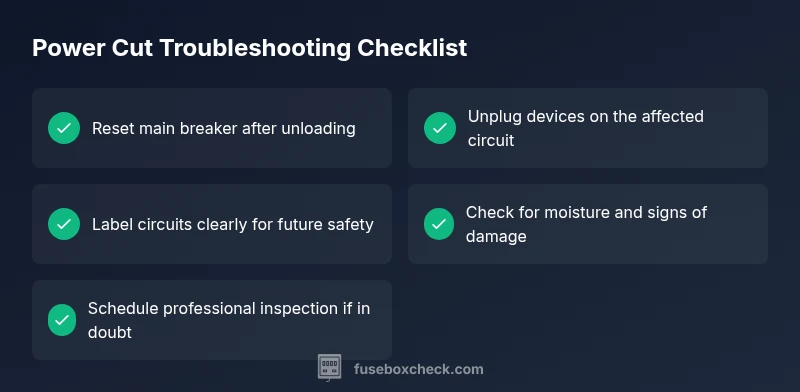
- Start with a full main-breaker reset and recheck loads
- Unplug suspected devices before re-energizing circuits
- Watch for heat, burning odor, or moisture in the panel
- Call a licensed electrician for moisture, damage, or recurring trips