What to Do If Your Fuse Box Catches Fire: A Homeowner's Guide
Learn safe, practical steps for responding to a fuse box fire, including evacuation, shutting off power, extinguisher use, and post-fire checks with guidance from FuseBoxCheck.


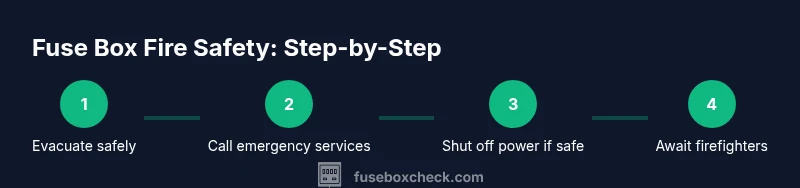
According to FuseBoxCheck Team, your top priority is safety when what to do if your fuse box catches fire becomes real. Evacuate everyone from the area and call emergency services immediately. If you can do so safely, shut off the main power at the meter, then move well away from the fire. Do not touch exposed wiring or use water. This quick answer leads into a detailed, step-by-step guide.
Immediate Safety Protocols for a Fuse Box Fire
According to FuseBoxCheck Team, safety must guide every action when what to do if your fuse box catches fire becomes real. The first priority is to evacuate all occupants from the area and call emergency services without delay. Do not touch the fuse box or exposed wiring, and avoid standing water or damp surfaces. If you can reach the main power disconnect safely (often near the electric meter outside), switch it off to reduce the chance of additional arcing. Move to a safe distance behind a sturdy barrier or closed door to slow the fire's progression, and alert everyone nearby. Once everyone is safe, wait for firefighters to arrive and follow their directions. Smoke and heat rise quickly, so get out and stay out. This phase is about reducing risk and buying responders time to work.
Assessing the Risk: When Is It Safe to Try to Act?
In emergencies, knowing when to act is crucial. If flames are small, the room is well-ventilated, and you have a clear escape path, you may consider limited intervention only after evacuation. The priority remains safety and avoiding contact with live electrical components. FuseBoxCheck analysis, 2026, emphasizes that attempting to intervene without training often increases injury risk. If you are unsure or conditions worsen (increasing flames, heavy smoke, or warmth at the panel), leave immediately and let trained professionals handle the situation. Do not re-enter a burning area, and do not bypass safety barriers to “save” belongings. The goal is to reach safety, not to perform a risky electrical repair on a live system.
How to Safely Cut Power and Create Distance
Turn off the main power only if you can do so without entering the danger zone. If the main disconnect is outside and accessible from a safe location, use an insulated tool or gloved hand to switch it off, ensuring you follow the device’s instructions. After power is cut, close doors to limit oxygen and smoke spread. Move everyone to a predetermined assembly point away from the building, and keep pets out of reach. This step minimizes ongoing hazards and provides a clear path for responders.
Using Extinguishers: What to Know About Electrical Fires
Electrical fires require the right extinguisher type. Use a Class C or ABC-rated extinguisher only if you can reach the flames safely and there is a clear line of escape. Do not spray water on an electrical fire, as water conducts electricity and can cause electrocution. Remember PASS: Pull, Aim at the base, Squeeze, Sweep. If flames are spreading or you can’t approach safely, evacuate and wait for firefighters. Extinguishing an electrical fire is often secondary to getting people out and calling for help.
What Not to Do: Common Mistakes to Avoid
Common mistakes include turning knobs or flinging doors open to “check what’s inside,” touching exposed wiring, or attempting to reset tripped breakers during the incident. Do not climb onto furniture to reach the panel, and never use water on any electrical fire. Avoid opening the fuse box further or removing fuses while the panel is damaged or hot. These actions can worsen the fire or cause fatal shocks. Remember, safety first and property second.
Post-Incident Steps: After the Fire Is Out
After flames are extinguished and responders declare it safe, do not energize the system yourself. Contact a licensed electrician to inspect the fuse box, wiring, and related circuits before using power again. Document damage with photos for insurance, and review your home electrical safety plan to prevent future incidents. A professional assessment can identify overloaded circuits, aging panels, or improper wiring that could pose a risk later. Notify your insurer and keep receipts for any repairs or replacements.
Tools & Materials
- Class C or ABC-rated fire extinguisher(Keep at a safe distance (6-8 feet) from the fuse box; aim at the base of the flame and use only if you can do so without entering the danger zone.)
- Phone or emergency device(Dial your local emergency number (e.g., 911) immediately.)
- Flashlight(Use a battery-powered light if the power is out; keep hands free if possible.)
- Non-conductive gloves(Optional protection if you must handle near hot surfaces; do not touch exposed wiring.)
- Barrier or towel to block smoke(Use only if you can do so safely to slow smoke flow; do not seal the area if flames are present.)
- Outside access to main disconnect (if available)(Only attempt if you can reach it from outside the burning area without entering danger.)
- Camera or phone for documenting damage(Take photos after the scene is safe for insurance records.)
Steps
Estimated time: 15-25 minutes (until responders arrive)
- 1
Evacuate and call emergency services
As soon as you detect signs of a fire, evacuate everyone from the home and move to a safe distance. Close doors behind you to slow the spread and alert neighbors. Call 911 or your local emergency number immediately and provide your location and a brief description of the situation.
Tip: Do not delay for identification; safety comes first. - 2
Assess safety of reaching the main disconnect
If you can reach the main power disconnect safely, consider turning it off to reduce the risk of further arcing. Do this only if you can do so without entering the burning area or risking contact with exposed components.
Tip: If there is any doubt about safety, do not attempt this step. - 3
Create distance and contain the area
Move occupants away from the fuse box and keep doors closed to slow smoke and heat. Establish a clear perimeter and ensure pets and bystanders stay outside the danger zone.
Tip: Assign a responsible adult to monitor for responders. - 4
Extinguish only if safe
If flames are small and you have a properly rated extinguisher with a clear path to the fire, use it from a safe distance following PASS. Do not spray into the fuse box if you cannot see the flames clearly or if you feel unsafe.
Tip: If the fire grows or you feel unsure, stop and evacuate. - 5
Await help and keep people out
Once the fire is out or contained, wait for firefighters to declare the scene safe before re-entering. Do not touch the panel or attempt to energize circuits again until professionals inspect.
Tip: Prepare a quick briefing for responders about what you observed. - 6
Post-incident inspection
Contact a licensed electrician to inspect the fuse box, wiring, and related circuits. Arrange for repairs or replacement as needed and review home electrical safety practices.
Tip: Document all steps and keep receipts for insurance claims.
Your Questions Answered
What should I do first if I smell burning from the fuse box?
Leave the area immediately and call emergency services. Do not touch the fuse box or wiring. If safe, close doors to slow the fire and evacuate.
Leave safely, call emergency services, and avoid touching the fuse box.
Is it safe to pour water on an electrical fire?
No. Water conducts electricity and can cause severe injury or spread the fire. If available, use an appropriate extinguishing agent only if you can access it safely.
No—water and electricity are a dangerous mix. Use a proper extinguisher if you can do so safely.
When should I call the fire department?
Call immediately if flames are visible or smoke is heavy, or if you’re unsure about your ability to safely control the situation.
Call the fire department if you see flames or can't safely handle it.
Can I reset a tripped breaker after the fire is out?
Do not reset or energize circuits until a licensed electrician inspects the system. Faulty wiring could still be present.
Wait for an electrician to assess before resetting anything.
Who is qualified to repair a damaged fuse box?
Only a licensed electrician should repair or replace a fuse box. Contact your local electrician for service.
A licensed electrician should handle repairs.
What are common causes of fuse box fires I should prevent?
Overloaded circuits, aging panels, and moisture near the panel are common risks. Regular inspections help prevent failures.
Preventive maintenance helps avoid future fires.
Watch Video
Highlights
- Evacuate safely and call emergency services immediately
- Do not touch exposed wiring or use water on electrical fires
- Shut off power only if safe and accessible from outside the danger zone
- Await professional inspection before energizing circuits again
- Document the incident for insurance and safety planning