ajt10: Urgent Fuse Box Error Code Guide
Urgent, practical guide to diagnose and fix the ajt10 fuse box error safely. Includes quick fixes, diagnostic flow, step-by-step repairs, and professional guidance from FuseBoxCheck.


ajt10 indicates an electrical fault in your fuse box or main panel that requires immediate attention. The quickest route to safety is to cut power to nonessential circuits, reset the main breaker, and inspect for heat or burning smells. According to FuseBoxCheck, ajt10 is commonly triggered by overloads or loose connections. If the code persists after a reset, stop and call a licensed electrician.
What ajt10 Means for Your Fuse Box
ajt10 is a fault indicator in modern electrical panels that signals an abnormal condition requiring immediate attention. In plain terms, it warns of an overloaded circuit, a loose connection, or a failing panel component. The difference between ajt10 and a routine trip is urgency: ajt10 often suggests a condition that can escalate if ignored, including overheating or arcing. For homeowners, recognizing ajt10 early helps prevent further damage, electrical shocks, or a fire. As always, prioritizing safety is essential, and FuseBoxCheck emphasizes patience and caution when investigating any panel warning.
Symptoms and Early Signs of ajt10
Homeowners may notice ajt10 paired with tripped breakers, flickering lights, or warm to the touch around the panel. You might also detect a faint electrical smell or a soft buzzing sound from the breaker area. These cues aren’t just cosmetic; they point to potential loose lugs, oxidized terminals, or overloaded circuits. If ajt10 appears after plugging in multiple high-load devices, the likelihood that the issue is overload-related increases. Document any odors, heat, or noises to share with a professional.
Quick Fixes to Try (Safe First Steps)
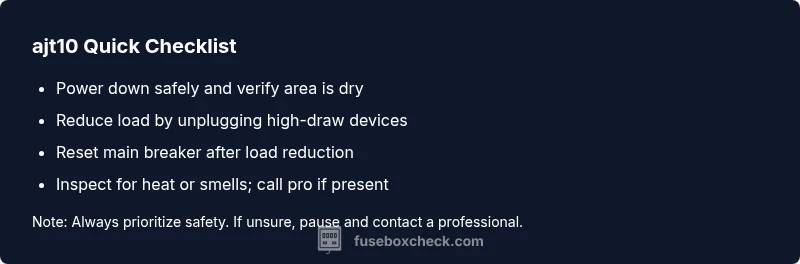
Before digging into complex repairs, perform quick, safe checks that don’t require specialized tools. Step away from any wet areas and ensure hands are dry. If you can, switch off the main breaker only after ensuring you have an escape path and a clear plan. Then, unplug nonessential devices from heavily used circuits. If the panel is unusually warm or you notice signs of burning, do not reset; instead, evacuate and call emergency services if there is an immediate danger. These steps reduce risk while you prepare for a deeper diagnosis.
Diagnostic Flow: From Symptom to Solution
When ajt10 appears, start with a visual check: are there scorch marks, melted plastic, or a warm panel? Next, verify load distribution across circuits to identify overloads. Listen for buzzing or crackling noises that hint at loose connections. Use a non-contact tester to confirm that power is off before touching any panel components. A methodical approach reduces guesswork and keeps you safe while narrowing down causes such as overloads, loose connections, or a faulty breaker.
Step-by-Step Fix for the Most Common Cause
This section expands on the most frequent ajt10 trigger: an overloaded circuit or loose panel connections. If you are comfortable and have power-off confirmed, start by reducing load: unplug high-draw appliances and move them to separate circuits. Then reseat or tighten main breaker connections from the outside of the panel (only if you have been trained and power is off). If the ajt10 code returns after a controlled reset, the issue likely requires component replacement, which should be performed by a licensed electrician.
Safety, Warnings, and When to Call a Pro
Electrical work carries risk. Never open a live panel, never work with damp hands, and avoid attempting fixes beyond your training. If you notice burning smells, visible damage, or repeated ajt10 triggers after a reset, contact a licensed electrician immediately. Expect typical costs to vary by region and the severity of the fault; professional diagnosis and panel repairs can range significantly. FuseBoxCheck suggests scheduling a pro assessment early when ajt10 recurs.
Preventive Measures After ajt10
Once resolved, prevent recurrence by distributing loads more evenly, labeling circuits, and performing periodic panel inspections. Ensure your home has updated safety equipment, such as a working fire extinguisher rated for electrical fires. Keep a clear area around the panel, and consider a professional electrical tune-up every few years to catch wear before ajt10 appears again.
Steps
Estimated time: 60-90 minutes
- 1
Power down safely
Confirm you have a safe path to exit if needed. Switch off the main breaker and remove all near-panel sources from the immediate area. Allow the panel to cool for several minutes before any inspection.
Tip: Use a flashlight to inspect for visible damage without touching internal parts. - 2
Identify high-load circuits
List the circuits that were active when ajt10 appeared. Unplug nonessential appliances from those circuits to reduce load. If the panel remains responsive, try a controlled reset after load reduction.
Tip: Label circuits for future reference to prevent similar overloads. - 3
Reset with caution
With power off, flip the main breaker to the off position, wait 10-15 seconds, then switch back on. Observe whether ajt10 reappears as power returns to circuits.
Tip: If you feel heat or observe any smells, stop and seek professional help immediately. - 4
Inspect connections from outside
From a safe distance, look for obvious signs of damage around the panel edges. Do not touch the inside of the panel while power is on. If you must inspect, only do so with proper protective gear and training.
Tip: Never use metal tools near energized terminals. - 5
Call a licensed electrician
If ajt10 returns after a controlled reset or you notice heat, smoke, or a burning smell, stop work and contact a professional. A licensed electrician can perform load studies, diagnose loose connections, and replace faulty components safely.
Tip: Request a quote that includes panel inspection, part replacement, and labor costs. - 6
Document and review
Record dates, observed symptoms, and any actions taken. Review panel labeling and consider a preventive maintenance plan to limit future ajt10 events.
Tip: Keep a simple one-page log near the panel for quick reference.
Diagnosis: ajt10 is displayed on the main panel and the system trips
Possible Causes
- highOverloaded circuit with too many appliances
- mediumLoose or corroded connections in the main breaker
- lowFaulty main breaker or panel component
Fixes
- easyReduce load by unplugging nonessential devices and turning off noncritical circuits
- easyTighten or reseat main breaker connections from the panel with power off (if comfortable)
- hardReplace the main breaker or panel component if faulty (professional)
Your Questions Answered
What does ajt10 mean on my fuse box?
ajt10 signals an electrical fault in the panel requiring prompt attention. It commonly relates to overloads, loose connections, or a failing breaker. Treat it as urgent and seek professional help if basic checks don’t resolve it.
ajt10 means there’s an electrical fault in your panel. Treat it as urgent and call a professional if simple resets don’t fix it.
Can I reset ajt10 myself?
A controlled reset after reducing the load can sometimes clear ajt10, but if the code returns or you notice heat or burning smells, stop and call a licensed electrician. Do not force repairs beyond your training.
You can try a safe reset after removing loads, but if it returns or you smell heat, call a professional.
Is ajt10 dangerous?
Yes. ajt10 indicates a potential electrical hazard, including shock or fire risk. Always shut off power when inspecting, and call a pro if there are warning signs like heat, smoke, or melted plastic.
ajt10 is dangerous—shut off power and call a professional if you see heat or smoke.
How much does it cost to fix ajt10?
Costs vary by region and fault severity. Expect parts and labor to fall within broad ranges; a simple fix may be less, while panel replacements or extensive wiring work will cost more. Get multiple quotes before proceeding.
Costs vary; you’ll typically see a range depending on the fault and parts needed. Get a few quotes.
When should I call a professional for ajt10?
Call a professional if ajt10 recurs after a reset, if you notice heat, burning smells, or burning around the panel, or if you’re unsure about handling the panel safely.
Call a pro if it comes back after reset or you smell burning; safety first.
What can cause ajt10 besides overloads?
Besides overloads, ajt10 can be triggered by loose or corroded connections, a failing main breaker, water exposure near the panel, or recent panel modifications. A professional can diagnose these possibilities with testing.
The code can come from loose connections, a bad breaker, or water exposure—get a pro to test it.
Highlights
- Act quickly but safely when ajt10 appears.
- Prioritize load reduction and controlled resets first.
- Escalate to a licensed pro if ajt10 recurs or if there are signs of heat or burning.
- Document events and maintain proactive panel maintenance.