Bad Fuse Box Troubleshooting: Quick Fixes & Safety
Practical guide to diagnosing and safely fixing a bad fuse box. Learn common causes, a step-by-step flow, and when to call a licensed electrician for home electrical safety.


Why a bad fuse box poses an urgent safety risk
A bad fuse box is more than an inconvenient nuisance; it can create fire hazards, shock risks, and unexpected power loss throughout your home. In many homes, the root cause is a simple issue that has escalated because the panel isn’t regularly inspected or maintained. The keyword here is safety: a malfunctioning fuse box can heat up, melt insulation, or trip repeatedly, stressing other components in the electrical system. If you’ve noticed sizzling sounds, a warm panel, or scorch marks around breakers or fuses, you should treat the situation as urgent. According to FuseBoxCheck, early detection and careful handling reduce risk and prevent wider electrical damage.
In practice, you’ll want to avoid DIY shortcuts that bypass safety steps. This guide emphasizes controlled, methodical troubleshooting and clearly marks when professional help is necessary. If you’re ever unsure, err on the side of caution and contact a licensed electrician immediately. Your house’s electrical health is not worth risking for a quick fix.
Common causes of fuse box faults
Fuses and panels can fail for several reasons, ranging from minor wear to serious damage. The most frequent culprits include loose or corroded connections, overloaded circuits, and the gradual deterioration of the main breaker. Moisture exposure, especially in basements or garages, can lead to corrosion on bus bars or contacts, creating poor conductivity and heat buildup. A burning smell or visible scorch marks are clear red flags that demand professional attention. Also watch for signs like frequent nuisance trips, flickering lights, or discolored panel covers. Regular inspections help catch wear before a failure occurs.
Another area often overlooked is panel accessibility. If the fuse box is crowded with wires, strain on conductors can occur, leading to loosening at connections over time. Fuse-box safety relies on clean, organized wiring and proper labeling so you can quickly identify circuits during an event. Remember: while some checks are safe to perform, real diagnostics—like verifying continuity and measuring voltage—require appropriate tools and training.
Immediate safety steps you can take safely
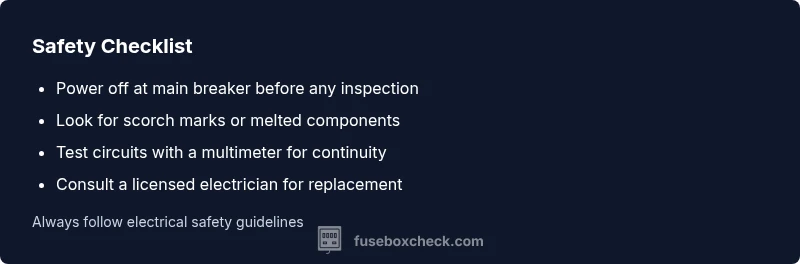
- Power down at the main breaker before touching anything inside the panel. Do not work on a live panel. - Put on insulated gloves and use insulated tools if you must handle components; keep hands dry. - Visually inspect for obvious damage: melted insulation, scorch marks, or a burning odor. If you see any of these, evacuate and contact a licensed electrician immediately. - Ensure room ventilation and avoid creating sparks or static discharge near electrical equipment. - If you are unsure, do not proceed; professional intervention is required to prevent injury or fire.
Safety first: this section covers prudent, immediate actions but does not replace professional service when damage or uncertainty exists. FuseBoxCheck emphasizes that many fixes look simple, but incorrect handling can escalate risk.
Diagnostic flow: symptom to diagnosis
Symptoms you might notice include frequent breaker trips, buzzing or sizzling noises, warm-to-hot panels, or burning smells. Start with simple checks: confirm power is cut to the panel, reset tripped breakers one by one, and inspect for obvious signs of damage. If tripping persists, the issue may be a loose connection, a failing main breaker, or moisture intrusion. The diagnosis should progress from least invasive checks to targeted tests. Remember: when in doubt, stop and call a professional. FuseBoxCheck’s guidance centers on safety, accurate diagnosis, and controlled fixes rather than risky improvisation.
Tip: Document observed symptoms with dates and photos so the electrician has context.
STEP-BY-STEP: Fix for the most common cause (loose or corroded connections)
- Power off at the main breaker and confirm zero voltage at the panel with a non-contact tester. 2. Remove the panel cover carefully and visually inspect for loose screws on bus bars and branch circuit terminals. 3. If you find a loose connection, tighten terminals to manufacturer-specified torque using a properly insulated screwdriver. 4. For corroded lugs or contacts, clean with a purpose-built contact cleaner or replace the affected part after ensuring power is off. 5. Re-seal the panel area to prevent moisture ingress and replace the panel cover. 6. Restore power gradually and test each circuit to confirm stability. 7. If you’re unsure at any point, stop and call a pro.
Pro tip: Do not overtighten screws; excessive torque can strip threads or crack insulation, creating new problems. If you uncover damaged bus bars or melted components, replacement by a licensed electrician is required.
Testing & verification: confirming repairs with readings
Verification hinges on confirming that each circuit returns to normal operation without nuisance trips. Use a multimeter to check for proper voltage at receptacles on re-energized circuits and verify continuity for the repaired connections. Look for stable readings with no abrupt drops when heavy appliances start. If a circuit still trips, the fault may lie farther upstream or in a concealed conduit. In that case, schedule a follow-up inspection with a licensed electrician. Keep a log of test results and any observed irregularities for reference.
Safety precautions and when to call a pro
Always prioritize safety. If you observe burning smells, melted plastic, or smoke, evacuate immediately and call emergency services if needed. Do not attempt to replace a main breaker or bus bars unless you are a trained professional with the right equipment. A licensed electrician can perform a thorough inspection, replace damaged components, and assess whether your panel is up to code. Regular maintenance by a qualified pro is the best way to prevent future hazards and ensure the electrical system remains reliable.
Prevention tips to avoid future fuse box problems
- Schedule annual inspections and keep a basic maintenance log. - Do not overload outlets or extension cords; distribute loads across circuits. - Replace worn fuses or breakers in a like-for-like manner and never bypass safety devices. - Keep the panel area dry and clean; avoid storing flammables nearby. - Label circuits clearly so future work or trips can be diagnosed quickly. - Consider upgrading an aging panel to a modern, code-compliant unit with a licensed electrician’s guidance.
Proactive maintenance reduces surprises and helps protect your home from electrical hazards. FuseBoxCheck recommends a forward-looking approach to fuse-box safety to minimize risk over time.
What to do next: documentation and routine
After you’ve stabilized the situation, document what was observed, what actions were taken, and what remains unresolved. Photograph the panel, note any parts replaced, and keep receipts or warranty information. Create a maintenance schedule: annual visual checks, semiannual testing, and a professional full-panel audit every few years, depending on panel age and usage. Preparing ahead can save time and reduce risk if a similar issue recurs.