dsf100m: Urgent Guide to Fuse Box Error Diagnosis and Fix
Urgent guide to understanding and resolving the dsf100m fuse box error code safely. Learn symptoms, diagnostic flow, step-by-step repairs, and when to call a pro with FuseBoxCheck guidance for 2026.


The dsf100m error code signals a protective fault in the fuse box circuit, indicating an unsafe condition detected by the panel’s safety sensors. The most common quick fix is a safe main-breaker reset followed by a careful check for overloaded circuits and heat signs. If the code recurs after a reset, or you notice burning smells or melted components, stop and contact a licensed electrician immediately.
What dsf100m Means and Why It Demands Urgency
In many residential panels, the dsf100m code is flagged by the main safety relay when a circuit exceeds safe operating conditions. According to FuseBoxCheck, this code typically points to an overload, a loose connection, or a defective sensor within the panel. The urgency comes from the potential for overheating, arc faults, or hidden damage that can escalate quickly in older homes or during periods of high electrical demand. dsf100m should never be ignored; treating it as a signal to pause, assess, and take measured action protects people and property. Homeowners should treat this as a safety-critical alert rather than a routine nuisance code.
Immediate Steps You Can Take Right Now
If dsf100m appears, begin with safety-first actions before poking around the panel. Power down loads selectively by turning off the main breaker and then resetting the main disconnect after a minute. Next, inspect visible signs of damage or heat around breakers and wiring—do not touch live conductors. If you’re uncomfortable with any of this, or if you hear buzzing, see scorch marks, or smell burning, evacuate and call emergency services if there is an immediate risk. FuseBoxCheck emphasizes that you should never bypass a protection device or operate a panel with exposed wiring.
Diagnostic Flow: Symptom to Cause
Symptoms: dsf100m appears on the panel, circuit tripping, or a breaker repeatedly resets. Possible causes (in order of likelihood): 1) Overloaded circuit or multiple high-draw appliances on a single leg (high). 2) Loose or corroded connections in the bus bar or breaker (medium). 3) Faulty breaker or sensor module within the panel (low). 4) Bad wiring insulation or a ground fault in a downstream circuit (low). Solutions progress from quick fixes to deeper diagnostics.
Step-by-Step Fix: Most Common Cause (Overload or Loose Connection)
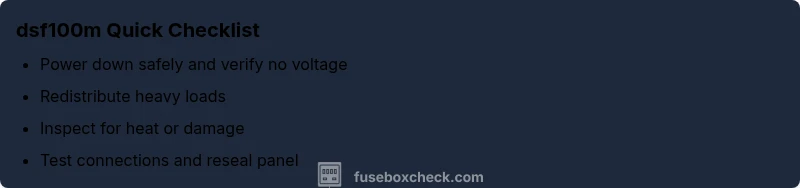
This section walks through the most common dsf100m scenario: an overloaded circuit or a loose connection triggering protective shutdown. Start by de-energizing the panel and confirming power is off using a non-contact tester. Then redistribute loads across circuits to balance demand—don’t run high-draw appliances (heater, space heater, dryer) on the same branch. Inspect for loose wires at the breaker terminals and tighten if you have the right tools and training. If the wiring shows any signs of damage, stop and call a licensed electrician. Finally, reset the main breaker and monitor for repeated trips. If trips continue, move to a professional diagnostic protocol.
Other Possible Causes and How to Address Them
If overloads aren’t the culprit, other causes for dsf100m include a degraded or miscalibrated sensor in the panel, a failing main breaker, or degraded insulation in a feeder cable. Addressing these issues typically requires specialized equipment and expertise. A professional can perform insulation resistance tests, verify conductor integrity, and replace the faulty components with manufacturer-approved parts. Do not substitute parts or bypass protection devices, as this can create serious safety hazards.
Safety Warnings and When to Call a Pro
Electrical systems carry real risk. Always de-energize the panel before any inspection beyond the outward appearance of scorch marks. Use appropriate PPE, work with dry hands, and keep a clear path to exit. If dsf100m is accompanied by burning smells, heat, or visible damage, evacuate and call emergency services. For any doubt about your safe handling capabilities, contact a licensed electrician promptly. The key is to avoid making a dangerous condition worse while diagnosing the root cause.
Prevention and Ongoing Maintenance for dsf100m Readiness
Proactive maintenance reduces the likelihood of dsf100m recurrences. Schedule periodic panel inspections, tighten connections per manufacturer torque specs, replace aging breakers, and ensure your service panel has adequate headroom for your electrical load. Consider a home electrical upgrade if your feed from the utility is insufficient for current power demands. Regularly test GFCI/AFCI protection and keep a documented history of all panel work.
What to Expect: Costs, Timeframe, and Next Steps
Professional diagnostics for dsf100m typically involve a safety assessment, load analysis, and replacement of defective components if needed. Cost ranges vary by region and the panel type but generally cover parts, labor, and diagnostic time. Expect general estimates from $100–$500 for basic diagnostics and up to $1,000+ for significant panel work or service upgrades. Timeframes can range from 1–3 hours for a standard check to multiple visits for extensive rewiring or panel replacement. Always obtain a written quote and ensure your electrician is licensed and insured.
Steps
Estimated time: 60-120 minutes
- 1
Power Down Safely
Turn off the main breaker and all downstream breakers you will touch. Use a non-contact tester to verify no voltage is present before handling any conductors.
Tip: Wear insulated gloves and confirm exit paths before starting. - 2
Inspect for Heat and Damage
Look for melted insulation, scorch marks, or unusual warmth around breakers. Do not operate a panel that feels hot to the touch or shows signs of damage.
Tip: If you see damage, stop and call a pro immediately. - 3
Redistribute Loads
Move heavy loads (dryers, space heaters) to other circuits or spread across more circuits to balance demand.
Tip: Avoid piggybacking high-draw devices on one single breaker. - 4
Tighten and Check Connections
Carefully tighten any loose-looking terminal screws using the correct screwdriver, ensuring no wobbly wires remain.
Tip: Only perform this if you are comfortable; mis-torquing can worsen the issue. - 5
Reset the Main Breaker
With everything de-energized, turn the main breaker off, then back on, and monitor for re-trips when load is re-applied gradually.
Tip: If it trips again with minimal load, stop and call a professional. - 6
Test Downstream Circuits
One by one, re-energize circuits and observe for signs of overload or heat; avoid running multiple high-draw devices simultaneously.
Tip: Document any circuit that trips to share with your electrician. - 7
Call a Licensed Electrician
If dsf100m persists after the above steps or you notice burning smells, contact a pro for a comprehensive diagnostic and potential panel repair or replacement.
Tip: Never bypass protective devices or perform unsafe DIY panel work.
Diagnosis: dsf100m appears on the fuse box panel, with frequent trips or a panel-indicator warning
Possible Causes
- highOverloaded circuit with high-draw appliances on a single leg
- mediumLoose or corroded connections at a breaker or bus bar
- lowFaulty main breaker or sensor module inside the panel
- lowDamaged insulation or degraded wiring downstream
Fixes
- easyRedistribute loads and reduce simultaneous high-draw device use on one circuit
- easyTighten accessible breaker terminals and inspect for signs of overheating
- mediumReplace faulty breaker or sensor module with a matched replacement
- hardConduct insulation resistance tests and replace damaged wiring
Your Questions Answered
What does dsf100m mean on my fuse box?
dsf100m is a safety fault indicator in some panels suggesting an overload, loose connection, or faulty sensor. It should be treated as a serious warning and addressed promptly to prevent fire risk.
dsf100m signals a safety fault in the panel. Treat it seriously and seek professional help if unsure.
Can I fix dsf100m myself?
Simple load redistribution and a cautious reset can be attempted if you are comfortable with electrical work. If you notice damage, burning smells, or repeated trips, do not proceed—call a licensed electrician.
You can do basic load checks if you’re confident, but stop if you see damage or smell burning and call a pro.
How long does it take to diagnose dsf100m?
A typical diagnostic visit ranges from 1 to 3 hours, depending on panel type and whether any component needs replacement. More extensive panel upgrades take longer and require permits.
Most diagnostics take a couple of hours, with longer timelines if panel work is needed.
What are the safety risks if I ignore dsf100m?
Ignoring dsf100m can lead to overheating, arc faults, and possible electrical fires. Always treat this as a serious safety issue and involve a qualified electrician if there are doubts.
Ignoring it can be dangerous—get a professional assessment instead of guessing.
What costs should I expect for fixes?
Costs vary by region and complexity. Typical diagnostics run in the low hundreds, with panel work or upgrades potentially reaching higher ranges depending on parts and labor required.
Expect a few hundred dollars for a diagnostic, more for panel work.
Is dsf100m common in older homes?
Yes, older panels can be more prone to sensor drift, degraded insulation, or loose connections. Regular maintenance helps mitigate these risks and reduces surprise trips.
Older homes have more risk but regular checks help a lot.
Highlights
- Identify dsf100m as a safety signal, not just a nuisance code
- Start with a safe main-breaker reset and load redistribution
- Prioritize safety: stop DIY if you see damage or smell smoke
- Document trips and symptoms for the electrician
- Schedule preventative maintenance to reduce future risk