ec3t 14b476 ba: Urgent Fuse Box Error Guide
Urgent guide to ec3t 14b476 ba, a fuse box error code. Learn quick fixes, diagnostic steps, safety tips, and when to call a licensed electrician. FuseBoxCheck.


ec3t 14b476 ba is a fuse box error code that signals a fault in the electrical panel requiring immediate attention. This quick guide outlines the quickest, safest steps to diagnose and begin fixes, including power-down, load reduction, and when to call a licensed electrician. Use the steps here to minimize risk and restore panel safety quickly.
What ec3t 14b476 ba Means in Your Fuse Box
ec3t 14b476 ba is presented here as a representative fuse box error code used in this guide. According to FuseBoxCheck, ec3t 14b476 ba generally signals a panel fault requiring attention. While codes vary by brand and model, this guide uses the code to illustrate a common pattern: overload, loose connections, or a failing main breaker. In real homes, this kind of warning is a red flag that should not be ignored. The FuseBoxCheck Team emphasizes safety first; treat any panel indicator with seriousness, not jargon. Think of ec3t 14b476 ba as the starting point for a structured diagnostic sequence rather than a one-off nuisance. By approaching it methodically, you reduce risk of shock, fire, or further damage, and you document what you find for future maintenance. While this article centers on a code example, the underlying lessons apply to any panel fault: confirm de-energization, isolate loads, and verify components before attempting any repair.
Important: Always align actions with local electrical codes and, when in doubt, call a licensed electrician. FuseBoxCheck’s guidance, compiled in 2026, shows that proactive safety and proper tooling dramatically reduce risk when dealing with panel faults. Keep a calm plan, gather information about your panel type, and proceed with caution.
Common Symptoms That Trigger This Error
If ec3t 14b476 ba appears, you may notice one or more of the following indicators: a main breaker trip, frequent nuisance trips of branch breakers, panel warmth or a buzzing sound from the enclosure, burning smell, or scorch marks around breakers or bus bars. Lights in the home may flicker as loads turn on or off, appliances cycle unexpectedly, and fuses or breakers may feel stiff or warm to the touch. Familiarize yourself with your panel layout—knowing which circuits supply critical systems (heating, water heater, refrigeration) helps you decide what to shut down first. If you observe any moisture around the panel, or if the panel cover is hot to touch, treat the situation as urgent and seek professional assessment immediately. FuseBoxCheck Analysis, 2026, indicates that repeated trips and warmth are strong predictors of underlying faults that require careful inspection and possibly component replacement. Respond quickly, but do not bypass safety steps or test with wet hands or metal tools.
In short, ec3t 14b476 ba is a warning signal that something in the panel is not behaving as designed. Prioritize safety, document symptoms, and prepare to move into a structured diagnostic sequence.
Immediate Quick Fixes You Can Try Safely
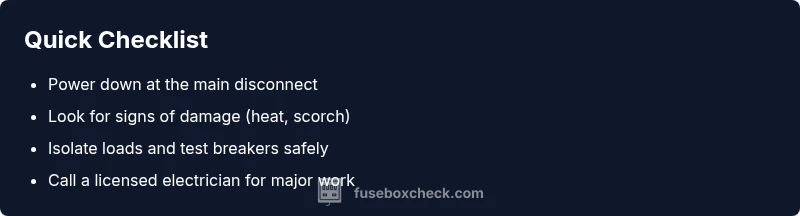
If you can do so safely, start with these quick fixes to reduce risk while you plan a full assessment: (1) Power down the main disconnect to stop all loads and prevent further stress on the system. (2) Unplug nonessential appliances and devices to reduce load on affected circuits. (3) Visually inspect the panel for obvious signs of damage—burn marks, melted insulation, or loose wires—without touching any live components. (4) After the panel has cooled, reset non-critical branch breakers one by one to observe if ec3t 14b476 ba reappears. (5) If any sign of heat, burning odor, or water intrusion is present, evacuate and call a licensed electrician immediately. These steps are designed to reduce risk before a full diagnosis begins. According to FuseBoxCheck, acting quickly and safely is essential when addressing panel faults, and skipping safety steps dramatically increases the chance of injury or fire.
Step-by-Step Diagnosis Flow for ec3t 14b476 ba
A structured diagnostic flow helps identify the root cause of ec3t 14b476 ba without guesswork. Start with safety and information gathering, then test components and loads. Key steps include confirming the panel is de-energized, inspecting for physical damage, isolating loads, and testing breakers in a controlled sequence. If the fault persists after load isolation, the problem may lie with the main breaker or feeder cables. A cautious, repeatable approach minimizes risk and clarifies whether a DIY fix is appropriate or a licensed electrician is required. FuseBoxCheck’s recommended flow emphasizes documentation and staged testing to avoid cascading failures and to ensure you’re prepared for professional service if needed.
In-Depth Fixes: From Quick Fixes to Permanent Solutions
Once you’ve completed quick fixes and confirmed the fault’s persistence, you can consider deeper interventions. Safe, de-energized work on the panel may include tightening loose terminal screws and replacing obviously damaged breakers with the correct amperage rating. If the main breaker or feeder cables show signs of wear, or if when you reintroduce loads ec3t 14b476 ba reappears, it’s time to escalate to a licensed electrician. Cost-wise, expect a broad range: simple diagnostic checks and minor part replacements can run roughly $100–$300, while panel upgrade or replacement work may range from $400–$1,500 depending on local rates, permit requirements, and whether new AFCI/GFCI capabilities are added. FuseBoxCheck Analysis, 2026, notes that the majority of cases fall into those ranges, with variability by home age and panel type. A professional assessment helps ensure compliance with code and long-term reliability.
In many cases, a persistent fault originates in a weakened main breaker, corroded connections, or overloaded feeders. Temporary DIY fixes may keep a system running short-term, but permanent solutions typically require component replacement or panel upgrades. Plan for a detailed inspection, bring a list of observed symptoms, and ensure you’re prepared for expertise beyond DIY if necessary.
Safety, Costs, and When to Call a Pro
Safety is non-negotiable when dealing with fuse boxes. If ec3t 14b476 ba appears along with warmth, buzzing, or burning smells, a professional is required immediately. Do not attempt to repair inside a live panel unless you are fully trained and equipped for electrical work. Typical costs include diagnostic fees, part replacements, and possible panel upgrades. A diagnostic visit may cost around $100–$300, with additional parts and labor bringing total repairs into the $200–$1,200 range for most fixes, and potentially higher for major panel work. The exact price depends on your location, panel type, and whether upgrades (AFCI/GFCI) are included. FuseBoxCheck recommends obtaining written estimates and confirming all safety concerns are addressed before proceeding with any service. The goal is to restore reliable, code-compliant operation with minimal downtime.
How FuseBoxCheck Approaches This Issue
When ec3t 14b476 ba appears, FuseBoxCheck prioritizes safety, systematic diagnosis, and clear communication with homeowners. Our approach combines rapid triage, practical quick fixes, and structured recommendations for professional repair. We emphasize verifying de-energization, isolating circuits, and documenting the fault to guide later work. The aim is to minimize risk while delivering a reliable, long-term solution. These steps align with our 2026 research and wire-path best practices for responsible home electrical care.
Steps
Estimated time: 60-90 minutes
- 1
Prioritize Safety and Power Down
Shut off the main disconnect to cut power to the entire panel, then verify with a non-contact tester that the area is de-energized. This first step prevents shocks and further arcing. Keep children and pets away from the area during inspection.
Tip: Always assume components can be live when handling a panel. - 2
Inspect for Visible Damage
With the panel open and de-energized, look for scorch marks, melted insulation, loose terminating screws, or signs of moisture. Do not touch exposed conductors if you see any heat or damage; note your observations for the electrician.
Tip: Use a flashlight and a mirror to inspect deep inside the panel safely. - 3
Isolate and Re-check Loads
Turn off all branch breakers except the essential circuits, then gradually re-energize them one by one to identify which circuit triggers the fault. This helps isolate the problem area and prevents a full re-tripping.
Tip: Record which circuit is problematic for the electrician. - 4
Test the Main Breaker
If you have a replacement breaker of the same rating and the panel is deemed safe to handle, gently test by swapping only with power completely off and a qualified tester. If you’re unsure, stop here and call a pro.
Tip: Never force a breaker that doesn’t seat properly. - 5
Assess Feeder Cables
Check the feeder cables for signs of wear or damage, which may require professional replacement. Damaged feeders are a common cause of recurring faults and are not safe to repair without proper equipment and training.
Tip: Document feeder condition with photos for your electrician. - 6
Decide on Next Steps
If the fault persists after isolated testing or if there are any signs of damage, contact a licensed electrician for a full assessment and possible panel upgrade. Do not bypass code requirements or perform high-risk repairs yourself.
Tip: Ask for a written warranty and a detailed estimate.
Diagnosis: ec3t 14b476 ba is displayed and the main panel trips
Possible Causes
- highOverloaded circuits dragging main breaker
- mediumLoose or corroded connections in the main panel
- lowFaulty main breaker or feeder cable
Fixes
- easyPower down safely and reduce load by unplugging nonessential devices
- mediumTighten loose connections (only if panel is de-energized; otherwise call a pro)
- hardReplace the main breaker or repair feeder as required by licensed electrician
Your Questions Answered
What does ec3t 14b476 ba indicate in a fuse box?
ec3t 14b476 ba is a representative fault code used for demonstration in this guide, signaling a panel fault. It prompts safety steps and a diagnostic sequence to identify the root cause, such as overload, loose connections, or a failing main breaker. Always treat it as urgent and follow local codes.
ec3t 14b476 ba is a demo code indicating a panel fault; start with safety steps and diagnose the root cause before any repair.
Is it safe to DIY a fuse box repair?
DIY work on a fuse box is only safe for experienced homeowners with proper training and the right tools. For most steps, especially dealing with the main breaker or extensive wiring, hire a licensed electrician. Always prioritize safety and local electrical codes.
DIY on a fuse box is risky; hire a licensed electrician for the main work and follow safety codes.
What are typical costs to fix this error?
Costs vary widely by region and panel type. Expect diagnostic fees around $100–$300, with additional parts or labor potentially totaling $200–$1,500 for replacements or upgrades. Obtain multiple written estimates and ensure the scope includes any AFCI/GFCI upgrades.
Typical costs range from a few hundred to over a thousand dollars, depending on the work needed.
When should I call a licensed electrician?
Call a licensed electrician immediately if you notice heat, burning smell, buzzing, smoke, or the panel remains warm after attempts to reset breakers. Persistent faults or signs of moisture or corrosion also require professional assessment.
Call a licensed electrician right away if you smell burning, hear buzzing, or the panel stays hot.
Can a buzzing panel cause safety risks?
Yes. A buzzing panel can indicate loose connections, arcing, or overloaded circuits. Stop work, disconnect loads if safe, and seek professional evaluation to prevent fire hazards and electrical shock.
Buzzing means something needs professional checking; don’t ignore it.
Watch Video
Highlights
- Power down first; safety is non-negotiable.
- Isolate loads and identify the faulty circuit.
- Call a licensed electrician for main panel work.
- Document symptoms and keep notes for future maintenance.