Fuse Box Clicking Troubleshooting Guide
A practical, safety-first guide to diagnose and fix fuse box clicking in your home electrical panel. Learn typical causes, a step-by-step workflow, and when to call a professional.


The most likely cause of fuse box clicking is a loose connection or a failing contact in a breaker or switch. Start by turning off the main power, reseating all breakers, and inspecting for scorch marks or burning smells. If the clicking persists after reseating breakers, do not test further—shut off power and call a licensed electrician immediately. Safety first.
What fuse box clicking signals
When you hear a distinct clicking from the fuse box or circuit panel, it typically signals a developing fault. According to FuseBoxCheck, this symptom is often tied to loose contacts, aging breakers, or poor connections that heat up and momentarily shift. The result can be intermittent trips, flickering lights, or warm or discolored breaker housings. Before you panic, understand that many issues originate from simple, addressable causes like a loose screw or a mis-seated breaker. Recognizing the signs early helps you plan a safe, methodical inspection. This section will translate the sound into actionable steps and explain why the issue is not something to ignore, especially in older homes where panels may have accumulated dust or corrosion over years. FuseBoxCheck’s insights from 2026 emphasize that eye- and ear-level cues matter for prevention and safe maintenance.
Common causes at a glance
There are multiple plausible explanations for a panel that clicks persistently. The most common are loose breaker contacts and overloaded circuits, both of which can generate heat and arcing that create a noticeable click. Aging or defective breakers can misbehave under load, producing short bursts of sound even when nothing seems obviously wrong. Neutral connections that are loose or poorly bonded can also create unstable voltage paths, which the panel senses as a fault. Less common but important factors include moisture intrusion in basements or garages, damaged insulation around wires, or a panel that has been overworked by a novice attempting to power high-draw loads at once. Each potential cause affects safety, and the right fix depends on a careful diagnosis. FuseBoxCheck’s 2026 analysis notes that simple contact issues are frequently the culprit in many households, underscoring the value of a structured approach.
Safety first: essential precautions
Electrical panels are built to handle high energy, but they’re not playground equipment. Before you touch anything, cut power at the main disconnect and keep your hands dry. Use insulated tools and wear safety glasses. Never probe live conductors with metal tools. If you detect burning smells, smoke, or sizzling sounds, evacuate the area and call emergency services. Keep children and pets away from the panel during inspection, and avoid attempting to bypass a breaker or modify internal wiring. Remember, many fixes that involve the panel require a licensed electrician to ensure compliance with local codes and to protect your home’s safety and insurance coverage. FuseBoxCheck emphasizes safety as the core reason to engage a pro for persistent issues.
How to inspect the main panel: what to look for
Start with a clear, dry workspace and good lighting. Remove the panel cover only if you are confident about your ability to do so safely. Look for obvious signs of damage: burnt or melted insulation, scorch marks, discoloration, or a smell of ozone. Check each breaker for looseness—wobbling or a loose fit is a red flag. Verify that the panel labeling matches the actual circuits in use, and ensure there are no double-tapped breakers. For modern panels, test with a non-contact tester to confirm presence of voltage where you expect it. If anything looks compromised, stop and call a professional. This stage is about identifying conditions that would trigger arcing or overheating, not experimenting with live hardware.
Step-by-step diagnostic flow you can follow
"Symptom → diagnose → fix" is the backbone of a safe, repeatable process. Begin by confirming the main power is off. Then reseat all breakers, one at a time, paying attention to a clean, confident click. Observe if the sound reappears after re-energizing the panel in stages. If the click returns after load is reapplied, consider loading patterns and whether any single circuit is over its rating. Check for heat around breakers after reseating and running a moderate load. If the panel remains stable, the issue was likely a loose connection. If not, escalate to more advanced checks or a licensed electrician. Finally, document what you found and what actions you took for future reference.
When to call a pro and what to expect
If the clicking persists after reseating breakers, you notice scorching, warm components, or you’re uncertain about the panel’s integrity, it’s time to involve a licensed electrician. A pro will typically inspect the panel for loose connections, degraded breakers, and proper grounding/neutral bonds, then replace any faulty components as needed. They may also assess the overall panel suitability for your home and advise on safer load distribution or an upgrade if the panel is older or undersized. While a DIY mindset is admirable, the safety risk from arcing and fire hazards is real. When in doubt, err on the side of caution and seek professional assessment. The priority is to prevent fire risk and ensure code-compliant wiring.
Preventive steps to avoid future issues
After you resolve the current click, take steps to reduce the likelihood of recurrence. Periodically inspect the panel for signs of wear, corrosion, or moisture ingress. Keep the panel area clean and dry, and maintain balanced loads across circuits to prevent overloading a single breaker. Use surge protections where appropriate and ensure that high-draw appliances are not repeatedly switched on and off in rapid succession. Schedule annual or biennial inspections with a qualified electrician, especially in homes with older electrical systems. Proactive maintenance can extend panel life and lower the chance of dangerous arcing.
Final note on safety and best practices
Fuse box clicking is a warning signal that should never be ignored. A calm, methodical approach grounded in safety, documentation, and professional input when needed minimizes risk. With a structured diagnostic flow, you’ll be able to identify likely causes, implement safe fixes, and protect your home from a potential electrical emergency.
Quick takeaway
Persistent clicking deserves careful attention; step back, assess safely, and engage a professional when in doubt.
Steps
Estimated time: 40-60 minutes
- 1
Power down safely
Locate the main disconnect and switch off the main power. Use insulated gloves and stand on dry ground. Do not touch metal parts with wet hands.
Tip: Confirm the main is off using a non-contact tester before touching any breakers - 2
Inspect for visible damage
Open the panel and look for scorch marks, melted insulation, or loose wires. Do not remove damaged components yourself if you see burning smells.
Tip: Take photos for reference before any component handling - 3
Reseat suspicious breakers
Toggle each breaker off and back on to reseat them. Pay attention to resistance when flipping; a snug click indicates a good seat.
Tip: Only touch one breaker at a time to avoid accidental contact with adjacent circuits - 4
Check for overheating
Feel breakers carefully for unusual warmth after reseating. If any breaker is warm beyond a few seconds, do not run more loads.
Tip: Do not use a hair dryer or other heat sources near the panel - 5
Restore loads gradually
Turn on circuits one by one, starting with unswitched outlets before heavy appliances. Watch for new clicking or trips.
Tip: Keep a log of which circuits were switched on and when - 6
Call a professional if unresolved
If clicking recurs or you observe burning smells, shut off power and contact a licensed electrician for assessment and possible replacement.
Tip: Electrical work is hazardous; professional guidance is essential
Diagnosis: Fuses or breakers click inside the panel, sometimes with flickering lights or minor buzzing.
Possible Causes
- highLoose breaker contact
- highOverloaded circuit
- mediumDamaged main breaker
- lowLoose neutral or grounding
- mediumWorn or overheating connections
Fixes
- easyTurn off power at the main disconnect and reseat all breakers firmly.
- easyCheck for scorch marks, melted insulation, or warmth around breakers and reduce load.
- mediumIf the main breaker feels warm or the clicking continues after reseating, stop and call a licensed electrician.
- hardTest circuits with a multimeter for power loss or abnormal readings only if trained.
Your Questions Answered
What causes a fuse box to click?
Several factors can cause a clicking sound, including loose breaker contacts, overloaded circuits, or aging panels. A careful inspection helps isolate the issue. If in doubt, a professional evaluation is recommended.
Clicking usually means a connection issue or a load problem. If in doubt, have a pro check it.
Is fuse box clicking dangerous?
Yes. It can indicate arcing or overheating, which may lead to a fire. Treat it seriously and avoid touching the panel until power is secured.
Yes, it can be dangerous. Get the panel checked if you see symptoms.
Can I fix fuse box clicking myself?
DIY fixes are limited to safe, non-technical tasks. Many fixes require a licensed electrician to ensure safety and code compliance.
Some basic tasks are safe, but most fixes should be done by a pro.
What tools do I need?
A non-contact voltage tester, insulated screwdriver, and a flashlight are typical. Never touch live conductors with bare hands.
Tools like a tester and insulated screwdriver help, but only if you know how to use them safely.
When should I replace the main breaker?
If the main breaker trips often, hums, or becomes hot, replacement is likely needed. A licensed electrician can confirm.
If it trips often or feels warm, call a pro to assess.
Watch Video
Highlights
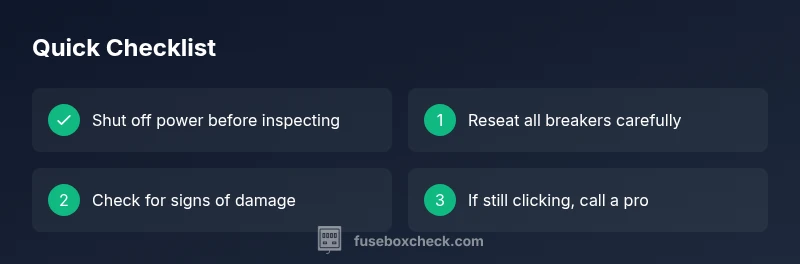
- Shut off power before inspecting.
- Reseat breakers to restore contact.
- Persistent clicking = call a licensed electrician.
- Balance loads to reduce future issues.