Fuse Box Troubleshooting for Christmas Lights
Urgent, practical guide to diagnosing fuse box trips caused by Christmas lights. Learn safe checks, common causes, and when to call a licensed electrician for holiday safety.


If your fuse box trips when Christmas lights are on, the most common issue is an overloaded circuit from many light strings or a faulty outlet. Start by unplugging all lights and resetting the breaker, then inspect cords for damage and connections for tightness. If the problem continues, limit loads and call a professional.
Why fuse box on christmas lights is risky
According to FuseBoxCheck, the fuse box on christmas lights often gets overloaded when people run many strings from a single outlet. Holiday lighting naturally increases circuit demand, and this can expose aging breakers or undersized wiring before you even realize it. The FuseBoxCheck team found that many homes underestimate load when outdoor displays spool out across porches, trees, and eaves. The result is nuisance trips, heat buildup at outlets, and, in worst cases, arcing that jeopardizes nearby decorations and dry seasonal décor. This is not hyperbole—tripping breakers during a holiday display can interrupt comfort, safety, and tradition in minutes. In this guide you’ll find a practical, safety‑driven approach to diagnosing the problem, with a clear path to fixes and prevention, so you can enjoy your lights without compromising electrical safety.
Common causes of trips during holiday lighting
Holiday lighting creates unusual load patterns. The most common culprits include overloaded circuits from multiple strings plugged into a single outlet, damaged or frayed cords, loose connections at plugs or outlets, and outdoor outlets without weatherproofing or a proper GFCI protection. Additionally, using cheap or non‑listed power strips, running lights on circuits that serve heavy appliances, or daisy‑chaining many strings beyond the manufacturer’s recommended limit can push breakers to their limit. Water exposure and moisture near outdoor outlets further raise the risk of short circuits. Identifying which of these factors is at play requires careful inspection and a methodical testing sequence to avoid blind guesses and unnecessary risk.
Safety-first steps you can take before diagnosing
Before touching any wiring, switch off the circuit at the main panel and unplug all lights. Do not attempt to diagnose energized circuits. Wear non‑conductive footwear and keep hands dry. For outdoor installations, verify that cords and outlets are rated for exterior use and that you are using a ground fault circuit interrupter (GFCI) or an AFCI‑protected outlet where required by local code. Keep decorations away from flammable materials and never run lights through water or snow accumulations. Document any visible damage to cords or plugs and avoid plugging damaged strings back in. If you notice persistent heat, burning odors, or scorch marks, stop immediately and call a licensed electrician.
How to perform a quick diagnostic check
A systematic check starts with the simplest elements. Test the lights one string at a time on separate outlets to see which string causes a trip. Inspect each string for damaged insulation, exposed conductors, or loose sockets. Use a non‑contact voltage tester to verify outlets supply power consistently and check that the outlet isn’t warm to the touch. Examine extension cords for internal breaks or kinks. If the circuit trips only when a specific outlet is used, the issue likely lies with that outlet or its wiring rather than the lights themselves.
Step-by-step fix for the most common cause
First, unplug everything and reset the breaker's handle to the full OFF position, then back to ON. Reintroduce lights one string at a time, testing each string in isolation. Replace any damaged strings or damaged plugs, and avoid running too many strings on one circuit. Ensure you are using outdoor-rated cords for exterior displays and that all connections are tight and dry. If the breaker trips again, do not keep resetting it; this is a sign of an underlying fault and a licensed electrician should be consulted.
Troubleshooting flow chart: if it still trips
If the breaker trips after testing individual strings, check for moisture around outdoor outlets and ensure weatherproof enclosures are properly sealed. Confirm that the total load on the circuit does not exceed the outlet’s rating and that no other high‑demand devices are sharing the same circuit. When in doubt, reduce the number of strings further or switch to a separate circuit for outdoor decorations. Recheck after each adjustment, and remember: persistent tripping is a red flag that safety work is needed.
Prevention tips to enjoy safe lights every season
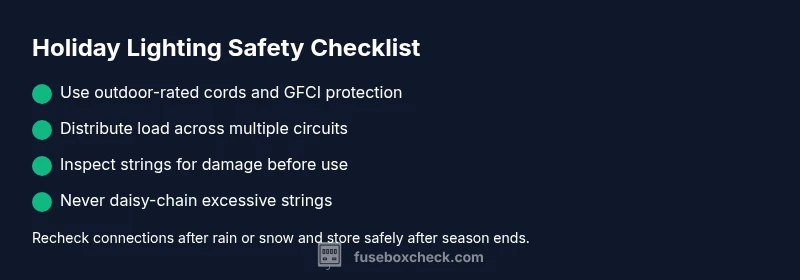
Plan your holiday lighting load early. Distribute lights across multiple circuits and use outdoor outlets only when equipped with proper weather protection. Use certified, UL‑listed decorations and avoid cheap adapters. Store decorations neatly, label strings by location, and inspect gear before each season. Regular maintenance, including checking for frayed wires and replacing damaged items, will extend the life of your display and keep circuits healthy.
When to call a professional
If you encounter repeated trips after following these steps, or if you notice buzzing sounds, burning smells, or visible heat near your panel or outlets, shut off power at the main and call a licensed electrician. Complex issues like degraded panel components, moisture intrusion in the junction box, or faulty AFCI/GFCI devices require a professional assessment. A pro can perform non‑invasive diagnostics, verify proper load calculations, and ensure your electrical system remains safe for future seasons.
Steps
Estimated time: 30-45 minutes
- 1
Power down and unplug all lights
Before touching any wiring, switch off the circuit at the main panel and unplug every light string. This reduces the risk of shock while you inspect. Wear non-conductive footwear and avoid wet surfaces.
Tip: Always unplug the plugs, not yanking a cord from the outlet. - 2
Reset the breaker and test a single string
Return the breaker to the ON position, then plug in one string at a time into a separate outlet. Observe if the breaker holds or trips, noting which string causes the issue.
Tip: Start with the safest, shortest extension cord first. - 3
Inspect each string for damage
Look for cracked insulation, exposed wires, broken sockets, or scorch marks. Replace any damaged strings and do not attempt to repair frayed insulation.
Tip: Check around the plug, not just the middle of the string. - 4
Check outlets and weatherproofing
Ensure outdoor outlets are rated for exterior use and protected by a weatherproof cover. Test GFCI outlets and replace any faulty devices with UL-listed components.
Tip: Keep your outdoor setup dry and away from puddles. - 5
Distribute the load
Spread strings across multiple circuits if possible. Do not exceed the manufacturer’s recommended number of strings per outlet or per circuit.
Tip: Label which outlets feed which areas to balance load. - 6
Re‑test and monitor
Gradually reintroduce lights while monitoring for heat or unusual smells. If the breaker trips again, stop and seek professional help.
Tip: Document steps taken for the electrician. - 7
Document and store safely
Record what worked and what didn’t for next season. Safely store lights in a dry location, and inspect gear again before reuse.
Tip: Avoid storing defective items together with good ones. - 8
Know when to escalate
If trips persist after following these steps, do not continue attempting resets. A licensed electrician should diagnose panel health, wiring integrity, and code compliance.
Tip: Safety first: never bypass trip protections.
Diagnosis: Fuse box trips whenever Christmas lights are turned on
Possible Causes
- highOverloaded circuit from multiple strings on a single outlet
- highDamaged or frayed light cords or sockets
- mediumMoisture or water intrusion in outdoor outlets
- lowFaulty breaker or panel component
- mediumUsing non‑outdoor rated accessories or improper load distribution
Fixes
- easyUnplug all lights and reset the breaker, then test strings one-by-one to locate the fault
- easyInspect cords and plugs for wear; replace damaged items; avoid daisy‑chaining too many strings
- easyEnsure outdoor outlets have weatherproof covers and use GFCI/AFCI protection where required
- easyDistribute load across multiple circuits and avoid plugging heavy appliances into the same outlet
- mediumIf trips persist, contact a licensed electrician to inspect the panel and wiring
Your Questions Answered
Why does my fuse box trip when Christmas lights are on?
Trips are usually caused by load overload, a short, or moisture near outdoor outlets. Systematically test each string and outlet to identify the culprit before proceeding.
Trips are usually caused by overload, a short, or moisture near outdoor outlets. Test strings and outlets to identify the culprit.
Is it safe to reset a breaker with lights plugged in?
No. Unplug all lights first, reset the breaker, then reintroduce loads one at a time. If trips recur, stop and seek professional help.
No. Unplug first, reset, then test loads one by one. If it trips again, call a pro.
Can outdoor lights affect indoor circuits?
Yes, if the outdoor circuit shares a breaker with indoor outlets. Use separate circuits or ensure proper GFCI protection.
Yes, if they share a circuit; use separate circuits or GFCI protection.
When should I replace a fuse box or breaker?
If you notice frequent trips, signs of damage, or scorching, have a licensed electrician inspect and replace faulty components.
If trips are frequent or you see damage, call an electrician.
What should I inspect on light strings?
Look for worn insulation, frayed cords, broken sockets, and loose plugs. Replace damaged strings immediately.
Check insulation, cords, sockets, and plugs, and replace damaged strings.
How can I prevent future trips during holidays?
Spread the load across circuits, use outdoor-rated gear, and test equipment before decorating. Avoid daisy‑chaining too many strings.
Spread the load, use proper gear, and test equipment before decorating.
Watch Video
Highlights
- Unplug and test in stages to locate the fault
- Distribute load across circuits to prevent trips
- Inspect for damaged cords and moisture near outlets
- Call a licensed electrician if trips persist