Fuse Box Smells Like Burning Plastic: Urgent Troubleshooting Guide
Urgent guide: If your fuse box smells like burning plastic, shut power safely, perform quick checks, and call a licensed electrician for a full panel assessment and potential replacement.


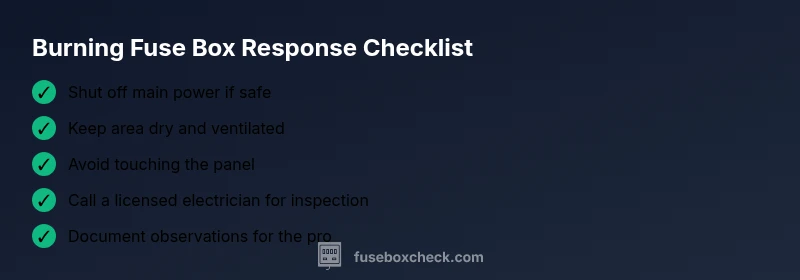
If your fuse box smells like burning plastic, shut off power at the main disconnect if safe, and call a licensed electrician immediately. This odor often signals overheating, melted insulation, or arcing. Do not touch exposed wires or open the panel; pursue professional help to prevent fire or electric shock.
Understanding the warning signs when fuse box smells like burning plastic
A burning plastic odor near the fuse box is a warning signal, not a nuisance. The exact phrase “fuse box smells like burning plastic” is a common report from homeowners when insulation or wiring overheats. According to FuseBoxCheck, such odors indicate potential overheating, insulation damage, or arcing inside the panel, which raises the risk of electrical fire. Even if the smell seems faint, treat it as urgent. Visible signs such as scorch marks, melted plastic, or discolored breakers are not normal and require immediate action. Do not ignore the odor or try to force the panel to reset a breaker; a faulty connection can heat rapidly and spread to other parts of the system. For safety, keep children and pets away from the panel, ensure you have an exit route, and avoid using water to cool the area—water and electricity are a dangerous combination. If the odor worsens or you see smoke, evacuate and call emergency services. In almost every case, the safe next step is to shut down power at the main disconnect if you can do so safely and then call a licensed electrician for a professional assessment.
Immediate safety actions you should take now
First, assess whether you can reach the main disconnect safely. If you can, switch off the entire house power and unplug or power down critical devices on any affected circuits. Do not open the fuse box lid or touch any wires if there is a noticeable heat or smoke. Keep a safe distance and ensure others do the same. If you cannot access the main disconnect safely or the smell intensifies, evacuate and contact emergency services. After power is off, do not attempt to reset any breakers or replace fuses yourself. Instead, document what you observed (odor strength, any smoke, visible damage) and wait for a licensed electrician to inspect. Always have a working smoke alarm in the area and a fire extinguisher rated for electrical fires accessible. FuseBoxCheck recommends prioritizing safety above all and seeking professional help promptly to prevent a potential ignition.
Common causes you should know
Burning plastic odors from a fuse box are commonly linked to overheating caused by loose connections, overloaded circuits, or insulation damage. A worn or loose breaker or fuse can heat up, creating an acrid smell and, in worst cases, arcing. Water intrusion or high humidity near the panel can also contribute to insulation breakdown. Older panels may have degraded components that fail under load. While some signs are visible (scorch marks, melted insulation), many issues are internal and require professional testing. Do not assume the problem is a simple reset; escalating heat and arcing can occur without obvious external damage. Recognize patterns such as breakers frequently tripping, warm-to-the-touch panel surfaces, or a persistent chemical odor. These signals reinforce the need for inspection by a licensed electrician, especially if the panel is behind walls or in a tight enclosure.
Diagnostic approach: creating a plan without guessing
A structured diagnostic approach helps prioritize safety. Start with the symptom: fuse box smells like burning plastic. Consider the most likely causes in order: loose connections causing overheating, overloaded circuits, and worn or damaged breakers causing arcing. For each cause, correlate observable clues (odor strength, heat, scorch marks) with potential fixes. The key is to avoid guessing, especially when safety is at stake. If you are unsure, treat it as a high-risk situation and escalate to a professional. Document the timeline of when the odor started, any events that preceded it (new appliances, recent wiring work), and whether the smell is localized to a particular area or circuit. This information helps the electrician pinpoint the issue quickly and minimizes downtime.
Step-by-step safe checks you can perform before professional help
- Locate the main service disconnect and verify you can access it safely. If yes, switch off power to the entire home and keep the area ventilated. 2) Visually inspect the exterior of the panel for scorch marks or melted plastic; do not open the panel if you notice heat or smoke. 3) If safe, identify any circuits that recently added heavy loads; avoid using or relocating those devices until inspected. 4) Do not reset any tripped breakers while a burning odor persists. 5) Call a licensed electrician for a full inspection; share your observations and any photos. 6) After service, request a thorough panel evaluation and discuss replacement options if the panel is old or damaged. 7) Integrate a preventive plan: test smoke detectors, schedule regular panel maintenance, and avoid overloading circuits in the future.
Safety, prevention, and when to call a pro
Immediate professional assessment is essential if you notice a burn-like odor around the fuse box. Do not attempt DIY repairs or panel replacements. Always prioritize safety: keep the area dry, avoid touching live parts, and ensure you have an unobstructed exit route. If there is any sign of fire, evacuate immediately and call emergency services. After a professional assessment, consider upgrading a legacy panel, improving circuit labeling, and implementing ongoing electrical maintenance to reduce future risk. FuseBoxCheck emphasizes that proactive maintenance and timely replacement of aging components dramatically lowers the chances of a serious electrical incident.
Steps
Estimated time: 60-90 minutes
- 1
Power down safely
Locate the main disconnect and switch off power to the home if you can do so safely. This reduces the risk of further overheating or arcing while you assess the situation.
Tip: Stand on a dry surface; avoid touching metal parts. - 2
Check for visible damage
Look for scorch marks, melted plastic, or charred insulation around the panel from the outside. Do not open the panel if heat or smoke is present.
Tip: Use a flashlight and keep a safe distance. - 3
Limit further load
If power is off and you can safely access it, unplug devices on circuits that previously showed heat or odor to reduce the risk of rebound overheating.
Tip: Label circuits so you know what to avoid when power is restored. - 4
Avoid reset attempts
Do not reset tripped breakers or replace fuses while there is a burning odor. Resetting can spur more heat or arcing.
Tip: Waiting for a professional prevents escalation. - 5
Call a licensed electrician
Explain the odor and any signs you observed. A pro can perform insulation resistance tests, thermography, and determine if replacement is needed.
Tip: Have your observed details ready for the technician. - 6
Follow up after service
Get a full written report and a plan for maintenance, labeling, and potential panel upgrade if the panel is old.
Tip: Schedule periodic checks every few years. - 7
Prevention steps
Invest in regular panel cleaning, avoid overloading circuits, and ensure detectors and alarms are functioning correctly to catch issues early.
Tip: Keep a clear space around the panel for quick access in an emergency.
Diagnosis: Fuse box smells like burning plastic
Possible Causes
- highLoose connections causing overheating
- mediumOverloaded circuit causing insulation overheating
- mediumWorn or damaged breakers or fuses causing arcing
Fixes
- easyShut off power at the main disconnect if accessible and safe
- easyInspect the outside of the panel for scorch marks; do not open the panel if heat or smoke is present
- hardCall a licensed electrician for a full inspection and panel repair or replacement as needed
- easyUnplug or reduce loads on nonessential devices on affected circuits if safely possible
Your Questions Answered
What does a burning plastic smell from a fuse box mean?
It usually indicates overheating or arcing inside the panel. This is a safety hazard and requires immediate action—shut off power if safe and contact a licensed electrician.
A burning plastic odor from a fuse box usually means overheating or arcing. Shut off power if safe and call a licensed electrician right away.
Is it safe to flip breakers to stop the smell?
No. Don’t reset or flip breakers when you smell burning. If safe, shut off power at the main disconnect and wait for a professional evaluation.
No. Don’t reset breakers when you smell burning; switch off at the main disconnect if safe and call a professional.
Can an overload cause a burning odor in the fuse box?
Yes. Overloading circuits can overheat insulation and create a burning smell, signaling a risk that needs professional inspection.
Overloading circuits can cause overheating and a burning odor; it needs professional inspection.
When should I contact emergency services?
If you see flames or thick smoke, evacuate immediately and call emergency services. For a burning odor without flames, contact a licensed electrician promptly.
If there are flames or heavy smoke, evacuate and call emergency services. Otherwise, contact a licensed electrician quickly.
What should I do while waiting for a pro?
Keep the area clear, avoid water, and unplug nonessential devices on unaffected circuits if it’s safe to do so. Do not touch the panel again.
Stay safe, keep clear of the panel, and unplug nonessential devices if safe while you wait for the pro.
Should I replace my fuse box after a burn odor?
Only after a professional inspection. If the panel is old or damaged, replacement may be recommended by the electrician.
Let the electrician decide whether a replacement is needed after inspection.
Watch Video
Highlights
- Shut off power safely if you can do so without risk.
- Do not reset a breaker that smells burnt or hot.
- Call a licensed electrician promptly for a professional assessment.
- Plan for panel maintenance or upgrade to reduce future risk.