Fuse Box Z800 Error Code: Urgent Troubleshooting Guide
Urgent guide to diagnosing and safely fixing the Fuse Box Z800 error code with practical steps, quick fixes, and professional thresholds.


Definition: The fuse box z800 error code signals a safety-critical fault in the electrical panel or its signaling circuits, often from overloads, loose terminations, or a failing sensor. Treat it as urgent: shut off power at the main disconnect, inspect for heat or burning, and start with simple checks before testing. This quick fix approach prioritizes safety and clear steps for a homeowner.
What the fuse box z800 error code means
The fuse box z800 is a warning label used to describe a fault within the electrical panel's protection or signaling systems. In plain terms, it indicates the panel detected an abnormal condition that could affect safety, power distribution, or both. For homeowners, this means you must act with caution, not assume it’s a minor nuisance. FuseBoxCheck's guidance emphasizes treating every Z800 alert as urgent, verify power isolation, and proceed with careful inspection. This section lays the groundwork for a calm, methodical response that reduces risk and helps you reach a safe resolution faster.
Recognize the symptoms and risk factors
Common symptoms accompanying the Z800 alert include a momentary power flicker, a tripped main breaker, a buzzing noise from the panel, or a warmth/heat feel around the enclosure. Frequent tripping on multiple circuits or burning smells around the panel are more serious and require immediate action. Risk factors to watch for include damp locations, recent electrical work, visible corrosion on terminals, or signs of moisture intrusion. Understanding these symptoms helps you triage quickly and avoid attempting risky repairs.
Immediate safety steps you should take now
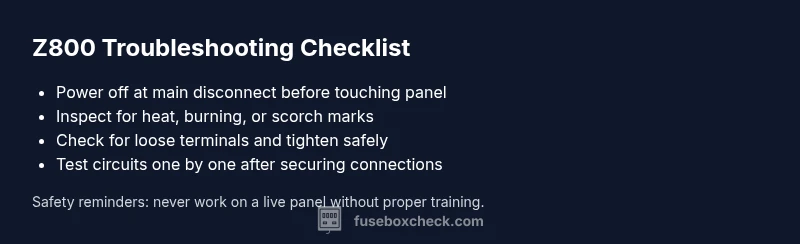
- Stop testing with live circuits; do not touch exposed conductors. 2) Switch off the main power disconnect and, if safe, switch off nearby breakers to reduce load. 3) Do a visual scan from a safe distance for burnt or melted insulation, scorch marks, or a warm panel surface. 4) If you smell burning or hear crackling, evacuate and contact emergency services if needed. 5) When safe, prepare to test with non-contact tools or a professional for an in-depth check.
Diagnostic flow: from symptom to root cause
Start by noting the symptom (panel light, trip pattern, odor). Then consider likely causes: overload or short, loose connections, defective breaker or sensor, moisture intrusion, or a failing main bus. Quick fixes should target the most probable causes first (like loose terminations or overloads), followed by more thorough checks if the issue persists. Always document findings to share with a licensed electrician if you need to call for professional help.
Most common causes and quick fixes
- Overload on a circuit or misrated breaker: reduce load, redistribute devices, or replace a faulty breaker if you’re qualified. - Tripped breaker or faulty sensor: reset in a controlled manner and test the affected circuit. - Loose connections: a loose terminal can cause heat and arcing; tightening should be done by a qualified person. - Moisture or humidity intrusion: ensure dry conditions around the panel and fix any water ingress sources. - Aging components: breakers, sensors, or the bus bars can degrade; replacement may be needed with proper parts.
Step-by-step fix overview (top-risk focus: loose connections)
If the root cause is suspected to be loose terminations, follow a cautious approach: power off at the main disconnect, remove the panel cover, visually inspect for loose wires at each terminal, gently tighten with appropriate insulated tools, re-seat any suspect connectors, and reassemble the panel. Re-energize circuits one by one to observe stability, and watch for heat or unusual noises. If you notice damage, replace the affected components or call a pro. Safety first.
Prevention, safety, and when to call a professional
Regular inspection of panel interiors, clean dry surroundings, and ensuring correct equipment sizing are key preventive steps. Keep access to the main disconnect clear and schedule periodic professional inspections as part of home electrical safety. If you’re uncomfortable with live testing, or if there are signs of damage (burn marks, smells, or heavy arcing), stop and call a licensed electrician. Budget for safety: costs vary with scope and region, but plan for a professional assessment when in doubt.
Steps
Estimated time: 60-90 minutes
- 1
Power down and verify safety
Shut off the main disconnect and any nearby breakers you will touch. Use a non-contact tester to confirm no voltage is present in the panel, and keep others at a safe distance.
Tip: Always work with dry hands and wear appropriate PPE. - 2
Open the panel and inspect visually
Remove the panel cover only if you are comfortable and authorized. Look for scorch marks, melted insulation, or loose wires at each terminal.
Tip: Do not touch live bus bars; keep tools insulated. - 3
Tighten or reseat connections
Gently tighten any loose looking terminals and reseat suspected connectors. Do not over-tighten, which can damage the terminal.
Tip: Use a torque-limiting screwdriver if available. - 4
Reset and test in stages
After securing connections, reassemble the panel and restore power in stages, testing one circuit at a time for stability.
Tip: Document each circuit you test and watch for any burning smells or heat. - 5
Evaluate the need for replacement
If the code recurs, or heat/arcing is observed, shut down and call a professional for a full inspection and possible part replacement.
Tip: Budget for potential panel replacement or component upgrade.
Diagnosis: Fuse Box Z800 error code appears on the panel, with or without a trip
Possible Causes
- highOverload or short on a circuit
- highLoose or corroded terminations in the panel
- mediumDefective breaker or sensor module
- lowMoisture intrusion or high humidity
Fixes
- easyRedistribute load or reset the suspected circuit
- mediumTighten loose connections with proper insulated tools (panel cover removed)
- hardReplace a faulty breaker or sensor module by a qualified electrician
Your Questions Answered
What does the Z800 error code indicate on a fuse box?
The Z800 error code signals a safety-critical fault in the panel’s protection or signaling circuit, often due to overloads, loose connections, or a faulty sensor. Treat it as urgent and inspect safely before proceeding.
The Z800 code means there is a serious panel fault; shut off power and inspect safely or call a professional.
Can I fix the Z800 error myself?
Basic checks like ensuring loads are balanced and tightening obvious loose connections can be done safely if you have electrical experience. Most fixes beyond this require a licensed electrician to avoid shock or fire risk.
Some simple checks you can do safely, but for complex repairs hire a licensed electrician.
What tools do I need to troubleshoot Z800 safely?
Non-contact voltage tester, insulated screwdriver, torque-limiting driver if available, and a dry, well-lit workspace. Do not use metal tools that can bridge conductors.
Get a voltage tester and insulated tools, and work in a dry area.
Is it safe to reset the panel after seeing Z800?
Only reset after confirming no burning smells or visible damage. If in doubt, leave the system off and call a professional. Resetting in error can worsen the fault.
Reset only if everything looks safe; otherwise, call a pro.
How long does a Z800 repair typically take?
Urgent inspections and basic fixes can take 1-2 hours, but a full panel replacement or sensor/bus work may extend the timeline to several hours or require a follow-up visit.
Most urgent checks take an hour or two, more involved fixes may need a return visit.
What are typical costs for Z800-related repairs?
Costs vary widely by location and scope. Expect general costs to involve parts and labor, with bigger repairs requiring a professional estimate.
Costs depend on what needs fixing; a pro can give you an estimate after inspection.
Watch Video
Highlights
- Identify Z800 as a safety-critical panel fault.
- Prioritize safety; shut off power before any inspection.
- Loosened connections and overloads are the most common causes.
- If you’re unsure, call a licensed electrician for repairs.