Pop from Fuse Box: Urgent Troubleshooting Guide
Urgent guide to safely diagnose and respond to a pop from the fuse box with step-by-step checks, safety tips, common causes, and when to call a licensed electrician.


Pop from fuse box usually signals a short circuit, overload, or a failing breaker. Cut power immediately by flipping the main breaker, unplug devices on the affected circuit, and avoid touching exposed wiring. If the problem persists or you smell burning, evacuate and call a licensed electrician right away. Do not bypass safety devices or work on live panels.
What a pop from fuse box means
A pop from the fuse box is more than a surprising sound—it’s a warning sign. According to FuseBoxCheck, a typical pop occurs when electricity arcs or a breaker trips from an overload. This moment signals that something on the circuit drew more current than the system could safely handle or that insulation or connections are compromised. In many homes, the immediate response is to reset a breaker, but a pop should never be ignored. Recurrent pops are a warning that the electrical system may be deteriorating or that a faulty device or wiring is present. Over time, repeated arcing can heat components and increase fire risk, so it’s essential to approach the situation with urgency but with caution.
In this guide, we’ll walk you through what to check, how to stay safe, and when it’s appropriate to call a professional. The goal is to help homeowners understand not just what happened, but why, and how to reduce the chance of a reoccurrence. Pop from fuse box events are often solvable with simple steps, but ignoring them can lead to dangerous outcomes. FuseBoxCheck emphasizes safety first and is here to help you troubleshoot with confidence.
Common causes of a pop from fuse box
Pops can stem from several common issues. The most frequent are overloaded circuits and aging safety devices, but faults in devices or wiring also play a role. Here are the primary culprits:
- Overloaded circuit: plugging too many high-draw appliances onto a single circuit is a frequent trigger.
- Faulty or worn breakers/fuses: aging devices lose their trip reliability or may fuse incorrectly.
- Damaged wiring or arcing: frayed insulation, loose connections, or damaged outlets can cause arcing that creates a popping sound.
- Moisture or water exposure: damp basements or leaks near the panel can produce micro-arcs.
- Incompatible fuse or breaker replacement: using a higher rated fuse/breaker to compensate for a nuisance trip can hide an underlying problem.
Not every pop means an imminent disaster, but each is a signal to investigate carefully and decisively. If you notice scorch marks, burning smells, or heat coming from the panel, treat it as a high-priority safety issue.
Immediate safety steps you should take
Safety is non-negotiable when you hear a pop from the fuse box. Follow these steps in order:
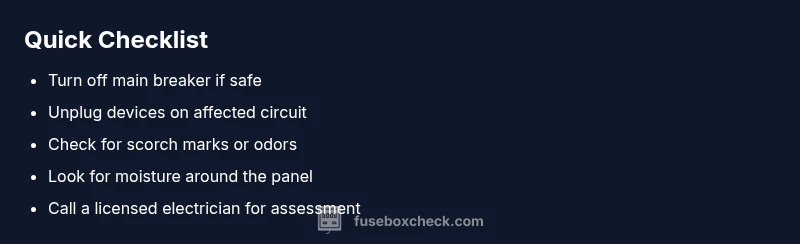
- If you hear a pop, move to safety, then switch off the main breaker if you can do so safely.
- Unplug devices on the affected circuit, starting with the highest-draw appliance.
- Do not touch metal parts or the inside of the panel, and keep children away.
- Do not attempt to reset more than once; if the trip recurs, call a professional.
- Document any signs of scorching or smell; take photos from a safe distance for reference later.
How to diagnose safely (without opening live panels)
You can narrow down the cause without risking a shock by using cautious, non-contact methods and by observing symptoms. Start by confirming which circuits were affected and whether the main breaker felt warm. Use a non-contact tester only on surfaces that are clearly safe to touch, and do not probe inside the panel. Look for obvious signs of damage, such as scorch marks or melted insulation around breakers or outlets. If moisture is suspected or you see any signs of burning, evacuate and call emergency services if needed. If you’re unsure, the safest path is to contact a licensed electrician who can perform a thorough inspection and testing with professional-grade equipment.
Common fixes you can perform before calling a pro
Many pops can be resolved without a full panel replacement, but only if you proceed with caution. Here are practical, non-invasive steps you can take:
- Replace blown fuses with the correct amperage rating as labeled on the panel, never exceeding it.
- Distribute the load: move high-draw appliances to other circuits and avoid daisy-chaining devices on one outlet.
- Inspect corded appliances for wear and replace damaged cables; never use damaged appliances on a live circuit.
- Label circuits clearly and keep a simple map of which outlets and devices are on each breaker for future reference.
- Ensure the panel area remains clean, dry, and unobstructed to reduce moisture-related risks.
If you’re not comfortable with any of these steps, or if the circuit keeps tripping, stop and call a professional.
When to call a professional and what to expect
If the pop recurs, signs of burning appear, or the panel feels hot, you should contact a licensed electrician immediately. A pro will perform a comprehensive safety assessment, test the panel with specialized equipment, identify loose connections or degraded components, and determine whether you need a repair, upgrade, or full panel replacement. Expect documentation of findings, repair recommendations, and an estimate for parts and labor. Regular maintenance by a qualified electrician can prevent future pops and improve overall home safety.
Steps
Estimated time: 30-60 minutes
- 1
Ensure safety and cut power
If safe to reach the panel, switch off the main breaker to cut all power. Do not touch live metal parts. This reduces the risk of shock during inspection.
Tip: Never bypass the main safety switch; it's your first line of protection. - 2
Identify affected circuit
Note which circuit tripped or where the pop originated. This helps you target the right breakers or fuses and avoids unnecessary testing on multiple circuits.
Tip: Label the affected circuit for future reference. - 3
Unplug devices on the circuit
Unplug high-draw appliances or electronics on that circuit to reduce load. If the breaker trips again when you re-energize, the issue may be in the wiring or device.
Tip: Test devices one by one after power restoration. - 4
Inspect the panel visually from a safe distance
Look for scorch marks, melted insulation, or damaged wiring around breakers. Do not touch interior components; a visual check can reveal obvious damage.
Tip: If you see charring or smell burnt plastic, stop and call a pro. - 5
Reset power and test the circuit
Turn the main breaker back on and restore power to the affected circuit. If it trips again, shut off power and proceed to call a professional.
Tip: Do not refresh the circuit repeatedly if it trips immediately. - 6
Consult a professional if it repeats
Persistent pops or trips indicate an underlying issue in wiring, panel degradation, or a faulty device that requires professional assessment.
Tip: Document observations (odors, heat, scorch marks) to share with the electrician.
Diagnosis: Pop or trip on fuse box when turning on a device
Possible Causes
- highShort circuit in a device or wiring on the circuit
- highOverloaded circuit due to too many devices on one circuit
- mediumFaulty breaker or blown fuse
- lowMoisture or water exposure in panel
Fixes
- easyTurn off main breaker and unplug devices on the affected circuit; reset after 60 seconds
- easyReduce load on the circuit by moving devices to other circuits
- mediumReplace blown fuse or faulty breaker with correct rating by a qualified electrician
- easyInspect for signs of moisture or burn marks and call a pro if present
Your Questions Answered
Why does a pop from the fuse box happen?
A pop usually indicates arcing, a short, or an overload on a circuit. It can also stem from a failing breaker or worn wiring. Recurrent pops require professional inspection to prevent fire risk.
A pop usually means arcing or an overload on a circuit. If it keeps happening, call a professional to inspect the breaker and wiring.
Is it safe to reset a breaker after a pop?
Only reset once and ensure you’ve unplugged devices on that circuit. If the breaker trips again or you smell burning, leave the power off and call an electrician.
Reset once if it’s safe; if it trips again or you smell burning, don’t reset and call a pro.
Can moisture cause pops in the fuse box?
Yes, moisture can cause arcing inside the panel and lead to pops. This is a signal to dry the area and have a pro inspect for moisture intrusion and corrosion.
Moisture can cause arcing in the panel, which is dangerous—get it checked by a pro.
What should I do if I smell burning near the panel?
Evacuate immediately if you smell burning and call emergency services if the odor worsens. Do not touch the panel or attempt repairs yourself.
If you smell burning, evacuate and call for professional help right away.
When should I replace the fuse box?
A fuse box or breaker panel that frequently pops, heats up, or is very old should be evaluated for replacement or upgrade by a licensed electrician.
If it frequently pops or is old, have a pro assess whether replacement is needed.
Do I need an electrician for every pop?
Not every pop requires a full replacement, but recurring events should be professionally evaluated to prevent fire risk and electrical damage.
Recurring pops mean you should call an electrician for a full assessment.
Watch Video
Highlights
- Prioritize safety before testing or touching the panel
- Identify whether the issue is overload, fault, or moisture
- Do not reset repeatedly; seek professional help if it recurs
- Document signs of damage for the electrician