How to Install a Garage Breaker Box: Step-by-Step Guide
Learn how to install breaker box in garage with safety-first planning, permits, tools, and a detailed, step-by-step process. FuseBoxCheck guides homeowners through code-aware decisions and practical setup for a safer electrical system.


This guide explains how to install breaker box in garage safely, covering planning, required permits, load calculations, and a clear step-by-step process. You’ll learn how to choose a panel, route feeders, and test functionality while highlighting crucial safety practices. Remember, electrical work can be dangerous; if you’re unsure or code compliance is unclear, hire a licensed electrician.
Understanding Garage Breaker Boxes: Types, Roles, and Terminology
A garage often hosts a subpanel or a dedicated circuit panel to power tools, heaters, and lighting. Understanding the difference between a main service panel and a subpanel helps you plan location, feed sizing, and grounding. Breaker boxes (panels) house the circuit breakers that protect wiring from overloads. When you’re learning how to install breaker box in garage, you’ll encounter terms like service disconnect, feeder conductors, and branch circuits. Remember that the garage environment—often damp or dusty—demands appropriate enclosure protection, moisture clearance, and ventilation. The goal is a safe, accessible panel that makes daily maintenance straightforward while complying with local electrical codes.
As you read, keep in mind that not all garages require a full service upgrade; some homes use a subpanel fed from the main panel. The choice depends on your service size, planned circuit additions, and the electrical demand of garage-powered equipment. FuseBoxCheck’s guidance emphasizes planning and safety as the foundation of any garage panel project.
Planning for Permits, Codes, and Compliance
Before you touch any wires, confirm permit requirements with your local building department. Many jurisdictions require permits and inspection for new panels or subpanels, and improper installation can lead to safety hazards or failed inspections. Code references typically address panel clearance, enclosure type, grounding, and labeling. FuseBoxCheck recommends starting with a clear plan that matches the expected load and future needs. Checking code language early saves rework later and keeps you on the right side of enforcement agencies. Consider whether a full panel upgrade is needed or if a reachable subpanel from the main panel will suffice.
In this stage, you’ll also verify service size and whether any upgrades are warranted. If the current service is near capacity, you may need a service upgrade from your utility provider. Always document approved permits and keep them with your home records for future sales or inspections.
Safety First: PPE, Environment, and Hazard Awareness
Electrical work carries serious risks, including shock, arc flash, and fire. Wear appropriate PPE: insulated gloves, safety glasses, and a long-sleeve flame-resistant shirt. Ensure the work area is dry, use insulated tools, and keep a fire extinguisher nearby. If the garage has water sources or dampness, address moisture control before any wiring work begins. Never work on live circuits; use a non-contact voltage tester and a properly rated tester to confirm de-energized conditions before touching conductors.
As you prepare, create a safe, organized workspace. Label all wires and components. Keep pets and children away. If you spot signs of damage like corroded bus bars or burnt insulation, stop and call a licensed electrician—these are red flags that require professional intervention.
Load Calculations and Sizing: Planning for Real Demand
A core part of learning how to install breaker box in garage is estimating load. A realistic load assessment considers lighting, outlets for tools, workshop equipment, and climate control if present. Rather than guessing, base calculations on nameplate ratings and typical usage patterns. When in doubt, design for a higher capacity panel to accommodate future equipment, but avoid oversizing beyond code allowances. This planning step helps ensure that the panel will protect wiring from overloads and that feeders are correctly sized for safety.
Keep in mind that load calculation methods vary by jurisdiction. FuseBoxCheck recommends documenting assumed loads and keeping a simple table for future reference during renovations or additions.
Choosing Between a Main Panel Upgrade and a Subpanel in the Garage
A common question when addressing how to install breaker box in garage is whether to upgrade the main panel or install a garage subpanel. A subpanel is a practical solution when the garage is far from the main service and you want localized control. Subpanels require a properly sized feeder, a separate grounding bus, and correct bonding rules. If space or architectural constraints exist, a dedicated subpanel often makes sense. Always compare the costs and benefits, including permit requirements, before deciding.
This choice influences wire routing, grounding strategy, and inspection criteria. In many homes, a subpanel fed from the main service panel provides improved reliability and easier wiring for garage tools and outlets.
Wiring Pathways: Routing Conductors Safely and Efficiently
How you route feeders and branch circuits affects safety, future maintenance, and reliability. Plan to minimize bends, reduce voltage drop, and protect conductors with approved staples or conduit. Use appropriate protection where conductors run through walls or ceilings, and maintain separation from water sources. If you’re working with aluminum conductors, observe appropriate connectors and anti-oxidant compounds. A clean, well-supported routing reduces wear and helps inspections pass with fewer issues.
Documentation matters: keep a schematic of feeder routes and label every circuit. Clear diagrams make future troubleshooting and upgrades easier while keeping the work organized and safe.
Grounding, Bonding, and GFCI Requirements for Garage Installations
Grounding and bonding are critical to electrical safety. In garages, where moisture or metallic surfaces may be present, proper grounding reduces shock risk and improves fault clearing. GFCI protection is often required for outlets in workshops and near water sources; ensure that any receptacles installed near the garage are GFCI-protected where mandated. Bonding the neutral and ground in certain subpanel configurations is essential per code—check, do not assume. If you see corroded equipment or signs of moisture intrusion, address these safety concerns first.
Understanding how grounding and bonding work helps you design a safer system. If you’re uncertain about how to implement these protections, consult a qualified electrician to verify your plan aligns with the latest code requirements.
Step-BY-Step Overview: Quick Reference for the DIY-Adjacent Reader
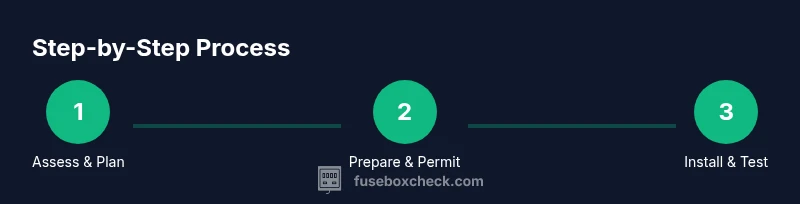
This section offers a high-level overview of steps you’ll perform when you’re ready to proceed with the installation under supervision or with a pro. The goal is to provide context for the detailed STEP-BY-STEP section that follows. You’ll want to confirm permits, plan loads, select a panel, mount it, run feeders, connect grounds, install breakers, label circuits, and test the system. Remember: safety first, and when in doubt, hire a professional.
By understanding these high-level milestones, you’ll be better prepared to discuss options with a licensed electrician and ensure a compliant, safe garage electrical system.
Maintenance, Inspection, and When to Call a Pro
After installation, create a maintenance routine to check for signs of wear, corrosion, or loose connections. Periodic inspections by a licensed electrician help catch issues early and keep your panel compliant with evolving standards. If you notice buzzing breakers, warm panels, or burning odors, shut off power and call a pro immediately. Routine labeling and keeping a log of any changes helps long-term safety and clarity when you plan future upgrades.
FuseBoxCheck emphasizes ongoing safety and proactive upkeep as essential parts of a durable garage electrical system.
Tools & Materials
- Personal protective equipment (PPE)(Insulated gloves, safety glasses, long sleeves)
- Voltage testers(Non-contact tester and a properly rated multimeter)
- Insulated hand tools(Screwdrivers, pliers, wire cutters with insulated handles)
- Measuring and marking tools(Tape measure, pencil, level)
- Conduit and wiring materials(Conduit, clamps, connectors, and rated conductors as per code)
- Panel enclosure and breakers(Appropriately sized main/branch breakers, panel model meeting code)
- Grounding equipment(Grounding electrode conductor, bonding jumpers, ground rod as required by code)
- Documentation(Schematic drawings, load calculations, permit paperwork)
- Ladder or stable platform(Stable access for mounting and wiring at height)
- Fire extinguisher(Class C or ABC, kept accessible)
Steps
Estimated time: 4-8 hours
- 1
Assess current service and define scope
Evaluate your existing electrical service size, determine whether a subpanel or full main upgrade is needed, and outline circuits you will relocate or add. Create a rough load list to guide panel sizing and permit requirements.
Tip: Document assumed loads in a simple table to avoid later miscalculations. - 2
Shut down power and verify de-energized
Shut off the main breaker and confirm no voltage is present on any feeders using a non-contact tester. Establish a lockout/tagout procedure if multiple people may access the panel area.
Tip: Double-check all downstream breakers to ensure nothing is energized during work. - 3
Choose location and obtain permits
Select a dry, accessible location with adequate clearance for panel doors and future expansion. Contact your local building department to determine permit requirements and inspection steps for a garage panel installation.
Tip: Keep permit documents organized with your project notes. - 4
Mount the panel enclosure
Securely anchor the panel to a stud or support surface. Ensure the box is level, and maintain the required clearance around the enclosure for service access and ventilation.
Tip: Mounting accuracy reduces issues with cover alignment and labeling. - 5
Run feeders and plan routing
Route feeders from the main to the subpanel or from the service to the new panel using approved conduits and connectors. Keep feeders away from moisture sources and ensure protection along their path.
Tip: Avoid sharp bends; use gentle curves and proper clamps to prevent insulation damage. - 6
Grounding, bonding, and neutrals
Create a proper grounding path, separate neutrals and grounds in subpanels, and bond as required by code. Install a grounding electrode conductor and, if applicable, ground rod to improve fault clearance.
Tip: Follow the exact bonding rules for subpanels to prevent stray currents. - 7
Install breakers, label circuits, and test
Install the appropriate branch breakers, place a main disconnect if required, and label each circuit. Restore power and perform tests, including receptacle GFCI tests and circuit-tripping checks.
Tip: Document the final wiring schematic and take photos for your records.
Your Questions Answered
Do I need a permit to install a garage breaker box?
Most jurisdictions require a permit for installing or upgrading a panel. A permit helps ensure work meets safety and code standards, and inspections verify correct installation.
Permits are typically required; check with your local building department before starting.
Can I install a subpanel in the garage?
A garage subpanel is possible if feeders, grounding, bonding, and enclosure meet code. It’s often preferred when the garage is distant from the main panel or needs dedicated circuits.
Garage subpanels are doable with proper design and code compliance.
What is the difference between a main disconnect and a service panel?
The service panel houses branch breakers and connects to the utility service; the main disconnect controls the entire service, disabling all power to the panel.
The main disconnect shuts off the whole service; the service panel holds the branch circuits.
Is it safe to DIY install a breaker box?
DIY electrical work can be hazardous. If you lack training or local code knowledge, hire a licensed electrician to ensure safety and compliance.
DIY electrical work is risky; consider professional help if unsure.
How long does garage breaker box installation take?
Timing depends on scope, permit readiness, and whether upgrades are needed. Plan for several hours to a full day when you include planning and testing.
It can take several hours to a full day depending on the project.
What safety gear should I wear during installation?
Wear insulated gloves, safety glasses, and non-slip, dry footwear. Keep metal jewelry away from live components and ensure tools are properly insulated.
Wear proper PPE and avoid jewelry near electrical work.
Watch Video
Highlights
- Plan loads and space before purchasing a panel.
- Follow permits and local codes to avoid safety and legality issues.
- Grounding, bonding, and GFCI protections are essential in a garage.
- Label circuits and maintain documentation for future maintenance.
- When in doubt, hire a licensed electrician to ensure safety and compliance.