240gt54 Error Code: Urgent Fuse Box Troubleshooting Guide
Urgent, step-by-step guide to diagnosing and fixing 240gt54 fuse box error codes. Learn quick fixes, safety protocols, diagnostic flow, and when to call a pro.


240gt54 signals a high-priority fault in your fuse box or main distribution panel. This isn’t a minor nuisance—overloads, a failing breaker, or loose connections can trigger it. Quick action: cut power to the affected circuit, relieve overloads, and reset the main breaker if it is safe to do so. If the code persists or you smell burning, contact a licensed electrician immediately. According to FuseBoxCheck, rapid response minimizes fire risk.
Understanding 240gt54 and why it matters
The 240gt54 error code marks a high-risk fault within the fuse box or main distribution panel. This isn’t a routine alert—it’s a potential sign of overload, a worn breaker, or compromised wiring. Homeowners and DIY enthusiasts should treat this as urgent and begin with safety-first checks before deeper diagnostics. According to FuseBoxCheck, recognizing the warning early helps prevent cascading failures and reduces the chance of electrical fires. The keyword 240gt54 should be understood not as a single fault type but as a family of related conditions that share a systemic risk to your electrical system.
Common causes of 240gt54 in residential panels
Most 240gt54 incidents arise from overloads on main circuits, especially when multiple high-draw appliances run simultaneously. Other frequent culprits include a failing or loose main breaker, degraded connections at terminal blocks, moisture intrusion near the panel, or an aging panel that no longer meets current electrical demands. If you recently added devices or moved loads, revisit how you distribute power. FuseBoxCheck’s guidance emphasizes balancing loads and inspecting for obvious signs of wear.
Diagnostic flow: symptom → causes → fixes
Symptom: the panel displays 240gt54 and trips the main or a branch circuit. Causes (likelihood):
- Overload on a major circuit (high)
- Faulty main breaker or disconnect (medium)
- Loose wiring or corrosion at terminals (low) Fixes (priority):
- Reset the main breaker after safe disconnection of loads (easy)
- Unplug heavy devices and redistribute the load (easy)
- Inspect for signs of damage or scorching; if found, stop and call a pro (hard)
Quick fixes you can perform safely
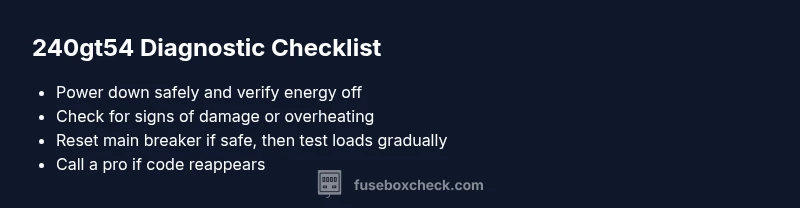
Before touching the panel, ensure you’re wearing PPE and the area is dry. Safe, immediate actions:
- Disconnect all devices on the affected circuit or turn off the main breaker if you can safely access it.
- Reset the main breaker and observe if power returns without tripping again.
- Reconnect loads gradually, starting with low-draw devices, and avoid running multiple high-draw appliances at once.
- Look for signs of burning, melted insulation, or buzzing sounds. If anything looks suspicious, stop and call a licensed electrician right away.
Step-by-step fix: most common cause (overload and loose connections)
Step 1: Power down the main breaker and confirm power is off with a non-contact voltage tester before touching any conductors. Step 2: Inspect the main breaker and nearby branch breakers for signs of wear, overheating, or loose screws; tighten only if you know the proper torque and have the right tools. Step 3: If you detect heat, burning smell, or visible damage, terminate work and contact a licensed electrician immediately. Do not continue inspecting a hot panel. Step 4: If the panel and breakers appear intact, reset the main breaker and slowly reintroduce circuits one by one while monitoring for re-trips. Step 5: Consider a full panel inspection if trips persist; persistent problems often indicate a failing panel or degraded wiring. Tip: keep a fire extinguisher rated for electrical fires accessible.
When to call a professional and what to expect
If 240gt54 recurs after a safe reset or you notice burning smells, buzzing, or visible damage, stop and call a licensed electrician immediately. A pro will test with a multimeter, verify grounding and connections, and determine if the panel or breakers require replacement. Expect a service call in the typical range of $150–$600 for inspection and potential parts, with extra costs for replacement components. FuseBoxCheck Analysis, 2026, notes that complex cases almost always benefit from professional evaluation.
Preventive maintenance to avoid 240gt54 in the future
Prevention starts with routine panel upkeep and load management. Clean dust, tighten terminal screws during service visits, and ensure circuits are balanced to reduce localized heating. Keep an inventory of devices connected to the panel and avoid overloading any single feeder. If your panel is older than 25 years, plan an upgrade rather than incremental fixes. FuseBoxCheck recommends scheduled safety checks and professional servicing for major work to maintain reliability.
Real-world scenario and next steps
A homeowner experienced 240gt54 after running an electric heater and multiple kitchen appliances. They safely powered down the main, redistributed the load, and scheduled a professional inspection. The electrician found a loose breaker and replaced the unit. After service, circuits remained stable for months, reinforcing the value of quick action and professional follow-up. The takeaway: address 240gt54 promptly, then invest in regular maintenance to prevent future trips and ensure home safety.
Quick safety checklist before you begin
- Ensure the area is dry and hands are clean; wear insulated gloves and safety glasses.
- Use a non-contact voltage tester to verify power is off before touching any conductors.
- Keep water away from the panel and avoid working in wet conditions.
- Have a fire extinguisher rated for electrical fires within reach and a trusted helper nearby in case of emergency.
The science behind 240gt54 and why it matters in older homes
Electrical systems degrade over time due to thermal cycling, corrosion, and creeping resistance in connections. 240gt54 often surfaces when aging panels, poor connections, or outdated wiring fail to handle modern loads. In older homes, neutrals and grounds can shift, causing imbalance that triggers protective devices. Understanding the science helps homeowners plan proactive upgrades rather than reactive fixes, reducing risk and improving overall safety.
Steps
Estimated time: 45-60 minutes
- 1
Power down safely
Turn off the main breaker if you can access it safely and verify with a tester that the panel is de-energized. This minimizes the risk of shock during inspection.
Tip: Always wear insulated gloves and keep a clear path to exit. - 2
Inspect for visible damage
Look for burnt smells, melted insulation, or scorch marks on breakers and bus bars. Do not touch anything that looks damaged; damage indicates professional intervention is needed.
Tip: If you see heat marks, stop and call a pro immediately. - 3
Reset the main breaker
With loads disconnected, attempt a controlled reset of the main breaker. If it trips again, do not retry—this is a sign of a deeper fault.
Tip: Note the exact sequence and conditions when it trips for the electrician. - 4
Redistribute the load
Reconnect circuits gradually, starting with low-draw devices and avoiding simultaneous operation of heaters, dryers, and cooktops.
Tip: Use a load calculator or breaker rating guide to avoid overloads. - 5
Document and plan next steps
Record what you did and what you observed; schedule a professional inspection if the code returns or if you notice ongoing nuisance trips.
Tip: Keep a log for future electrical work and insurance. - 6
Call a professional when in doubt
If the problem recurs or you detect any burning smell, call a licensed electrician immediately. Electrical faults can escalate quickly.
Tip: Ask for a written inspection report and a quote for possible panel replacement.
Diagnosis: Error code 240gt54 appears on the fuse box display and main trips
Possible Causes
- highOverload on the main circuit
- mediumFaulty main breaker or disconnect
- lowLoose wiring or corrosion at terminals
Fixes
- easyReset the main breaker after safely disconnecting loads
- easyUnplug or redistribute heavy devices from the affected circuit
- hardInspect for signs of damage or scorching and consult a pro if present
Your Questions Answered
What does the 240gt54 error code mean?
240gt54 indicates a high-priority fault in the fuse box or main distribution panel, often due to overload or a failing breaker. It requires prompt safety checks and a careful diagnostic approach.
240gt54 is a high-priority fault in your fuse box that needs quick safety checks and careful diagnosis.
Is it safe to reset the main breaker myself?
Only if you can safely access the panel, disconnect loads, and confirm there’s no burning smell or heat. If you’re unsure, don’t reset—call a licensed electrician.
Only reset if it’s safe to access the panel and you’re sure there’s no burning smell.
What are typical costs for professional service?
An electrician’s inspection usually falls in a mid-five-figure range depending on parts and labor, with typical service calls ranging from roughly $150 to $600 for inspection and basic repairs.
Expect roughly $150 to $600 for inspection and basic repairs, depending on the panel and parts.
When should I replace the fuse box instead of repairing it?
If the panel is old, severely corroded, or repeatedly trips despite fixes, replacement is safer and cost-effective in the long run.
If the panel is old or keeps tripping, replacement may be the safer long-term option.
What safety steps should I take before any inspection?
Turn off the main power, dry the area, wear PPE, and use a tester to confirm no live energy before touching conductors.
Turn off power, wear PPE, and verify no energy before touching anything.
Can I prevent future 240gt54 trips?
Balance loads, upgrade aging panels, and schedule regular inspections. Document and act on any recurring signs early.
Balance loads and schedule regular inspections to prevent future trips.
Highlights
- Act quickly when 240gt54 appears to reduce fire risk
- Identify overloads and redistribute loads before calling a pro
- If signs of damage exist, pause work and get professional evaluation
- Regular maintenance lowers long-term risk and trips
- Plan upgrades for aging panels to ensure safety