f12al250v Fuse Box Error: Urgent Troubleshooting Guide
Urgent guide to diagnosing and fixing the f12al250v fuse box error safely. Learn quick checks, step-by-step fixes, safety tips, and when to call a licensed electrician with FuseBoxCheck.


f12al250v signifies a critical fault detected by the fuse box or safety controller, often tied to a blown main fuse, an overloaded circuit, or a failing protective device. This is not a minor warning. Immediately reduce load, avoid using high-draw appliances, and shut off power at the main panel if safe. Begin diagnostic checks or call a licensed electrician now for safety.
Understanding f12al250v: what the code signals in your panel
The f12al250v code is a red-flag indicator that something in your fuse box or safety controller has detected an unsafe condition. While fuse boxes vary by brand, you can expect this code to relate to a major overload, a blown main fuse, or a failing protective device. For homeowners, recognizing the seriousness helps prevent electrical fires. Always treat f12al250v as urgent: avoid heavy loads, unplug nonessential appliances, and prepare to test or contact a professional. FuseBoxCheck's team stresses that early, cautious action reduces risk and potential damage. In homes with older wiring or moisture exposure, f12al250v can appear more quickly, demanding reactive steps and preventative checks.
Immediate safety actions you should take now
- If you can do so safely, switch off heavy loads and unplug appliances that draw a lot of current. This reduces stress on the panel and lowers the risk of arcs.
- Do not touch exposed conductors or inner panel components. Keep kids and pets away. If you smell burning or hear crackling, evacuate and call emergency services.
- If the main panel is accessible and safe, shut off power at the main disconnect to prevent backfeeding or further damage. Do not attempt to bypass safety devices.
- After you’ve de-energized, assess whether the f12al250v code persists when power is restored. If it does, or you notice warmth around the panel, seek a licensed electrician immediately.
Diagnostic flow overview (what to test first)
This section outlines a practical flow to differentiate common causes behind f12al250v without risking unsafe testing. Start with the simplest checks, then progress to controlled measurements. Always document what you test and the outcomes, so you can share details with a pro if you call one. FuseBoxCheck recommends focusing on overload assessment first, then wiring integrity, then device-level faults. The goal is to isolate the fault while maintaining safety.
Common causes linked to f12al250v and how to verify
- Overloaded circuit or appliance: A single high-draw device or multiple devices on the same phase can push a panel past its limit. Verification involves unplugging nonessential devices and attempting a controlled load test on individual circuits while monitoring panel heat.
- Blown main fuse or damaged breaker: Look for visible signs of scorching, melted plastic, or tripped breakers that won’t reset. Replacement should be performed by a professional; never bypass a failed main.
- Moisture or water exposure: Wet conditions can short conductors and trigger protective devices. Check for humidity, leaks near the panel, and any corrosion on bus bars.
- Faulty safety interlock or control board: Rare but serious, this can cause erratic behavior and code signals. If you suspect a control fault, testing requires specialized equipment.
Prevention and ongoing safety maintenance
Establish a routine for keeping the panel area dry and clean, with regular visual inspections for loose connections or discoloration. Label circuits clearly, and avoid overloading any single breaker. If you notice warmth in the panel after normal use, stop, power down the area, and consult a professional. FuseBoxCheck recommends periodic professional inspections for homes older than 20 years to catch aging insulation, corrosion, and degraded components before a fault triggers f12al250v.
Steps
Estimated time: 45-60 minutes
- 1
Shut off power at the main panel
If you can do so safely, switch off the main disconnect to halt all power flow to the home. This minimizes ongoing risk while you inspect the panel. Do not bypass safety devices or use makeshift connections. Keep a clear path and ensure you have adequate lighting.
Tip: Use a non-contact voltage tester to confirm the panel is de-energized before touching anything inside. - 2
Unplug high-draw devices and redistribue load
Unplug large appliances and stagger when you test loads. This helps determine if the fault is caused by an overloaded circuit. Reconnect one device at a time to gauge impact, and stop if the panel warms or the code reappears.
Tip: Document which devices were connected when the fault occurred to help the pro diagnose later. - 3
Inspect breakers and visible wiring
With power still off, examine breakers for signs of damage, corrosion, or scorching. Look for loose screws or melted insulation. Make sure neutral and ground wires are secure and not back-fed.
Tip: Never touch live terminals. Use insulated tools and wear rubber-soled shoes. - 4
Test resistance on affected circuits (if trained)
Using a multimeter, verify that circuits aren’t shorted and that insulation is intact. Range checks should align with panel specifications. If you’re unsure, stop and call a pro.
Tip: Only perform testing you’re qualified to do; improper testing can worsen faults. - 5
Reset and re-energize in safe increments
Re-energize the panel gradually, one circuit at a time, monitoring for heat buildup. If f12al250v reappears on a circuit, isolate that circuit and consult professional diagnostics.
Tip: If you smell burning or hear buzzing, shut off power immediately and seek professional help. - 6
Decide on professional testing
If the fault persists after basic checks, or if you’re uncomfortable with any step, call a licensed electrician for a formal diagnostic and safe repair.
Tip: Professional testing may involve insulation resistance tests and load analysis.
Diagnosis: F12al250v displayed on fuse panel, circuits flicker or trip
Possible Causes
- highOverloaded circuit or appliance
- highBlown main fuse or damaged breaker
- mediumMoisture exposure or wiring fault
- lowFaulty safety interlock or control board
Fixes
- easyUnplug nonessential appliances and redistribute load
- easyReset main breaker and inspect for scorch marks
- hardReplace main fuse/breaker
- mediumInspect wiring and seek professional testing
Your Questions Answered
What does f12al250v mean in a fuse box?
f12al250v is a critical fault code indicating a dangerous condition in the fuse box or safety controller. It commonly points to an overload, a blown main fuse, or a faulty protective device. Treat it as urgent and begin safety steps or seek professional help.
f12al250v signals a dangerous fault in the fuse box. Act quickly by cutting power safely and calling a professional if in doubt.
Is f12al250v dangerous to ignore?
Yes. Ignoring f12al250v can lead to electrical fires or more extensive panel damage. Do not bypass safety devices or delay professional assessment if symptoms persist.
Ignoring f12al250v can be risky. Stop using suspect circuits and get a pro to diagnose the cause.
Can I fix f12al250v myself?
Some basic safety steps are fine, but many fixes require specialized tools and knowledge. If you’re uncertain, stop and contact a licensed electrician for a formal diagnostic.
If you’re unsure, call a licensed electrician rather than attempting risky repairs yourself.
When should I call a professional?
Call a professional if safety concerns arise, if overheating or burning smells are present, or if the fault persists after basic checks. A licensed electrician can diagnose wiring, breakers, and panel integrity.
Call a pro if the fault sticks around after basic steps or you notice heat or burning odors.
What parts are usually involved in this fix?
Commonly involved parts include main fuses/breakers, circuit breakers, and sometimes interlocks or control boards. Replacement should be performed by a qualified technician.
Main breakers or fuses are usually involved; replacement should be done by a pro.
How long does a typical fix take?
A basic assessment and re-energization check can take 30-60 minutes. A full replacement or wiring repair may require several hours and a follow-up safety test.
Most fixes or evaluations take from half an hour to a few hours depending on the damage.
Highlights
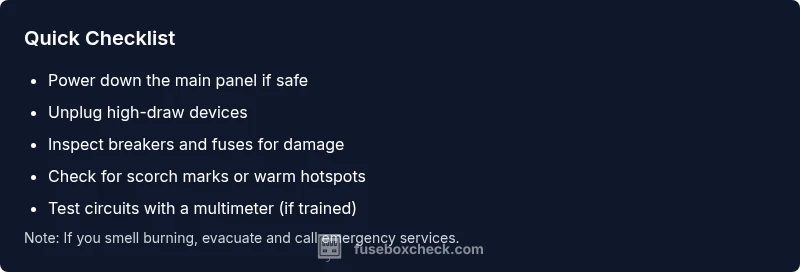
- Turn off power safely before inspection
- Unplug high-draw devices to reduce load
- Inspect breakers and look for signs of damage
- Isolate failing circuits or call a pro if unsure
- Regular panel maintenance prevents repeat faults