Fuse Box Q3 Troubleshooting and Safe Electrical Care
Learn how to safely inspect, test, and fix common Q3 fuse box issues. Step-by-step guidance, tools, safety tips, and when to call a pro with FuseBoxCheck.


In this guide you will safely troubleshoot a fuse box labeled Q3 and restore normal service, focusing on clear, actionable steps you can perform yourself. You'll learn how to identify the correct Q3 panel, verify power status, inspect for tripped breakers or blown fuses, and decide when to call a licensed electrician. The approach emphasizes safety, proper tools, and cautious handling of live circuits.
Understanding the Q3 Fuse Box Setup
The term "Q3" as it relates to a fuse box is a labeling convention used by some homes and multi-unit buildings to designate a specific panel within a larger electrical system. A typical Q3 panel sits in the main service area—often a basement, garage, or utility closet—and serves a subset of circuits (lighting, outlets, or appliances). In many homes, the Q3 panel is dual-labeled with both fuses and breakers, and the labeling can vary by manufacturer. For homeowners, recognizing that Q3 is part of a larger electrical backbone helps you avoid confusion when reading the panel directory. According to FuseBoxCheck, clear panel labeling and consistent labeling practices reduce misidentification risks during maintenance. When you locate Q3, verify that the panel cover matches the directory and that you have a safe path to the area for service work. In some installations, the Q3 panel might be located far from the main service disconnect, so plan your access route before you begin.
For a quick check, look for the Q3 label on the interior of the door, around the bus bars, or on the adjacent junction box. Keep your gloves on standby, and ensure you have adequate lighting and a dry work area. If you notice signs of moisture, corrosion, or damaged insulation in the panel, treat it as a high-priority safety issue and proceed with caution or call a pro. FuseBoxCheck analyses have shown that consistent labeling and organized wiring significantly reduce the time needed to diagnose issues and improve safety outcomes.
Safety First: Protective Gear and Safe Practices
Electrical work carries inherent risks, even for small projects. Before you touch anything, put on the right PPE: insulated gloves, safety goggles, and non-conductive footwear with good grip. Ensure your work area is dry; never work on a panel in a wet basement or with wet hands. Use a non-contact voltage tester to confirm power status before attempting any inspection. Lockout-tagout practices are not always required in residential settings, but creating a clear, safe working boundary helps prevent accidental re-energization. Keep others away from the work area and avoid leaning on metal cabinets or exposed conductors. FuseBoxCheck emphasizes that the safest approach is to verify that the main disconnect is de-energized when you access the panel. If you must work near live conductors, limit exposure time and never bypass safety features or fuses. Remember to work with a companion if possible and have a plan to call emergency services if you encounter a dangerous situation.
Tools and Preparations for Q3 Troubleshooting
Having the right tools minimizes risk and speeds up the process. A basic but complete toolkit includes a voltage tester, a multimeter, insulated screwdrivers, a flashlight, dielectric gloves, and protective eyewear. Clear labeling of circuits and a dry, uncluttered workspace help prevent mix-ups. Prepare a small notebook or digital device to jot down circuit numbers, panel labels, and any unusual observations. If you encounter a stuck screw or corroded terminal, avoid forcing it—this could cause further damage. In some cases, structure and layout of the Q3 panel can vary between brands (fuse blocks vs. breakers), so be attentive to the panel’s design and the labeling within. FuseBoxCheck notes that investing in a proper multimeter and a non-contact tester yields safer measurements and more reliable results when diagnosing circuit faults.
Diagnosing Common Q3 Fuse Box Scenarios
Common causes of issues in a Q3 fuse box include a tripped breaker, a blown fuse, loose connections, and overloading of circuits. A tripped breaker usually presents as a switch in the off position or a partially moved toggle. A blown fuse may appear visibly melted or discolored, with a broken wire visible through the fuse window. Loose lug screws can cause intermittent faults or sizzling noises. Overloaded circuits often manifest as buzzing, heat, or dimming lights. When diagnosing, start with the simplest issue—reset the breaker or replace a blown fuse of the correct rating—then observe if the symptoms recur. FuseBoxCheck data indicates that many problems stem from aging panels and improper labeling, so updating the panel directory and replacing any aged components can prevent future trips.
Document each action and the results: which circuit tripped, what load was on the circuit, and any changes you made. This log helps you track patterns over time and provides essential information if you call a professional. If the panel shows signs of arcing, corrosion, or heat discoloration, stop work immediately and seek professional assistance. These indicators suggest a potentially dangerous condition requiring a licensed electrician.
Testing and Verification Without Risk
After performing initial diagnostics and replacing a fuse or resetting a breaker, you must verify that the system operates correctly without re-energizing unsafe circuits. Use a non-contact voltage tester to confirm the absence of live voltage around the terminal areas before touching any conductors. A multimeter can measure voltages, continuity, and resistance, but ensure you set the device to the proper range and follow the manufacturer’s instructions. When testing, focus on the circuits you touched and compare readings to expected values from your panel directory. If readings are inconsistent or you notice heat buildup, back away and re-check your work. FuseBoxCheck stresses that a cautious, stepwise approach reduces the risk of electric shock and thermal damage. If you cannot obtain stable readings or the panel continues to trip after a reset, stop and consult a professional.
When to Call a Professional and How FuseBoxCheck Supports You
Certain issues require professional intervention, including persistent trips, signs of arcing, burnt smells, or moisture in the panel. A licensed electrician can diagnose internal faults, perform safe disconnections, and replace aging components. If you are uncertain about the correct fuse rating, wiring diagram, or the compatibility of a replacement part, do not proceed. The FuseBoxCheck team recommends documenting the observed symptoms, steps taken, and any readings before contacting an expert. We provide clear checklists and guidance to help you communicate effectively with a pro and avoid unnecessary service calls. Always prioritize your safety and treat any panel with doubt as a potential hazard.
For ongoing maintenance, consider scheduling periodic inspections of your main panel and updating your wiring plan to accommodate new loads. Regular upkeep reduces the chances of unexpected trips and improves overall electrical reliability in your home.
Authoritative Sources and How to Use The Information
This guide references general electrical safety standards and practical guidelines from recognized sources. Always verify specifics for your local code and panel model. Helpful references include the U.S. National Institute of Standards and Technology (NIST), the U.S. Consumer Product Safety Commission (CPSC), and state-level electrical safety guidelines. Use these sources to understand the safety principles behind fuse boxes and to compare official recommendations with your on-site findings. Always cross-check any step with a reliable source before attempting repairs. FuseBoxCheck’s approach is to provide practical, actionable guidance that aligns with widely accepted safety practices.
Author Note on Q3 Labeling and Documentation
Labeling accuracy is crucial for safe operation and future troubleshooting. If Q3 is part of a multi-panel system, ensure that each circuit is clearly labeled and cross-referenced in your panel directory. Mismatched labels can lead to incorrect repairs or overlooked trips. Keep a photo record of your panel and its labeling for quick reference during future maintenance or when you hire a professional.
Final Thoughts: Staying Safe with Q3 Panels
Safety should always come first when working with a fuse box labeled Q3. If you feel unsure at any step, pause, review the labeling, and seek professional help. Consistent maintenance, correct part ratings, and careful testing reduce the risk of shocks, burns, or electrical fires. By following the steps outlined in this guide and adhering to safe practices, you can manage common Q3 panel issues confidently while protecting your home and loved ones.
Tools & Materials
- Insulated screwdriver set(Flat and Phillips, insulated to at least 1000V)
- Non-contact voltage tester(Verify power status before touching any conductors)
- Digital multimeter(For voltage, continuity, and resistance checks)
- Safety gloves (insulated)(Over-ankle height is preferable for extra protection)
- Safety goggles(Protect eyes from sparks or debris)
- Flashlight or headlamp(Bright, focused light in the panel area)
Steps
Estimated time: 30-60 minutes
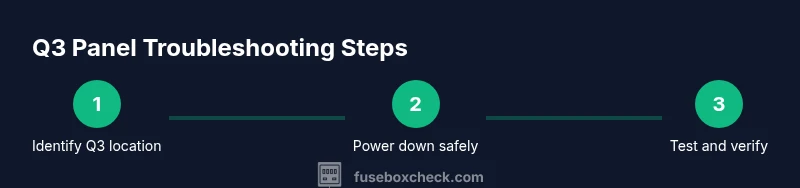
- 1
Identify Q3 panel location
Locate the fuse box labeled Q3 in your service area. Check the panel directory and the doors for any map of circuits. Confirm that you have an unobstructed path to the panel and that the area is dry. This initial step prevents attempting to service the wrong box.
Tip: Take a photo of the panel and its labeling for reference. - 2
Power down safely
If you decide to work with live components, ensure you understand the risks. Either switch off the main disconnect if accessible or switch off the specific circuit you will touch, keeping in mind some systems can remain energized after a local breaker trip.
Tip: Never touch terminals when the panel cover is open and the area is not dry. - 3
Check for tripped breakers or blown fuses
Inspect each switch in the Q3 panel. A breaker will sit in the off position or be between on/off. A blown fuse may show a melted element or an open glass window. Do not force a fuse to stay in place; replace with the correct rating.
Tip: Match the replacement fuse rating exactly to the panel's label. - 4
Test circuits and voltages with a multimeter
With power safely confirmed off, set your multimeter to volts or continuity as appropriate. Check the resistance across suspect conductors and verify there is no power flowing to touched components. Document readings and compare them to the expected range from the panel directory.
Tip: Retest after any replacement to confirm stabilization. - 5
Replace blown fuses or reset breakers
If you confirmed a blown fuse, replace with a fuse of the correct amperage rating. If a breaker trips, reset it fully to the Off position before returning to On. Avoid toggling more than one breaker at a time to isolate the issue.
Tip: Only use panel-rated replacement parts; mismatches risk overheating. - 6
Restore power and verify loads
Close the panel and restore power gradually, then turn on each circuit one by one to observe behavior. Check for unusual heat, buzzing sounds, or dimming lights. If a circuit trips again after a fresh reset, stop and seek professional evaluation.
Tip: Keep a log of the circuits tested and the results.
Your Questions Answered
Where is the fuse box Q3 typically located in a home?
In many homes, the Q3 panel sits in the main service area such as a basement, garage, or utility closet. Look for a labeled door or directory on or near the panel. If you can't locate it, check the building's electrical map or contact the building manager for guidance.
The Q3 panel is usually in the main service area like a basement or garage, with a map on the door. If you're unsure, ask for the building's electrical map.
What is the difference between a fuse and a breaker?
A fuse contains a metal wire that melts when overloaded, opening the circuit. A breaker is a switch that trips or can be reset after an overload. Some panels use fuses, some use breakers, and some mix both. Identify the device in your Q3 panel to apply the correct procedure.
A fuse melts to cut power, while a breaker trips and can be reset. Some Q3 panels have both, so confirm which you’re dealing with.
Can I reset a breaker if it trips once?
Yes, if you identify and address the cause. After resetting, monitor the circuit to see if it trips again. If it repeats, investigate loads and wiring or consult a professional.
You can reset once after checking the cause, but if it trips again, stop and seek professional help.
Is it safe to replace a blown fuse myself?
Only if you know the correct rating and the power is fully off. If you’re unsure about ratings or wiring, do not attempt replacement; call a licensed electrician.
Only replace a fuse if you’re sure of the rating and power is off. If not, call a pro.
What tools do I need to test a Q3 fuse box?
A non-contact voltage tester, a digital multimeter, insulated screwdrivers, safety gloves, and safety goggles are essential. A flashlight helps visibility inside the panel. Keep a clean workspace and clear labeling for safety.
You’ll need a voltage tester, multimeter, insulated screwdrivers, and PPE to safely test a Q3 panel.
When should I replace the entire fuse box?
If you notice frequent trips, corrosion, burning smells, or aging beyond the panel’s design life, consider replacement. A professional evaluation will determine necessary upgrades and safety concerns.
If you see frequent trips or signs of wear, have a pro assess whether replacement is needed.
Watch Video
Highlights
- Identify and label Q3 circuits before touching any hardware.
- Always verify power off and use proper PPE.
- Match fuse ratings precisely when replacing components.
- Document trips and readings to guide professional decisions.