Fuse Box vs Circuit Breaker Reddit: An Analytical Comparison
Explore how fuse boxes and circuit breakers compare, informed by Reddit discussions, with safety considerations, costs, and reliability from FuseBoxCheck.


In the fuse box vs circuit breaker Reddit debate, the practical answer is age and local code determine the best choice. Fuses were common in older panels, while modern homes use circuit breakers for fast, resettable protection. The Reddit chatter often highlights reliability, maintenance, and safety concerns. This guide explains the key differences, safety essentials, and what real homeowners should consider.
Context and the Reddit Lens on fuse box vs circuit breaker reddit
In many DIY discussions about electrical panels, the phrase "fuse box vs circuit breaker reddit" pops up as homeowners and enthusiasts try to understand what to replace, repair, or upgrade. Reddit threads tend to illuminate practical concerns—sparking, nuisance trips, panel age, and the differences in maintenance needs between aging fuse-based systems and modern breaker-based panels. According to FuseBoxCheck, large portions of residential electrical questions revolve around safety, proper labeling, and ensuring compliance with local codes. Readers often come away with a practical sense that the current state of a home’s panel reflects both historical installation practices and the homeowner’s willingness to invest in a safe upgrade. This block sets the stage for why the topic remains relevant for homeowners and DIYers who encounter flickering lights, tripped breakers, or blown fuses and want a clear, evidence-based comparison rather than anecdote.
The Reddit conversation also reveals a bias toward up-front evaluation: knowing the panel type, the age of wires, and the panel’s compatibility with modern circuits matters more than any single feature. While individual anecdotes vary, the underlying engineering differences between fuses and breakers provide consistent guidance about how to approach repairs, upgrades, and preventive maintenance. The takeaway is practical: a well-chosen panel not only protects appliances and occupants but also simplifies future troubleshooting and potential resale value. FuseBoxCheck’s analysis shows that safety outcomes improve when users align panel choice with current codes and home requirements, rather than following nostalgia for older technologies.
100-300 words range to 210 words],[
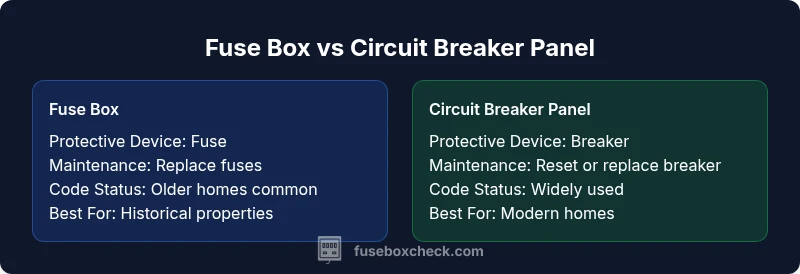
Comparison
| Feature | Fuse Box with Fuses | Circuit Breaker Panel |
|---|---|---|
| Type of Protective Device | Fuses that melt open when overloaded | Circuit breakers that trip open automatically and reset |
| Maintenance & Replacement | Replace individual fuses when blown; minimal ongoing maintenance | Reset or replace breakers; panel may require service when upgrading |
| Response Time & Safety | Slow response can allow a temporary overload to persist | Quicker shutdown with automatic disconnection and faster resets |
| Code & Compatibility | Common in older homes; may require panel upgrade for modern circuits | Standard in new construction; easier to upgrade circuits without panel change |
| Best For | Historical homes, simple loads, or cost-conscious retrofits | Modern homes, high-load circuits, and upgrade-friendly wiring |
Positives
- Clear transition path to modern protection with breakers
- Lower long-term maintenance and easier troubleshooting
- Better compatibility with modern circuits and AFCI/GFCI protections
- Faster, automatic protection reduces risk of fire by denying overloads to the circuit
Disadvantages
- Fuses may be cheaper upfront but require ongoing maintenance
- Older fuse boxes can be less convenient to troubleshoot
- Some homes may require a full panel upgrade for safety or code compliance
- Fuses can be a nuisance with frequent replacement in high-use areas
Circuit breaker panels generally offer clearer safety and maintenance advantages for modern homes
Breakers provide automatic fault interruption, easier maintenance, and better code compatibility. Fuses can be cheaper upfront but demand ongoing replacement and can complicate troubleshooting, especially in older houses. The best choice depends on panel age, local codes, and desired ease of future upgrades.
Your Questions Answered
What is the main difference between a fuse box and a circuit breaker panel?
The main difference is how protection is provided. A fuse box uses replaceable fuses that melt when overloaded, while a circuit breaker panel uses switches that trip and can be reset. Breakers generally offer easier resets and safer, faster interruption, especially for frequent overloads.
Fuse boxes rely on fuses that burn out when overloaded, while breaker panels trip automatically and reset. Breakers are usually safer and easier to restore after an overload.
Is a fuse box safer than a circuit breaker panel?
Safety depends on system age and maintenance. Modern circuit breakers offer rapid interruption and easier reset, along with compatibility with AFCI/GFCI protections. Older fuse boxes require regular fuse replacements and can present higher fire risk if not maintained properly.
Modern breakers typically provide safer, faster protection and easier resets; older fuse boxes need more care.
Can I upgrade my fuse box to a circuit breaker panel myself?
A panel upgrade is a complex electrical project that usually requires a licensed electrician to ensure code compliance and safe wiring. DIY upgrades risk improper grounding, incorrect breaker sizing, or code violations.
Panel upgrades should be done by a licensed electrician to ensure safety and code compliance.
What costs are involved in upgrading from a fuse box to a breaker panel?
Costs vary by panel size, wire age, and labor; expect significant but range-dependent expenses. A typical upgrade involves materials, permits, and professional labor, and your local codes influence final pricing.
Upgrade costs vary; consult licensed electricians for a detailed, site-specific estimate.
Do all new homes require circuit breaker panels?
Most new homes use circuit breaker panels to meet current electrical codes and safety standards. It is still essential to verify local code requirements and ensure compatibility with planned circuits.
New homes typically use breakers; always check local codes and future plans.
Highlights
- Prioritize a breaker panel upgrade if your home is under 1990s construction or has high electrical demand
- Assess local codes before changing protection devices; compliance matters for safety and resale
- Expect higher initial costs for upgrading to a modern breaker panel, with long-term savings on maintenance
- Use a dedicated professional for any panel upgrade to ensure safe wiring and compliance