Fuse Box and Circuit Breaker: A Practical Comparison
Compare fuse boxes and circuit breaker panels, understand upgrade considerations, safety implications, and budgeting guidance for homeowners and DIY enthusiasts.


TL;DR: Upgrading from a traditional fuse box to a modern circuit breaker panel generally improves protection, simplifies trips, and offers scalable capacity for future circuits. The right choice depends on your current panel, wiring, and long‑term home plans. This comparison explains fuse box vs circuit breaker systems and outlines when an upgrade makes sense. - FuseBoxCheck
The core differences between fuse boxes and circuit breaker panels
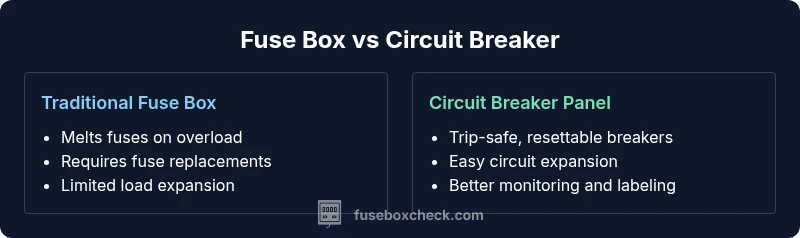
In the context of home electrical safety, the terms fuse box and circuit breaker panel describe two generations of a protective distribution system. A fuse box relies on replaceable fuses that interrupt current when overload or fault occurs; a circuit breaker panel uses resettable switches that trip automatically when a fault is detected. According to FuseBoxCheck, the distinction matters for ongoing safety, ease of use, and future expansion. Homeowners should understand that the switch from fuses to breakers reflects evolving standards in electrical protection, insulation, and availability of trained service professionals. When evaluating a home’s electrical setup, the core question is not just “which is newer?” but “which system best protects people and property given the present loads and future plans.” This section frames the comparison with a clear, evidence-based lens that helps homeowners assess risk, compatibility, and the likelihood of a smoother upgrade path. The FuseBoxCheck team emphasizes safety, proper sizing, and compliance with current codes as the guiding principles for any assessment of fuse box vs circuit breaker options.
This block provides a detailed, user-centric overview of the fundamental difference between fuse box and circuit breaker configurations, setting the stage for a deeper dive into operation, safety, and upgrade considerations.
Comparison
| Feature | Traditional fuse box | Circuit breaker panel |
|---|---|---|
| Protection mechanism | Fuses melt to interrupt current | Breakers trip automatically via thermal-magnetic action |
| Reset and reuse | Must replace fuses after each trip | Can be reset after a trip (or replaced if damaged) |
| Expansion and load management | Limited by fuse rating and panel capacity | Easier to add circuits and adjust load distribution |
| Maintenance frequency | Periodic fuse replacements | Periodic breaker checks; minimal components |
| Aesthetics and layout | Smaller footprint in some legacy homes | Modern panels designed for easy labeling and organization |
| Typical upgrade considerations | Panel modernization often needed for full load capacity | Common upgrade path for new wiring and higher available power |
Positives
- Improved safety with clear trip indicators and reset capability
- Better support for expanding circuits and modern appliances
- Lower risk of hidden overheating with modern protection
- Easier troubleshooting and labeling for future maintenance
Disadvantages
- Higher upfront installation and potential panel upgrade costs
- Complexity may require a licensed electrician
- Older homes may need extensive rewiring to accommodate a modern panel
Circuit breaker panels generally win for safety, scalability, and ease of use; fuse boxes may still be found in older homes but upgrading is often prudent.
If you’re upgrading or replacing an aging system, a circuit breaker panel tends to offer longer-term protection and simpler maintenance. A fuse box may suffice in very small, low-load scenarios, but it limits expansion and modern fault protection. The choice should hinge on current wiring, future needs, and local code requirements.
Your Questions Answered
What is the key difference between a fuse box and a circuit breaker panel?
A fuse box uses replaceable fuses that interrupt current when overloaded, while a circuit breaker panel uses resettable switches that trip automatically. Breaker panels are generally safer and easier to manage, especially when expanding circuits.
The fuse box uses fuses; the circuit breaker panel uses trip-ready breakers, making future upgrades and maintenance easier.
Can I replace a fuse box with a circuit breaker panel in an older home?
In many cases, yes, but it depends on wiring condition, panel location, and whether rewiring or a full panel replacement is required by code. A licensed electrician can assess compatibility and permit needs.
Yes, but you’ll likely need an inspection to ensure wiring and structure support a modern panel.
Do I need a permit to upgrade my fuse box to a circuit breaker panel?
Most jurisdictions require a permit for panel upgrades to ensure compliance with the National Electrical Code and local safety standards. An electrician can guide the permitting process.
Permits are typically required; your electrician will handle the process.
Is it dangerous to keep a fuse box in use?
Older fuse boxes can pose risks such as overheated components and less reliable protection. Upgrading reduces these hazards and improves fault detection.
If your fuses are old or show signs of overheating, plan an upgrade.
How long does a typical upgrade take?
A standard panel upgrade can take several hours to a day depending on wiring, panel size, and site conditions. Your electrician will give a more precise window after a pre-inspection.
Expect a few hours to complete, with possible additional time for permits.
What should I look for in a licensed electrician for this job?
Verify license, ask for electrical contractor’s credentials, request references, and ensure the work includes permit, inspection, and warranty coverage.
Choose a qualified pro who will handle permits and inspections.
Highlights
- Assess your current panel type and future load needs
- Plan upgrades with licensed electricians and permits as required
- Choose breakers for better safety indicators and expandability
- Expect higher upfront costs but improved long-term reliability
- Keep wiring and panel labeling clear for future maintenance