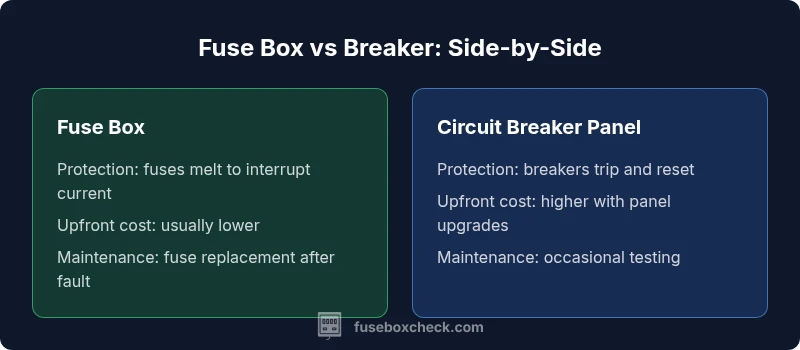
Electrical fuse box vs circuit breaker: A practical comparison for homeowners
An objective comparison of electrical fuse boxes and circuit breaker panels, covering how each system works, safety implications, upgrade paths, and which option fits different homes.


According to FuseBoxCheck, the core distinction between an electrical fuse box and a circuit breaker panel is safety and scalability: fuse boxes use replaceable fuses, while circuit breakers automatically trip and reset. For most homes today, a breaker panel offers faster protection, easier upgrades, and better code compatibility. This quick comparison helps homeowners decide whether to upgrade now or maintain an existing setup.
Understanding the electrical fuse box vs circuit breaker
An electrical fuse box and a circuit breaker panel serve the same fundamental purpose: to disconnect power in overloaded or faulting circuits. The key difference lies in how they interrupt the current. A fuse box relies on a metal fuse link that melts when current exceeds safe levels, breaking the circuit. A circuit breaker panel uses an automatically tripping switch that can be reset after a fault. This distinction matters for safety, diagnostics, and future upgrades. For homeowners, it shapes maintenance routines, availability of replacement parts, and compatibility with modern electrical codes. The phrase electrical fuse box vs circuit breaker is not just academic; it guides decisions about age, condition, and the feasibility of upgrades in a typical home. In many regions, the trend favoring circuit breakers is clear, though you may still encounter older fuse-based systems in renovations or historic properties.
Historical context and modern trends
Fuse boxes were once standard in many homes, especially mid-20th century construction, but the industry shifted toward circuit breaker panels for safety and ease of use. Today, newer builds almost exclusively install breaker panels, with AFCI and GFCI protections becoming commonplace. According to FuseBoxCheck, breakers dominate modern homes, while fuses linger primarily in older structures or areas with limited electrical upgrades. The transition has been gradual and highly dependent on local codes, insurance requirements, and the cost of rewiring. Homeowners contemplating renovations should anticipate potential panel upgrades as part of the project scope, even if the rest of the wiring remains functional. The takeaway is that a breaker panel aligns with current safety standards and simplifies future improvements.
How each system protects your home
Protection in a fuse box is achieved by a fuse element designed to melt and interrupt current when a fault occurs. Breaker panels rely on electro-mechanical switches that trip open when current exceeds preset limits, then can be reset after a fault is cleared. Modern circuits increasingly pair breakers with AFCI and GFCI features to address arcing faults and ground faults, boosting safety. For older properties, you may still encounter fuse-based protection, but upgrading to a breaker panel can enable healthier protection across all rooms and outlets. When selecting protection, consider ambient conditions, panel load, and the types of devices you power, as these influence whether a simple fuse replacement is sufficient or a full panel upgrade is warranted.
Safety and compliance considerations
Electrical safety standards drive the choice between fuse boxes and breaker panels. In many jurisdictions, the national and local codes favor breaker panels with AFCI and GFCI protections to mitigate shock and fire risks. NEC updates in several regions have encouraged or required updated panels for new installations and renovations. From a homeowner perspective, a breaker panel often means easier testing, better fault localization, and easier integration with childproof outlets and smart home safety features. Always consult a licensed electrician to assess panel age, wiring compatibility, and compliance with current codes before making changes.
Indicators you might have a fuse box
Fuses are the defining feature of a fuse box: a row of replaceable fuses rather than switches. Look for older-looking dials, glass cartridges, or fuse pull-out holders labeled per circuit. The labeling on fuse boxes can be inconsistent, and specialized replacement fuses may be hard to source in some regions. If you notice frequent fuse replacements, signs of overheating on the box, or the absence of modern safety features, these are indicators that your home uses a fuse-based system. Fuse boxes are more common in older homes or in areas with slow modernization, but they can be retained for budget constraints or preservation projects.
Indicators you might have a circuit breaker panel
Circuit breaker panels are identified by rows of levers or resettable switches, usually with a main disconnect at the top. They typically have clearer labeling per circuit and are designed to be reset after a fault. If your panel includes AFCI or GFCI-protected breakers, you already benefit from enhanced safety features. Modern panels often allow easy expansion with additional spaces for breakers, making upgrades feasible within standard home electrical layouts. If you notice modern breakers, a labeled directory, and a main breaker, chances are you’re looking at a circuit breaker panel.
Practical scenarios: when to repair, replace, or upgrade
If your fuse box is aging, displays frequent fuse failures, or cannot accommodate AFCI/GFCI protection, upgrading to a circuit breaker panel is prudent. For homes undergoing renovations, a panel upgrade can unlock safer, more efficient circuit protection and improved home value. In some cases, you may be constrained by existing wiring or space; in those situations, a professional assessment can determine whether selective upgrades, feeder rewiring, or a complete panel replacement is most cost-effective. Regardless of path, involve a licensed electrician to ensure wiring compatibility and code compliance.
Cost implications: upfront and long-term
Upfront costs for panels and installation vary based on the house size, existing wiring, and local labor rates. A fuse box replacement generally involves lower initial expenses, but long-term maintenance, parts availability, and safety concerns can raise total cost. A circuit breaker panel upgrade or replacement may require more labor and materials but yields stronger safety features, future-proofing, and easier compliance with current codes. When evaluating value, weigh the immediate expense against long-term benefits like improved fault detection, easier fault restoration, and compatibility with AFCI/GFCI requirements.
Maintenance and troubleshooting guidelines
Keep panels accessible and well-lit for inspections. Regularly inspect for signs of overheating, corrosion, or loose connections, and schedule a professional inspection if you notice burning smells, discoloration, or buzzing sounds. Always power down and test each circuit with a meter or appropriate tester before opening a panel. Do not attempt repairs beyond basic visual checks. For any uncertainty, contact a licensed electrician to avoid shocks, arc flash, or code violations.
Installation considerations for DIYers
DIY installation or upgrades to fuse boxes or breaker panels is not advised for untrained homeowners. Electrical work poses shock and fire hazards, and improper panel upgrades can create life-threatening conditions or violate local codes. If you have the necessary permits and a qualified electrician, ensure the plan includes proper grounding, correct breaker sizing, and AFCI/GFCI protection where required. Always follow safety protocols and local regulations to reduce risk and ensure a compliant, durable installation.
Common myths vs reality
Myth: Fuse boxes are inherently safer than breakers. Reality: modern breakers with AFCI/GFCI protections generally provide safer, more reliable fault interruption. Myth: All upgrades require a full rewiring of the house. Reality: Many upgrades can be accomplished with panel replacements or partial rewiring, depending on the existing wiring and load requirements. Myth: Upgrading is not worth it if nothing seems wrong. Reality: Upgrading improves safety, energy management, and future-proofing for appliances and smart home devices.
How to plan an upgrade: steps and safety protocols
Begin with a professional assessment of your current panel, wiring age, and electrical load. Obtain a formal estimate for a breaker panel upgrade, including AFCI/GFCI provisions and any needed rewiring. Plan for permits, possible temporary power shutoffs, and a clear project timeline. During the upgrade, ensure all work follows applicable codes and safety standards, and verify the new panel has proper labeling and a central directory for circuits.
Comparison
| Feature | Fuse Box | Circuit Breaker Panel |
|---|---|---|
| Protection Mechanism | Fuses melt to interrupt current | Breakers trip and reset automatically when faulted |
| Response to Fault | Fuse element opens the circuit when blown | Breaker trips and can be reset after fault clearance |
| Upgrade Path | Requires full replacement for most upgrades | Easier to upgrade within standard breaker panels |
| Protection Scope | Limited by fuse availability and rating | Offers AFCI/GFCI options for enhanced protection |
| Installation footprint | Can be bulky in older homes; space issues common | Typically standardized and modular; easier to extend |
| Maintenance & Parts | Fuses require replacement after fault | Breakers can be reset and tested; parts readily available |
| Best For | Older homes with limited rewiring funds | Newer homes or renovations needing modern safety features |
Positives
- Circuit breakers offer automatic protection and quick resets
- Breakers enable easy upgrades and integration with AFCI/GFCI
- Modern panels improve safety, diagnostics, and code compliance
- Upgrading provides long-term reliability and home value
- Fewer risks of severe fire from blown fuses during faults
Disadvantages
- Upfront cost and labor for upgrading can be higher
- Older homes may require rewiring or panel relocation
- Finding a compatible panel and permits can add time
- Fuses may be cheaper initially but riskier long-term
Circuit-breaker panels are generally the safer, more scalable choice for modern homes
For new builds or renovations, choose a breaker panel with AFCI/GFCI protection. Fuse boxes persist in some older properties, but upgrading is often the safer, more future-proof path.
Your Questions Answered
What is the fundamental difference between a fuse box and a circuit breaker panel?
The fuse box uses replaceable fuses that melt open after a fault, whereas a circuit breaker panel uses switches that trip and can be reset. Breakers provide easier fault identification and a safer, quicker return to service. This distinction impacts upgrade options and ongoing maintenance.
A fuse box uses fuses that burn out to stop power, while a breaker panel trips and you can reset it. Breakers are generally safer and easier to use, especially during repairs.
Are fuse boxes allowed in new homes?
Many jurisdictions prefer or require circuit breaker panels in new homes due to safety features. Some areas still permit fuses in older structures, but upgrades are common during construction or substantial renovations. Always check local codes before planning any installation.
In new homes, breakers are usually required or strongly preferred. Fuses are mostly seen in older buildings and during renovations.
When should I upgrade from a fuse box to a breaker panel?
Consider upgrading if the fuse box is aging, frequently blows fuses, or lacks AFCI/GFCI protection. An upgrade improves safety, allows modern protections, and supports added circuits during renovations. A licensed electrician can assess wiring compatibility and code requirements.
Upgrade if your fuse box is old or frequently blows. It enables better protection and future expansions.
Can I DIY replace a fuse box or circuit breaker panel?
Upgrading electrical panels is hazardous and legally requires licensing, permits, and professional evaluation. Do not attempt a panel replacement without expertise. Hire a qualified Electrician to ensure safe, code-compliant work.
No. Replacing a panel is dangerous and requires a licensed electrician and proper permits.
What maintenance do fuse boxes or circuit breaker panels require?
Keep the panel area accessible, check for signs of overheating, and schedule periodic inspections. If you smell burning, see scorch marks, or notice frequent trips, call a professional. Regular testing and labeling improve long-term reliability.
Keep it accessible, watch for overheating, and have it inspected regularly. If you smell burning, call a pro.
Do fuse boxes support modern AFCI/GFCI protections?
Fuses themselves do not provide AFCI/GFCI protection. To achieve modern safety, most upgrades move to a circuit breaker panel with AFCI/GFCI breakers or compatible devices. This upgrade is often essential for meeting current safety standards.
Fuses don’t provide AFCI/GFCI protection. Upgrading to a breaker panel enables modern safety features.
Highlights
- Prioritize breaker panels for new builds and major renovations
- Fuses are cheaper upfront but carry higher long-term risk
- Upgrade with licensed electrician and proper permits
- Choose AFCI/GFCI-enabled protection for enhanced safety
- Plan a staged upgrade if full rewiring isn’t feasible