How to Turn On a Fuse Box Safely: A Practical Guide
Learn how to turn on a fuse box safely with a practical, step-by-step approach. This guide covers safety checks, tool lists, and best practices from FuseBoxCheck to help homeowners handle fuse boxes confidently.


Turn on a fuse box only after confirming the area is dry, identifying the main disconnect, and verifying de-energization. Gather the right tools, inspect for damage, and replace blown fuses or reset tripped breakers one circuit at a time. Safety-first guidance from FuseBoxCheck helps you avoid common mistakes and protect your home.
Safety fundamentals before turning on a fuse box
When you consider how to turn on fuse box, safety is your first priority. Electricity can be dangerous, and a panel can be energized even when the main is off. The FuseBoxCheck team emphasizes treating every fuse box as potentially live until you verify otherwise. Start by locating the main disconnect and ensuring the surrounding area is dry and clear. Wear rubber-soled shoes, avoid touching metal surfaces, and use a flashlight rather than a bare bulb that can create glare or heat near components. Before you touch any wires or switches, identify which circuits will be energized and know how to label them. In older homes with fuses, a blown fuse is visible as a missing fuse or a sputtering lamp inside the cartridge; in breaker panels, a tripped breaker sits in a half-locked position. If you notice burning smells, melted insulation, or scorch marks, do not proceed. This section also clarifies the difference between fuses and breakers and why a cautious approach matters. According to FuseBoxCheck, a calm, methodical plan reduces risk, minimizes errors, and protects your home. Proceed only after you have assessed risks and prepared your tools and workspace.
Tools and protective gear you need
Before you begin, assemble the following tools and protective gear. Having everything ready reduces last-minute mistakes and helps you stay focused on safety.
- Non-contact voltage tester — required to verify if circuits are energized from a safe distance.
- Multimeter — optional but helpful for confirming dead circuits.
- Screwdrivers (flathead and Phillips) — for removing the fuse box cover or panel screws.
- Insulated gloves — prevent accidental contact with live parts.
- Safety glasses — protect eyes from sparks or debris.
- Flashlight — ensures clear visibility in dark panels.
- Rubber-soled footwear — reduces grounding risk.
- Owner’s manual or panel diagram — identifies circuits and the main disconnect.
Notes: Keep tools dry and organized; never work on a live panel with wet hands. If you cannot locate the main disconnect or see signs of damage, call a licensed electrician.
Step-by-step: turning on the fuse box (overview and safety checks)
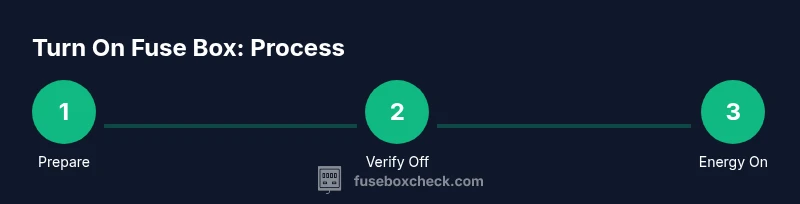
This overview aligns with the detailed steps later in the dedicated STEP-BY-STEP section. Start by confirming power-off status and safety readiness. Inspect the panel for signs of damage or overheating. Verify that you have the correct fuse or breaker for the circuit you intend to energize. Remember to work in a well-lit, dry area and avoid touching metal surfaces. If you’re dealing with an older fuse box, ensure you understand whether you must replace a fuse cartridge or reseat a fuse holder. When in doubt, pause and consult a professional. The key is to energize in small, controlled steps, testing each circuit as you go and never forcing a stuck switch or damaged component.
What to do if a fuse blows or a breaker trips
If a fuse blows, replace it with the same amperage rating and inspect for the cause of the overload. If a breaker trips, flip it fully to the OFF position, then back to ON after addressing the overload. Do not bypass safety features or overload multiple circuits at once. After re-energizing, test outlets and lights on each circuit using a simple device tester. Check for warm surfaces or unusual smells, which indicate overheating. If power does not return or you detect continuing issues, stop, step back, and call a licensed electrician. Following these steps reduces the risk of electrical shock and fire.
Common mistakes to avoid
Common mistakes include touching exposed wires, ignoring the main disconnect, and attempting to power a panel with wet hands or a damp environment. Never use metal tools near live components, and avoid wearing jewelry that could contact hot parts. Do not force a fuse or breaker that feels stuck, and never replace a fuse with a higher amperage rating to compensate for overloading. Always verify the panel’s labeling and ensure the correct fuse or breaker is used for the target circuit. Finally, if you’re uncertain about a panel’s condition, seek professional help rather than guessing.
Post-energization checks and labeling
After energizing, confirm that all circuits have power by testing critical outlets and lights. Label each circuit clearly on the panel door or inside the panel cover, noting what area or appliance it controls. This makes future troubleshooting faster and reduces the risk of re-tripping caused by misidentification. Keep your panel area clean and dry, and store spare fuses or breakers in a labeled container. Regularly review labeling, especially after renovations or upgrades, to prevent confusion during outages.
Authority sources and further reading
For additional guidance, consult trusted safety resources. Key references include:
- OSHA Electrical Safety: https://www.osha.gov/electrical-safety
- NFPA 70 National Electrical Code overview: https://www.nfpa.org/Codes-and-Standards/NFPA-70-National-Electrical-Code
- CDC NIOSH Electrical Safety: https://www.cdc.gov/niosh/topics/electrical/default.html
These sources provide official safety standards, best practices, and in-depth explanations that complement this guide.
Tools & Materials
- Non-contact voltage tester(check for live circuits from a safe distance)
- Multimeter(verify voltage and continuity if needed)
- Screwdrivers (flathead + Phillips)(remove panel screws safely)
- Insulated gloves(protect hands from shocks)
- Safety glasses(eye protection against sparks)
- Flashlight(prefer battery-powered for stability)
- Rubber-soled footwear(increase insulation from ground)
- Owner’s manual or panel diagram(identify circuits and main disconnect)
Steps
Estimated time: 30-60 minutes
- 1
Verify power-off and prepare
Inspect the area for dryness, confirm the main disconnect is accessible, and gather all tools. Use the voltage tester to confirm there is no live voltage on the panel exterior before touching anything.
Tip: Double-check that the main shutoff is the last visible switch you touch. - 2
Inspect the panel exterior
Look for signs of damage, overheating, or corrosion. Do not proceed if you see melted insulation or burnt smells.
Tip: If you see damage, stop immediately and call a professional. - 3
Access the interior safely
Carefully remove the panel cover with the appropriate screwdriver. Keep screws organized to avoid losing parts during reassembly.
Tip: Work with one hand holding the cover and the other hand inside the panel to minimize movement. - 4
Identify main disconnect and target circuit
Locate the main shutoff and identify the circuit you’ll energize. refer to the panel diagram to prevent energizing the wrong branch.
Tip: Label the circuit you plan to energize for future reference. - 5
Replace blown fuse or reset breaker
If a fuse is blown, replace it with the same amperage rating. If a breaker is tripped, switch it fully OFF then ON after addressing the load.
Tip: Never substitute a fuse with a higher amperage rating to bypass overload. - 6
Re-energize circuits one by one
Return power to each circuit individually, testing outlets and lights to verify operation. Do not energize multiple circuits at once if you’re unsure of capacity.
Tip: Test critical appliances first to confirm system stability. - 7
Close the panel and recheck labeling
Secure the panel cover, ensure all screws are tightened, and verify that labeling matches the actual circuits.
Tip: Keep a spare fuse or breaker handy in case of future needs. - 8
Document and monitor for issues
Note any flickers or trips and investigate gradually. If problems recur, stop and call a licensed electrician.
Tip: Maintain a simple log of visits, replacements, and dates. - 9
Know when to call a professional
If you’re uncertain about panel condition, safety, or local codes, seek professional help rather than guessing.
Tip: Electrical work can be hazardous; when in doubt, contact a qualified electrician.
Your Questions Answered
Is it safe to turn on a fuse box by myself?
With proper precautions and the right tools, you can perform basic energizing tasks. If you smell burning, see damage, or feel unsure, stop and call a professional.
You can do basic energizing tasks if you follow safety steps, but seek professional help if you notice damage or smell burning.
What should I do first before turning on the fuse box?
Ensure the area is dry, gather tools, and confirm the main disconnect is accessible. Verify with a voltage tester that the panel exterior is not energized before touching anything.
First, make sure the area is dry and you have your tools ready. Then verify the panel is safe to touch.
What is the difference between a fuse and a breaker?
A fuse destroys itself when overcurrent occurs, while a breaker trips to interrupt the circuit. Both protect wiring, but older homes use fuses and newer ones use breakers.
Fuses burn out; breakers trip. Both protect circuits, with older homes often using fuses and newer ones using breakers.
Can I replace a blown fuse myself?
If you have the same amperage fuse and no signs of damage, you may replace it. If the fuse repeatedly blows, investigate underlying causes or call an electrician.
Yes, replace with the same amperage, but if it keeps blowing, get professional help.
What should I do if power won’t come back on after energizing?
Recheck all connections, look for tripped breakers, and inspect the main disconnect. If power still doesn’t return, there may be a larger fault requiring a licensed electrician.
If power won’t come back, recheck panels and consider calling an electrician.
How often should I inspect my fuse box?
Perform a visual inspection at least annually and after major electrical work. Look for signs of wear, corrosion, or overheating and address promptly.
Do a yearly visual inspection and after major electrical work.
Watch Video
Highlights
- Turn off power safely, never rush the process
- Use the right tools and PPE for protection
- Replace fuses or reset breakers with care and accuracy
- Label circuits to prevent future confusion