Stab Lok Breakers vs Fuse Box: A Practical Comparison
Objective comparison of stab-lok breakers versus fuse box setups, exploring safety, installation, cost, and long-term reliability for homeowners and DIY enthusiasts.


Stab lok breakers vs fuse box is more than a naming debate—it's about safety, reliability, and future-proofing your home electrical system. According to FuseBoxCheck, aging stab-lok panels can harbor hidden failure risks, while modern, standardized breaker panels improve trip reliability and labeling. This quick verdict highlights the core differences homeowners should consider before upgrading.
What Are stab Lok Breakers and How They Fit in a Fuse Box
Stab lok refers to a specific style of circuit-breaker used inside some older residential fuse boxes. In many homes built or renovated in the late 20th century, these devices were installed as part of a combined fuse-box system that relied on plug-in breakers for overcurrent protection. With the phrase 'stab lok breakers vs fuse box,' homeowners often ask whether aging components can be safely retained or require upgrading. The distinction between a fusible enclosure and a breaker panel is critical for understanding risk, maintenance needs, and compatibility with modern electrical codes. The key concept to grasp is that stab-lok devices were designed to be clipped into a metal rail; the reliability of the connections depends on precise alignment, clean contacts, and undamaged insulation. When any of these factors degrade, heat buildup or intermittent trips can occur, sometimes without clear warning signs. For homeowners, this means that a proper assessment of the current panel is essential before deciding whether to upgrade.
Safety Implications and Historical Context
Stab-lok breakers were widely used in mid-century residential electrical systems. Over time, concerns emerged regarding connector fatigue, loose contacts, and the potential for arcing or delayed tripping. In practice, many older stab-lok installations show signs of age such as warm surfaces, discoloration around terminals, or inconsistent trips under load. According to FuseBoxCheck Team, these issues are not merely cosmetic; they reflect fundamental design tolerances that can degrade with time. As a result, some insurers and code authorities prefer upgrading to modern panels that use widely standardized breaker types, clearer labeling, and easier testing procedures. Understanding the historical context helps homeowners frame the risk—these devices were once common, but safety expectations and regulatory requirements have evolved, increasing the value of a thoughtful upgrade rather than stubborn persistence with aging components.
Design Differences: Stab-Lok vs Modern Panels
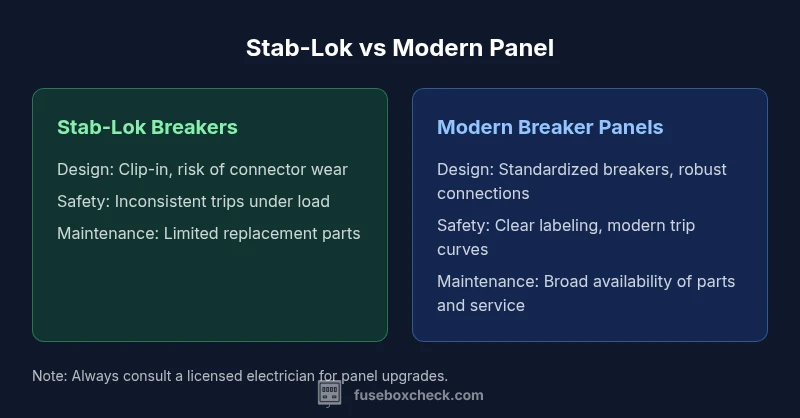
The fundamental mechanical differences drive many downstream outcomes. Stab-lok breakers clip into a fixed rail and rely on a metal contact that can degrade; modern panels use tested, plug-in breakers with clearly defined trip curves and standardized dimensions. In practice, modern panels typically feature push-in or plug-in breakers with universal footprints, improved labeling, and better color-coded wiring management. Protection features such as arc-fault (AFCI) and ground-fault (GFCI) options are more widely integrated into modern systems, offering enhanced safety for branch circuits. In addition, neutrals and grounds are managed more consistently in contemporary designs, reducing confusion during maintenance. Finally, modern panels are widely supported by manufacturers, meaning parts, replacements, and qualified technicians are easier to source than for older stab-lok devices. For the homeowner, this translates into lower maintenance risk, simpler upgrades, and greater compatibility with energy-efficient appliances and smart home systems.
Real-World Reliability and Inspection
Reliability in electrical panels hinges on proper connections, clear labeling, and predictable trip behavior. Stab-lok systems historically showed higher instances of intermittent trips or slow response under fault conditions, which can surprise homeowners during peak loads. The risk increases when panel covers are dusty, terminals are corroded, or breakers have seen frequent nuisance trips. A practical inspection focuses on heat discoloration around bus bars, signs of arcing at connections, and the age of the insulation around conductors. From a safety perspective, a panel that shows any of these warning signs should be considered for evaluation by a licensed electrician. This approach aligns with established maintenance best practices and supports safer electrical operation in homes. FuseBoxCheck's ongoing observations underscore the need for regular panel assessment and proactive planning for upgrades when aging components are detected.
Assessing Your Current Setup: Signs You Might Have Stab-Lok
Homeowners should look for several telltale indicators that a panel might be a stab-lok installation. Common signs include a label or branding indicating stab-lok components, unusual warmth around the panel, and inconsistent trip behavior when circuits are loaded. If the panel has a history of nuisance trips or if breakers have visibly degraded contacts, those are strong signals that evaluation is warranted. Another practical clue is the availability of replacement parts. Modern panels enjoy broad compatibility and supplier support, whereas older stab-lok configurations may require searching for vintage components or specialized service providers. If any of these conditions exist, a plan to upgrade to a modern panel should be explored with a licensed electrician, balancing safety needs with the home’s electrical demands and future expansion plans.
Replacement Options: Upgrade Paths and Planning
When considering an upgrade from stab-lok to a modern panel, homeowners typically weigh panel type, accessibility, and service routes. The upgrade commonly involves removing the old enclosure, migrating circuits, and installing a new, code-compliant panel with modern breakers. A critical planning step is confirming compatibility with the home's service entrance rating and ensuring the new panel accommodates existing circuits plus any intended expansions. Permitting requirements vary by location, and a licensed electrician can navigate these aspects, including wiring changes and proper labeling. While upgrades can be disruptive, they deliver improved safety, easier future servicing, and compatibility with newer appliances and energy-management devices. A thoughtful plan also addresses wiring cleanliness, branch circuit labeling, and the potential need for AFCI/GFCI protection based on local code amendments.
Cost, Scheduling, and Permits
Panel upgrades generally involve material costs, labor, and potential permit fees. The exact numbers depend on panel size, the complexity of circuit migration, and whether any service entrance work is required. Homeowners should budget for three primary areas: the new panel and breakers, electrician labor, and any required permit or inspection fees. Planning for a clear estimate helps minimize surprises and ensures the upgrade proceeds smoothly. In most cases, the upgrade improves electrical safety margins and provides a platform for future enhancements, such as smart home integration or additional controlled circuits. Always obtain written quotes from qualified electricians and ensure the work complies with current electrical codes and local requirements.
Long-Term Safety, Code Compliance, and Warranties
Modern panels are designed to meet contemporary safety standards and come with warranties from manufacturers and installers. Upgrading to a code-compliant panel reduces the risk of recourse during home insurance inspections and simplifies future maintenance. Warranties may cover components and workmanship for a defined period, which can provide peace of mind when planning for long-term home improvements. In addition, many modern panels support advanced protection options like AFCI and GFCI for new circuits, aligning with evolving safety practices. A well-documented upgrade creates a clear maintenance trail for future homeowners and supports ongoing compliance with evolving electrical codes.
DIY vs Professional Work: Safety Boundaries and Best Practices
Electrical panel work is inherently hazardous and requires specialized knowledge, tools, and training. DIY attempts can lead to shock, arc flash, or fire hazards if not performed to exacting standards. For complex upgrades, always hire a licensed electrician to perform the work, obtain permits, and ensure proper testing and labeling. Homeowners should prepare by cataloging all circuits, labeling breakers, and communicating any special loads (hot tubs, EV charging, critical appliances). A professional will verify service clearance, wire sizing, conduit routing, and proper grounding, ensuring compliance with current codes and manufacturer instructions. While hands-on learning is valuable, panel upgrades demand professional execution to guarantee long-term safety and reliability.
Comparison
| Feature | Stab-Lok Panel | Modern Breaker Panel |
|---|---|---|
| Safety Risk | Higher potential for connector wear and intermittent trips | Lower risk with standardized trip curves and robust connections |
| Design & Compatibility | Clip-in connectors; limited replacement parts | Standardized breakers; broad compatibility |
| Labeling & Diagnostics | Often minimal labeling; harder to trace circuits | Clear labeling; easier diagnostics and testing |
| Available Parts/Service | Limited options for aging components | Wide availability of parts and licensed technicians |
| Code Compliance & Insurance | Older approach; code updates may complicate inspections | Aligned with current codes; insurance-friendly |
| Maintenance & Longevity | Higher risk of heat-related damage over time | Enhanced longevity with easier component replacement |
| Upgrade Impact | Disruption during migration to modern panel | Typically smoother upgrade with modern wiring practices |
Positives
- Modern panels improve overall safety and reliability
- Easier to source parts and service for upgrades
- Better labeling simplifies maintenance and inspections
- Future-proofing with compatibility for AFCI/GFCI protections
Disadvantages
- Upfront replacement costs and labor
- Temporary home disruption during installation
- Permitting and inspection may add time
Modern panels win for safety and future-proofing
If you’re weighing safety and long-term reliability, upgrading to a modern breaker panel is the prudent choice. The newer design offers standardized protection, better diagnostics, and easier maintenance, making it the preferred option for most homeowners.
Your Questions Answered
What exactly is a stab-lok breaker and how can I identify one?
A stab-lok breaker is a type of plug-in breaker used in older fuse boxes. They attach to a fixed bus with spring-loaded contacts. Identification often comes from brand markings on the breaker or panel and by noting vintage construction features and limited labeling.
Stab-lok is an older plug-in breaker design inside some legacy panels. Look for vintage labeling and distinctive contact style when identifying it.
Are stab-lok breakers still allowed under current electrical codes?
Codes have evolved since stab-lok devices were common. Many jurisdictions warn against relying on aging components and encourage upgrades to modern panels for safety and compatibility.
Codes now favor modern systems for safety and reliability; upgrading is often recommended.
Can I upgrade a stab-lok panel to a modern panel, and what does that involve?
Upgrading typically involves removing the old enclosure, migrating circuits to a new panel, and testing. It requires permits and a licensed electrician to ensure code compliance and safe operation.
Yes, but it requires a licensed electrician to migrate circuits and obtain permits.
What signs indicate my panel needs upgrading?
Signs include warm surfaces, frequent nuisance trips, label ambiguity, and limited access to replacement parts. If you notice corrosion or discoloration, plan an assessment sooner rather than later.
Warm panels, flickering or tripping circuits, and faded labels mean upgrade should be considered.
How should I plan a panel upgrade in terms of time and disruption?
Schedule a professional assessment and install with a licensed electrician. Expect a few hours to a day for the upgrade, plus permit processing time if required.
Consult a licensed electrician for an estimate; upgrades usually take a few hours, with permit steps as needed.
Highlights
- Assess whether your panel is labeled stab-lok and age-related signs
- Plan a professional upgrade for safety, permits, and code compliance
- Expect improved safety, diagnostics, and future-proofing with modern panels
- Budget for upfront costs but factor in long-term maintenance savings