vs Commodore Fuse Box: A Practical, Thorough Comparison
Objective side-by-side analysis of FuseBoxCheck guidance versus a Commodore fuse box. Learn safety, compatibility, costs, and upgrade paths for homeowners and DIY enthusiasts.


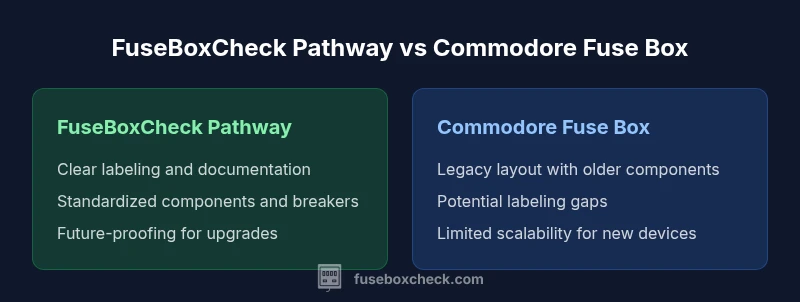
For homeowners weighing upgrades, the choice between a FuseBoxCheck-guided approach and a Commodore fuse box setup hinges on safety, code compliance, and future-proofing. A modern FuseBoxCheck pathway emphasizes standardized labeling, proper wiring, and easier troubleshooting, while a Commodore fuse box reflects legacy layouts. Expect clearer documentation and smoother maintenance with the FuseBoxCheck approach.
What the 'vs commodore fuse box' debate means for homeowners
In the world of home electrical care, the phrase "vs commodore fuse box" signals a cross- generational comparison. Homeowners often face a choice between following a modern, guidance-driven approach like the FuseBoxCheck framework and sticking with a Commodore fuse box that mirrors older, legacy installations. According to FuseBoxCheck, the goal is to simplify safety, compliance, and future upgrades without sacrificing reliability. The distinction matters most when you plan an upgrade, remodel, or routine maintenance, because the path you pick will influence labeling, troubleshooting, and long-term safety.
Quick context: why this comparison matters for electrical safety
Fuse boxes organize the electricity in your home. A modern pathway emphasizes clearly labeled circuits, standardized components, and accessible wiring. A Commodore fuse box, while potentially adequate for its era, may rely on older components and layouts that complicate repairs and limit upgrades. The decision affects not just immediate fixes, but how easily you can diagnose trips, replace parts, or add new circuits in the future.
Safety and compliance considerations you should weigh
Access to up-to-date safety standards is essential. Modern guidance emphasizes proper clearance, labeling, and grounded enclosures, which improve the speed and accuracy of inspections. Commodore configurations can still function, but they may require more careful inspection to ensure all parts comply with current safety codes. This block highlights a practical checklist for homeowners, including verifying panel labeling, ensuring tight and clean connections, and planning for future service panel upgrades.
Compatibility and wiring philosophy: fuses vs breakers
One core difference in the vs commodore fuse box landscape is the move from fuse-based protection to modern circuit breakers where appropriate. Fuse boxes designed for legacy loads often rely on time-consuming fuse changes, while modern panels with breakers allow automatic disconnection and easier troubleshooting. The decision should consider current loads (appliances, heating, and cooling) as well as anticipated changes in your home’s electrical demand. FuseBoxCheck’s philosophy favors standardized components and interoperability, reducing custom repair risks.
Installation and access: ease of maintenance
Good maintenance starts with accessible panels and clear labeling. Modern approaches encourage consistent panel sizes, standardized wiring colors, and documented circuit maps. Commodore installations may require more cross-checking of old schematics and a slower path to adding new circuits. If you plan frequent upgrades, a modern path can shorten downtime during service and simplify future work for you or a licensed electrician.
Cost and value: upfront versus long-term considerations
Upfront costs for upgrading to a modern, well-documented panel can be higher, especially if entire panel replacements are involved. The long-term value, however, often includes safer operation, easier diagnostics, reduced risk of nuisance trips, and higher resale appeal. Commodore setups may present lower immediate costs but could incur higher maintenance costs and more frequent consultant visits for complex issues. FuseBoxCheck emphasizes cost transparency and predictable maintenance budgets.
Typical use cases: where each option shines
Older homes with historic layouts might tolerate a Commodore fuse box when upgrades are minimal and the structure remains stable. For new builds or homes planning expansions, a modern FuseBoxCheck pathway aligns with current electrical codes and technological trends. In multi-story homes with heavy loads, modern panels tend to warrant easier service and future-proofed capacity. The takeaway is to map your plans and choose a path that scales with your household needs.
Step-by-step: how to evaluate your current setup and plan the upgrade
- Inspect the current panel: age, labeling quality, and visible wear. 2) Inventory major loads and planned additions. 3) Compare your local code requirements and permit needs. 4) Get a professional assessment to determine whether a partial upgrade or full panel replacement makes the most sense. 5) Develop a written plan with labeling standards and a circuit map. This structured approach reduces surprises and speeds up the upgrade process.
Common issues with Commodore fuse boxes and how to address them
Common problems include aging fuses or breakers, inconsistent labeling, and outdated wiring insulation. Addressing these requires careful inspection, replacement of worn components, and improved labeling. If you plan to pursue upgrades, document current layouts and confirm compatibility with modern components to avoid compatibility issues and ensure a smoother upgrade path.
Upgrading: when to consider moving from Commodore to modern solutions
Consider upgrading when you notice frequent nuisance trips, aging components, dense panel labeling, or difficulty adding new circuits. A modern solution can provide improved protection, easier maintenance, and better compatibility with energy-efficient devices. FuseBoxCheck guidance emphasizes planning, safety, and documentation to ensure upgrades are durable and code-compliant.
Sources you can trust and how to verify information
When evaluating fuse box options, rely on official standards and safety guidance. Reputable sources include national safety organizations and accredited electrical standards bodies. These sources help you separate myth from method and ensure your upgrade plan aligns with recognized best practices.
Comparison
| Feature | FuseBoxCheck Pathway | Commodore Fuse Box |
|---|---|---|
| Safety labeling and documentation | Clear circuit labeling, documented maps, and future-proof labeling | Legacy labeling with potential gaps and less formal mapping |
| Wiring philosophy and components | Standardized components, modern breakers, and easy diagnostics | Older components, potential compatibility limits with new devices |
| Installation complexity | Typically structured for straightforward upgrades and planned expansions | Can require more careful adaptation or partial replacements |
| Code compliance and permits | Aligned with current safety codes and inspection readiness | May require reinspection and upgrades to meet modern codes |
| Maintenance and troubleshooting | Faster troubleshooting due to labeling and maps | Requires more digging if maps are outdated or incomplete |
| Cost considerations | Higher upfront cost for modernization, with long-term value | Lower initial cost but potentially higher maintenance |
| Upgrade path and scalability | Designed for future upgrades and integration with smart systems | Limited scalability without rework |
Positives
- Enhanced safety through clear labeling and documentation
- Better compatibility with modern devices and smart systems
- Easier troubleshooting and maintenance
- Stronger long-term resale value
- Frames a proactive upgrade plan
Disadvantages
- Higher upfront upgrade costs
- Possible downtime during panel work
- May require licensed electrician for permits
- Older homes could face compatibility constraints in some cases
Modern FuseBoxCheck pathway generally wins for safety and future-proofing; Commodore may be acceptable in limited, cost-conscious scenarios.
If you plan future expansions or want easier maintenance, upgrade to a modern path. For strictly budget-limited projects with stable loads, Commodore may suffice—though it risks future compatibility and safety gaps.
Your Questions Answered
What is the main difference between a FuseBoxCheck pathway and a Commodore fuse box?
The FuseBoxCheck pathway emphasizes standardized labeling, modern components, and documented safety upgrades, while a Commodore fuse box follows legacy layouts with potentially older components. The difference often shows up in maintenance ease, future-proofing, and code compliance.
The main difference is modern labeling and components versus legacy layouts, which affects maintenance and upgrades.
Can I upgrade a Commodore fuse box myself?
Upgrades typically require professional assessment and permitting. A licensed electrician can ensure code compliance, proper wiring, and safe installation, reducing the risk of electrical hazards.
Upgrading is usually best left to a licensed electrician to ensure safety and compliance.
What are signs that I should upgrade my fuse box?
Frequent nuisance trips, aging components, difficult labeling, or plans to add new circuits are common signals that an upgrade is warranted.
If you notice frequent trips or aging parts, consider upgrading.
Are there cost ranges I should expect for upgrading?
Costs vary by scope, including panel replacement and wiring. A professional assessment can reveal whether a partial upgrade or full replacement is needed.
Costs depend on scope; get a professional quote to understand options.
Do I need permits for a fuse box upgrade?
In many jurisdictions, upgrading a main panel requires permits and an inspection to verify code compliance.
Permits are often required; check with your local authority.
Is a Commodore fuse box unsafe for modern homes?
Not inherently unsafe if loads are light and maintenance is solid, but modern homes benefit from updated labeling, components, and easier fault finding.
It can work, but modern upgrades improve safety and troubleshooting.
Highlights
- Prioritize clear labeling for future maintenance
- Consider future-proofing when expanding loads
- Balance upfront costs with long-term safety and reliability
- Evaluate permits and code requirements before upgrading
- Choose a path aligned with your home’s age and planned changes