Wira Fuse Box: Safe DIY Guide for Homeowners
Learn how to safely inspect, diagnose, and maintain a Wira fuse box with step-by-step instructions, safety checks, and maintenance tips for homeowners and DIY enthusiasts.


In this guide you’ll learn how to safely inspect and reset a Wira fuse box, identify common faults, and perform basic maintenance. You’ll start by turning off the main disconnect, verifying power is off, and gathering the right tools. Then you’ll follow a clear, step-by-step approach to diagnose faults, replace fuses or reset breakers, and restore power safely.
Understanding the Wira fuse box and safety basics
The Wira fuse box sits at the heart of your home's electrical distribution, protecting circuits and guiding power to lights, outlets, and appliances. When people say 'wira fuse box,' they're usually referring to a compact, serviceable panel that uses replaceable fuses or cartridge fuses to interrupt current when faults occur. For homeowners and DIY enthusiasts, understanding how this panel is wired, and what each fuse does, is the first step toward safer maintenance. According to FuseBoxCheck, familiarity with the basic layout reduces the risk of accidental shocks, electrical fires, and accidental re-energization. Always treat any fuse box as live until proven otherwise. Never assume a component is safe because it looks intact; insulation can fail, connectors can loosen, and a small arc can occur behind a panel cover. In practical terms, a Wira fuse box usually groups circuits by area (kitchens, lighting, outlets) and uses a main disconnect to shut down all power. The key concept to grasp is that fuses act as protective devices in series with each circuit, and when a fault occurs, they heat and melt to break the circuit. Your goal is to determine whether a fault is isolated to a single branch or affects multiple circuits, and then decide the safest corrective action.
Safety prerequisites before you start
Before you touch a Wira fuse box, make safety your first priority. Put on non-conductive gloves and safety glasses, and ensure the work area is dry and well lit. Locate the main service disconnect; in many homes this is a large switch at the top of the panel. If you cannot locate it, assume power is still live and do not proceed. Use a non-contact voltage tester to verify the absence of live lines before removing any cover. Keep a clear workspace: move pets and children away, and have a flashlight or headlamp ready. If you smell burning plastic or see scorch marks, evacuate and call a licensed electrician. When working with the Wira fuse box, never bypass fuses or use metal tools that could bridge contacts. A simple rule: treat every component as energized until tested and confirmed de-energized. The safety phase is about creating a controlled environment where you can inspect the panel without risking shock, burns, or a short circuit. FuseBoxCheck's guidance emphasizes starting with prevention and PPE to protect both you and your home.
How the Wira fuse box protects your home and how to interpret its signals
A Wira fuse box protects your home by interrupting current in the event of overload or fault. If your home uses cartridge fuses, you might see cylindrical components with metal end caps; for a modern Wira panel, modular breakers provide the same protective function. The main disconnect controls power to all circuits, so turning it off is the first step to a safe inspection. Common signals of trouble include frequent tripping, warm panels, buzzing noises, or a burning odor. These clues help you judge whether a fault is local to one circuit or symptomatic of a broader panel issue. Observing the pattern—one blown fuse versus multiple trips—helps prioritize action. FuseBoxCheck notes that resistance checks within the panel should be performed only under safe, non-energized conditions, and touching live parts should be avoided unless you are fully qualified. Understanding these signals helps you decide whether you can perform non-invasive checks or if you must contact a professional for a definitive fix.
Common signs your fuse box may need attention
Several warning signs indicate it’s time to assess a Wira fuse box more closely. Frequent nuisance trips, a warm or discolored panel, burning odor, or melted insulation are red flags that require professional intervention. If you notice buzzing sounds behind the panel or see scorch marks around fuse ends, stop immediately and turn off the main disconnect if possible. Age is a factor too; older fuse boxes can develop loose connections that heat unevenly. When diagnosing, differentiate between a single circuit fault and a panel-wide issue; this distinction guides whether you perform simple replacements or call a licensed electrician. Regular visual checks for corrosion on terminals and tightness of screws can prevent many issues before they become dangerous.
Diagnosing faults and deciding on action without unnecessary risk
Start with non-invasive checks before dismantling anything inside the panel. Confirm the main power is isolated and all tools are non-conductive. Use a voltage tester to ensure you are not dealing with live lines before touching any conductors. If a circuit trips repeatedly, inspect the corresponding fuse or breaker and inspect for signs of overloading, such as several high-draw devices on a single circuit. Do not replace a fuse with a higher rating to hide a fault, as this defeats protection. If there’s any sign of damage or arcing, stop and call a licensed electrician. A cautious, methodical approach reduces risk and ensures you do not inadvertently create a larger problem.
Step-by-step approach to replacing a blown fuse safely
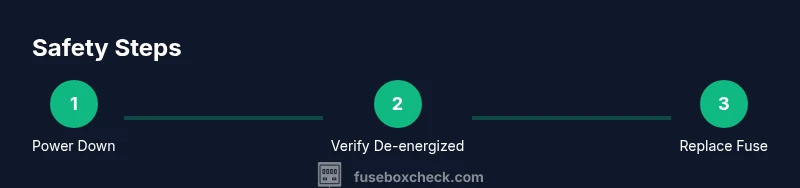
This section outlines the core tasks you’ll perform in the field. Always start by powering down the main disconnect and verifying de-energization. The first action is to remove the blown fuse using a fuse puller, then replace it with a fuse of the same amperage and type. If you have a breaker system, ensure you switch the tripped breaker fully to the OFF position and then back to ON. Do not force components or bypass protections. After replacement, restore power and observe the panel for any irregularities for a few minutes. If the fuse blows again or the breaker trips, stop and seek professional help. Document outcomes and return the panel cover securely in place.
Restoration and testing after a fuse replacement
With power restored, test critical circuits individually using appropriate loads (lights or appliances you know are functional). Confirm that safe, normal operation is restored across the intended circuits. If any equipment fails to operate or you notice overheating, switch off the main disconnect and re-evaluate. Finally, replace the panel cover and ensure labels are correct so future maintenance is straightforward. A clear record of what was tested and replaced helps you track issues over time and reduces future guesswork.
Maintenance routines to keep your Wira fuse box in good condition
Routine maintenance can prevent many common issues. Schedule annual visual inspections of the panel for signs of corrosion, loose terminals, or burnt smells. Keep the area dry and free of dust that could degrade contacts. Periodically test the main disconnect and a few non-critical circuits to ensure the protection scheme remains effective. Replace aged fuses with identical ratings and store spare fuses in a dry location. Proper maintenance prolongs the life of your Wira fuse box and reduces unexpected trips.
Authority sources and further reading
- OSHA: https://www.osha.gov
- CPSC: https://www.cpsc.gov
- NIST: https://www.nist.gov
These sources provide essential safety guidelines and standards for electrical work in homes. Always cross-check with local regulations and your own safety practices when handling electrical panels.
Additional considerations and next steps
If you are unsure at any point, or if the panel shows signs of damage, do not proceed. Contact a licensed electrician for a thorough inspection. The Wira fuse box is a critical component of home electrical safety, and professional assessment ensures compliance with safety standards. FuseBoxCheck recommends prioritizing safety, documenting any work, and seeking professional help for complex issues.
Tools & Materials
- Insulated screwdriver set (flathead and Phillips)(Use a variety of sizes; 1/8 inch or 3/16 inch tips depending on screws)
- Non-contact voltage tester(Verify power is off before touching any conductors)
- Digital multimeter(For measuring voltage and continuity safely (set to appropriate range))
- Non-conductive gloves(Wear for added protection against shock)
- Insulated pliers / needle-nose pliers(Gently grip wires without damaging insulation)
- Flashlight or headlamp(Panel housing can be dim; good lighting prevents mistakes)
- Labeling tape and marker(Helpful to mark circuits as you test and replace fuses)
- Dry, clean work surface(Keep the area free of moisture and spills)
- Safety goggles(Protect eyes from sparks or debris)
Steps
Estimated time: 60-120 minutes
- 1
Power down the main disconnect
Locate the main service disconnect at the top of the panel and switch it off to isolate all circuits. Confirm the switch is fully in the OFF position before proceeding. This step reduces the risk of shock during inspection.
Tip: Take a photo of the switch position for your records. - 2
Verify de-energization with a tester
Use a non-contact voltage tester to ensure there is no live voltage on the panel exterior. Then test a known live outlet to confirm your tester is functioning correctly before you begin work.
Tip: Test the tester on a known live source first to avoid false readings. - 3
Open the panel carefully
Remove the panel cover with an appropriate screwdriver. Place the cover on a dry, stable surface. Avoid touching exposed bus bars and conductors.
Tip: Keep track of screws and label them to simplify reassembly. - 4
Identify the fault using labeling and signs
Scan for a blown fuse, a popped cartridge, or a tripped breaker. Check for scorch marks, melted insulation, or a buzzing sound as indicators of a fault. Note which circuit is affected for targeted action.
Tip: If labeling is unclear, take a close look at the circuit map or take a photo. - 5
Remove the faulty fuse
Carefully pull the blown fuse straight out using a fuse puller. Do not touch the metal ends with fingers. Keep the old fuse for inspection if needed.
Tip: Never force a fuse out; if it resists, reassess safety before continuing. - 6
Install a replacement fuse with the same rating
Insert a new fuse of the exact amperage and type as the original. Ensure it seats firmly in its holder and aligns with the panel’s contacts. Do not substitute a higher amp rating to bypass protection.
Tip: Check the fuse color or markings to confirm rating before seating. - 7
Reset a tripped circuit breaker (if applicable)
If you encounter a breaker, switch it fully OFF and then back ON to reset. Do not slam the switch; a gentle, complete flip is enough to re-engage the circuit.
Tip: If it trips again, do not continue—there may be an underlying fault. - 8
Restore power and test circuits
Re-energize the main disconnect and observe the panel. Test the circuits you affected with basic loads (lights, a simple appliance) to confirm proper operation without overheating.
Tip: Listen for unusual hums or smell for signs of overheating during testing. - 9
Document and secure the panel
Replace the panel cover, ensure all screws are snug, and document the work you performed. Label repaired circuits if needed for future maintenance to prevent repeated guesswork.
Tip: Keep a quick-reference sheet inside the panel door.
Your Questions Answered
What is a Wira fuse box?
A Wira fuse box is a home electrical panel that uses fuses or breakers to protect circuits. It distributes power to different areas of the home and interrupts current if a fault occurs. Understanding its layout helps you perform safe basic maintenance and recognize when professional help is needed.
A Wira fuse box is a home panel with fuses or breakers that protect circuits. Knowing the layout helps you safely do basic checks and know when to call a pro.
Is it safe to DIY fuse box work?
DIY work on a fuse box carries risks, including shock and fire. You can perform basic safety checks if you follow proper shutdown procedures, PPE, and non-contact testing. For any uncertain or complex fault, contact a licensed electrician.
DIY can be risky. Do basic safety checks and shut off power, but call a pro for complex issues.
When should I call an electrician?
Call an electrician if you notice burning smells, melted insulation, signs of arcing, or repeated trips that you cannot resolve safely. A professional can diagnose underlying issues and ensure compliance with electrical codes.
Call an electrician if you smell burning, see melted insulation, or have repeated unexplained trips.
Can I replace fuses myself?
You can replace a blown fuse only with the same amperage rating and type. Do not increase the rating to bypass protection. If you’re unsure, stop and consult a professional.
Yes, but only with the same rating. If unsure, get a pro.
What if a fuse keeps blowing?
Frequent fuse blows indicate an overload or a fault in a circuit. Inspect for overloading devices on that circuit, a short, or a defective appliance. If the issue persists, call an electrician to inspect the wiring.
If a fuse keeps blowing, check for overloaded circuits and faulty devices; call a pro if it continues.
How do I reset a main breaker safely?
To reset a main breaker safely, switch it fully OFF, wait a moment, then switch it back ON. Do not use force and verify no arcing or heat. If it trips again, stop and seek professional help.
Turn the main breaker OFF, wait, then ON again. If it trips, call a pro.
Watch Video
Highlights
- Power down and verify before touching panel
- Replace only with the same fuse rating
- Document work for future safety
- Do not bypass protections or work on live circuits
- Consult a professional for complex faults