Fuse Box Breaker: Safe Troubleshooting and Replacement
Learn how to safely diagnose, test, and replace a faulty fuse box breaker with step-by-step instructions, tools, and safety tips from FuseBoxCheck.


You will identify a faulty fuse box breaker, safely isolate the panel, and replace the breaker with the correct type. Begin by de-energizing the main, verifying that power is off, and testing circuits before and after. This guide covers the exact steps, required tools, and essential safety precautions to prevent shock or fire.
What a fuse box breaker is and when to replace
A fuse box breaker, often simply called a breaker, is a safety device inside your main electrical panel that interrupts electrical flow when a circuit becomes overloaded or a fault occurs. It differs from a traditional fuse, which must be replaced after it trips. Understanding this distinction helps homeowners diagnose issues more accurately. According to FuseBoxCheck, many DIYers confuse breakers with fuses and end up chasing the wrong problem. A breaker that trips frequently, feels warm to the touch, or shows signs of physical damage should be considered for replacement. In most homes, problems stem from overloaded circuits, a short circuit, or a failing breaker itself. Replacing a faulty breaker promptly can prevent nuisance trips and reduce the risk of overheating or electrical fires. Before buying a replacement, check the panel label to confirm the exact amperage and type. Using the wrong replacement can cause continued tripping, overheating, or damage to connected devices.
Safety prerequisites before you start
Safety comes first when working with a fuse box breaker. Before any inspection, put on approved PPE: insulated gloves, safety goggles, and nonconductive footwear. Then locate the main disconnect and turn it fully to OFF, even if a single circuit is malfunctioning. If your panel has a lockout feature, engage it to prevent accidental power restoration. Use a non-contact voltage tester to verify there is no live voltage on the panel before you touch any bus bars or conductors. Keep the work area dry and clear of metal tools, jewelry, and water. If you smell burning, hear buzzing, or see melted insulation, stop and call a licensed electrician. FuseBoxCheck recommends treating every panel as energized until proven otherwise, especially in older homes.
How to identify a faulty breaker
Inspect the breaker for obvious signs: a tripped position (the switch is in the middle or off), discoloration, crusty marks, or a burning odor. A tripped breaker generally flips to OFF and stays there until reset. Use a voltage tester at the load side of the breaker to confirm whether power is reaching the circuit. If the load side reads voltage when the switch is OFF, do not touch the wiring. If power is off but circuits still show activity elsewhere, the issue may be elsewhere in the panel. Keep a log of which circuit trips and when, as this helps determine whether the problem is overload, short, or a failing breaker.
How to choose the right replacement breaker
Choose a replacement that matches the original amperage rating, physical type, and brand compatibility with your panel. Breaker types vary (twin, standard, or high-amp variants) and some panels require specific styles. Check the panel label or the owner manual to confirm the exact model. Never upsize a breaker beyond the panel’s rating to push more current through a circuit; this increases heat and risk of fire. For added safety, replace breakers in pairs only if both are worn, and consider upgrading to a newer panel if many breakers trip regularly. FuseBoxCheck emphasizes verifying compatibility before purchasing, to prevent false fits or unsafe connections.
Step-by-step replacement considerations
Prepare the panel by confirming the main disconnect is OFF and the area is dry. Remove the panel cover carefully to access the breakers, avoiding any contact with live components. Identify the faulty breaker by its label and ensure you have the exact replacement ready. Remove the faulty breaker from its slot with a proper insulated tool, freeing the conductors without tugging on wires. Install the new breaker by aligning it with the bus and snapping it firmly into place. Re-attach any load wires to the terminal and re-check seating. Finally, replace the panel cover, restore power at the main, and test the circuit with a small load to confirm proper operation. FuseBoxCheck recommends keeping a detailed log of the change for future maintenance.
Post-replacement testing and verification
Once power is restored, switch the new breaker to ON and observe the circuit for a short period. Use a multimeter to verify voltage at outlets on the circuit and confirm that no stray voltage is present at the panel exterior. Check for warm components after 15-30 minutes of operation. If the breaker trips again immediately or warms quickly, there may be a deeper electrical problem such as a short or overloaded circuit, and a licensed electrician should inspect the system. Label the breaker clearly on the panel cover to reflect the updated circuit information. Document any changes in your home electrical map for future reference.
Common mistakes and how to avoid them
Rushing the process or skipping the main power check is a common error. Do not force a breaker into a slot or use the wrong tool size, which can damage the bus bar. Overlooking panel labeling can lead to replacing the wrong breaker or mixing circuits. Never work with water nearby or on a panel that feels warm to the touch. Always confirm the exact amperage and type before purchasing a replacement, and avoid replacing a breaker after a single event without assessing the circuit load. Follow the manufacturer’s safety recommendations and your local electrical codes.
Maintenance and prevention tips
Regularly inspect the panel for signs of wear, corrosion, or loose breakers. Keep loads balanced across hot and neutral legs to reduce nuisance trips. Use a diagnostic log to track trips and identify overloaded circuits. Schedule professional inspections for older panels or panels that trip frequently. Consider upgrading to a modern panel with tamper-resistant breakers if you notice repeated failures. These practices help maintain safer electrical distribution and reduce the chance of a surprise outage.
Authority sources
Authorities and safety guidelines you can consult include:
- Occupational Safety and Health Administration (OSHA): https://www.osha.gov
- National Fire Protection Association (NFPA): https://www.nfpa.org
- U.S. Department of Energy (DOE) - safety guidelines: https://www.energy.gov
Note: Always verify local codes and manufacturer instructions before attempting work. FuseBoxCheck's guidance aligns with these sources to promote safe DIY practices.
Tools & Materials
- Non-contact voltage tester(Verify no voltage before touching breakers)
- Insulated screwdriver set(Flat and Phillips; insulated handle)
- Replacement breaker (matching type and amperage)(Check panel label for exact spec)
- Wire stripper/cpliers(Trim conductors neatly)
- Electrical tape(Insulate and label)
- Safety gloves(Electrical-rated gloves)
- Safety goggles(Eye protection)
- Flashlight or headlamp(Illumination for dark panels)
- Multimeter or voltage tester(For voltage verification on circuits)
Steps
Estimated time: 30-60 minutes
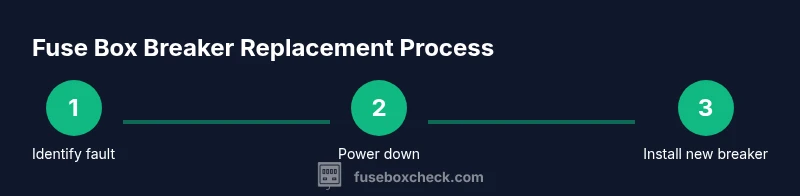
- 1
Identify the faulty breaker and circuit
Review panel labeling to locate the circuit and observe signs of failure such as a tripped switch, warmth, or burning odor. Confirm the issue before proceeding to avoid unnecessary replacement.
Tip: Double-check recent loads on the circuit to determine if overload caused the trip. - 2
Power down the main disconnect
Turn the main breaker to OFF and wait a moment for any stored energy to dissipate. This step dramatically lowers shock risk when you touch panel components.
Tip: If your panel has a lockout device, engage it to prevent accidental re-energizing. - 3
Remove the panel cover safely
Use the insulated screwdriver to remove the screws and lift the cover. Keep track of screws and inspect for corrosion or damage on the interior.
Tip: Do not touch bus bars or terminals with bare hands; keep tools in contact with nonconductive surfaces when possible. - 4
Flip the faulty breaker OFF and disconnect load wire
Switch the number of the circuit to OFF and carefully loosen the terminal screw to free the load wire. Do not tug on the wire while the breaker is detached.
Tip: Apply minimal force and consider a magnetic screwdriver to hold small screws. - 5
Remove the old breaker
Gently pull the breaker from its slot using an insulated tool, ensuring no wires are stressed. Note how the breaker sits in the bus so the new one can be seated correctly.
Tip: Take a quick photo of the arrangement before removal for reference. - 6
Install the replacement breaker
Align the new breaker with the bus and snap it into place. Re-attach the load wire to the terminal and tighten to specification without over-tightening.
Tip: Verify the replacement matches the original type and amp rating on the panel label. - 7
Re-seat and inspect connections
Ensure the breaker sits firmly and the terminal screws are snug. Check for any loose conductors in the panel and clear debris from the interior.
Tip: A loose connection is a common cause of post-replacement trips. - 8
Restore power and verify operation
Replace the panel cover, switch the main back ON, and test the circuit with a light load. Confirm that the new breaker remains stable and does not heat up.
Tip: If the breaker trips again, stop and seek professional help immediately.
Your Questions Answered
Can I replace a circuit breaker by myself?
Yes, you can replace a breaker if you follow strict safety steps and use the correct tools. If the panel is old or you smell burning, consult a licensed electrician before continuing.
You can replace a breaker if you follow safety steps and use the correct tools, but stop if you smell burning or the panel is old.
What tools do I need to replace a breaker?
You will need insulated tools, a non-contact voltage tester, a replacement breaker that matches your panel, and a multimeter for verification if available.
Insulated tools, a voltage tester, a matching replacement breaker, and a multimeter if you have one.
Is it safe to work on a panel with the main ON?
No. Always turn off the main disconnect and verify zero voltage before touching any components. Working on a live panel can cause severe shock or fire.
No, never work on a live panel. Turn off the main and verify there’s no voltage.
How do I know which breaker to buy?
Match the amperage rating and the physical style to your panel. Check the panel label or manual for the exact model and type.
Match the amperage and type to your panel; check the panel label for the exact model.
What should I do after replacing a breaker?
Test the circuit with a light load, label the panel, and monitor the breaker for signs of overheating over the next hours.
Test the circuit, label the panel, and watch for overheating in the next few hours.
If the breaker trips again, what now?
If a new breaker trips again, there may be an overload or a wiring fault. Stop and consult a licensed electrician for a full inspection.
If it trips again, there may be an overload or fault. Call a licensed electrician.
Watch Video
Highlights
- Power off and test before touching the panel.
- Match the replacement breaker to panel type and amperage.
- Double-check connections and reseal the panel.
- Test circuits after replacement to confirm safe operation.