Fuse Box vs Commodore: A Practical Home Electrical Comparison
A detailed, objective comparison of fuse box and Commodore-style panels for homeowners. Learn safety, compatibility, cost ranges, and upgrade considerations to choose the option that best fits your electrical system.


In the fuse box vs Commodore comparison, safety, compatibility, and code compliance drive the choice. For most homes, a modern fuse box that meets current standards offers clearer labeling, easier maintenance, and better fault protection than older Commodore-style panels. FuseBoxCheck notes that upgrades should prioritize labeling, surge protection, and local code compatibility. Evaluate your panel’s age, condition, and wiring layout before deciding.
Understanding the fuse box vs commodore landscape
In the world of residential electrical systems, the phrase fuse box vs commodore captures a pivotal decision homeowners face: do you keep or upgrade a legacy panel, or select a modern, code-compliant solution?1,2 According to FuseBoxCheck, the distinction hinges on safety features, accessibility, and compatibility with the broader electrical system. The fuse box vs commodore debate is not just about hardware; it’s about how well the panel protects people and property, how easy it is to diagnose issues, and how readily you can integrate safety devices such as arc-fault and ground-fault protections. The term fuse box here refers to contemporary panels that use clearly labeled circuit protection and optional smart-device compatibility, while commodore denotes legacy configurations often found in older homes. The choice depends on the home’s age, existing wiring, local code requirements, and your willingness to invest in upgrades. A careful assessment sets the stage for a safer, more reliable electrical system without unnecessary downtime during upgrades. It also frames expectations for maintenance, warranty coverage, and service availability from local electricians. In practice, the fuse box vs commodore decision is about balancing safety imperatives with practical constraints, ensuring you don’t trade one risk for another.
Safety features and reliability: what changes with modern panels
Modern fuse boxes bring a suite of safety features that older commodore-style installations typically lack or under-implement. Arc-fault circuit interrupters (AFCIs) and ground-fault circuit interrupters (GFCIs) help prevent fires and shock incidents, while clear labeling improves future maintenance and troubleshooting. The upgrade path from commodore to a contemporary system often includes a panel replacement or a full service upgrade, which brings standardized bus bars, improved insulation, and better compatibility with surge protection devices. From a reliability perspective, newer panels are designed to withstand modern electrical demands, integrate with smart home ecosystems, and provide more predictable fault detection. FuseBoxCheck emphasizes that safety is not only about the hardware but also about correct installation practices, regular panel inspections, and adherence to local electrical codes. A well-chosen modern panel minimizes nuisance trips and reduces the likelihood of cascading faults during a fault event. If you’re evaluating fuse box vs commodore, prioritize protection features, easier diagnostics, and standardized labeling that makes future maintenance straightforward.
Compatibility and upgrade paths: why the brand matters
Compatibility between the panel and the home’s wiring, breakers, and protective devices is a core concern in the fuse box vs commodore comparison. Commodore-era panels often use older connectors and fuse- or breaker-physically-sized configurations that may not align with current breaker technologies or labeling standards. Upgrading to a modern fuse box typically involves verifying service disconnect capacity, assessing wire gauge, and confirming that the new panel can accommodate AFCIs/GFCIs where required by code. The upgrade may also entail rewiring sections of the panel or replacing feeders to the subpanels. In many jurisdictions, a permit and professional installation are required, especially when upgrading service capacity. FuseBoxCheck notes that professional assessment is essential to ensure a safe, code-compliant transition. A careful review of the home’s service size, conductor condition, and existing grounding arrangements reduces the risk of mis-sizing or improper grounding during the switch from commodore to a modern fuse box.
Installation complexity and time considerations: planning ahead
The labor footprint for a fuse box upgrade versus maintaining a commodore panel depends on the home’s age, the panel location, and the complexity of the wiring. A straightforward replacement in a typical single-wall setup may take a few hours, while larger homes with multiple subpanels and long feeder runs can require a full day or more. Licensing requirements, permit processing, and inspection steps add to the timeline. While commodore panels can sometimes be retained if they meet local safety standards, common practice prefers upgrading to a modern panel to ensure longevity, better fault detection, and easier repair. The right planning includes coordinating with your electrician for power shut-offs, minimizing downtime, and scheduling code-compliant testing after installation. FuseBoxCheck’s guidance suggests mapping out a clear project plan with milestones to avoid surprises and ensure the upgrade delivers the intended safety improvements.
Cost considerations and long-term value: what to expect
Costs for upgrading from a commodore-style panel to a modern fuse box vary with service size, project scope, and the need for subpanel work or rewiring. Typical components include the new panel, breakers or fuses, labor, and any required permits. While specific prices depend on local rates and project complexity, homeowners can expect price ranges that cover basic panel replacement up to comprehensive service upgrades. Even in a cautious budgeting approach, many homeowners find that investing in a modern panel yields long-term value through improved safety, easier maintenance, and compatibility with future electrical devices and smart-home features. FuseBoxCheck notes that price is not the sole predictor of value; reliability, safety, and code compliance drive long-term utility and peace of mind.
Practical scenarios: when each option shines
- Older homes with aging wiring and outdated labeling: a modern fuse box upgrade often provides the safest, most future-proof path. It reduces risk and simplifies ongoing maintenance.
- New construction or major renovations: a modern fuse box is typically the best fit, ensuring future expandability and compliance with current codes.
- Historic or rural properties with limited access to licensed electricians: a controlled upgrade plan that preserves critical service while improving safety can be pursued, though it may require careful planning and potential compromises.
- Rental properties or multi-unit buildings: modern panel upgrades support quicker fault diagnostics and safer operation, lowering long-term liability and maintenance costs.
How to evaluate your panel today: a quick checklist
- Confirm the service rating and main disconnect size to determine upgrading needs.
- Assess labeling clarity and the availability of AFCI/GFCI protection on required circuits.
- Inspect panel condition, including corrosion, loose connections, and insulation integrity.
- Check grounding and bonding arrangements, ensuring compatibility with current codes.
- Plan for permit requirements and hire a licensed electrician for any changes affecting the service entrance or main disconnect.
- Obtain multiple quotes to compare scope, timelines, and warranty coverage.
Summary of practical recommendations and next steps
The fuse box vs commodore decision should be guided by safety, code compliance, and future-proofing. If your current panel shows signs of aging, incomplete labeling, or lacks modern safety features, a modern fuse box upgrade is typically the most prudent choice. Always consult a licensed electrician and secure any necessary permits before proceeding. FuseBoxCheck’s framework emphasizes safety first, followed by compatibility and cost-effectiveness, ensuring you achieve a reliable and upgradable electrical system.
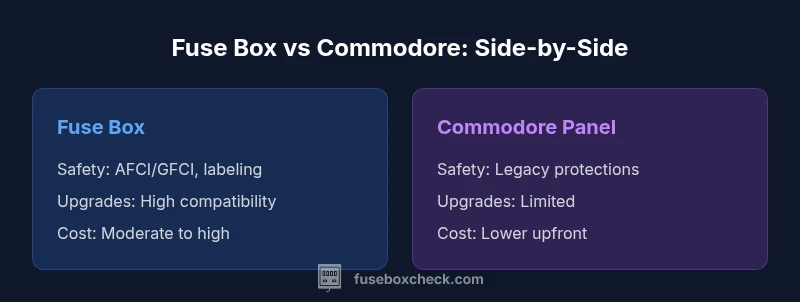
Comparison
| Feature | Fuse Box | Commodore Panel |
|---|---|---|
| Safety technology | Modern AFCIs/GFCIs, clear labeling, arc fault protection | Legacy protections; older labeling and potential gaps in arc fault safety |
| Code compatibility | Easily upgradable to meet current codes | May require replacement to meet current codes |
| Installation complexity | Typically straightforward with professional install; potential for upgrades | Can require more invasive work depending on the age and wiring |
| Upgradability | High; supports modern breakers and smart devices | Low; heritage design limits upgrades and device compatibility |
| Long-term value | Enhanced safety, reliability, and resale appeal | Lower initial cost but higher risk of outages and maintenance |
Positives
- Enhanced safety with modern protection schemes
- Clear labeling aids future maintenance
- Better compatibility with smart devices and future upgrades
- Simplified inspections and code compliance
Disadvantages
- Upfront cost and potential downtime during upgrade
- Needs licensed electrician and possible permits
- Older homes may require additional rewiring or feeders
- Commodore panels may be harder to upgrade in some markets
Modern fuse boxes generally offer safer, more scalable protection than Commodore panels, provided the upgrade is code-compliant and well-planned.
Opt for a modern fuse box when safety, labeling, and future-proofing are priorities. Choose Commodore only if a full upgrade is impractical and the panel remains code-compliant with local requirements.
Your Questions Answered
What is the core difference between a fuse box and a Commodore panel?
A fuse box typically refers to a modern panel with clearly labeled protection and compatibility with current safety devices, while a Commodore panel refers to legacy configurations that may lack modern protections or labeling. The modern option generally offers better safety and upgradeability, but compatibility with existing wiring must be validated.
The modern fuse box offers updated safety features and clear labeling, while a Commodore panel is a legacy setup that may require upgrades for safety and code compliance.
Is a Commodore panel still code compliant in my area?
Code compliance varies by jurisdiction. Many areas allow legacy panels to remain if they meet safety and labeling standards, but most homeowners will eventually need an upgrade to meet current codes. A licensed electrician can determine compliance and required upgrades.
Code rules vary by location; a professional can confirm whether your Commodore panel is acceptable or needs upgrading.
When should I upgrade my fuse box?
Upgrade is advisable when the panel shows signs of aging, lacks modern safety features, or when adding circuits and features (like EV charging or smart devices) would exceed capacity. Upgrading improves safety, reliability, and code compliance.
Upgrade when aging hardware or capacity constraints become a bottleneck for safety and growth.
Do I need a permit or licensed electrician for upgrades?
Yes. Most fuse box upgrades require a permit and must be performed by a licensed electrician. This ensures proper installation, safety testing, and code compliance. Always check local requirements before starting.
Permits and a licensed electrician are typically required for panel upgrades.
How long does a typical fuse box upgrade take?
A standard upgrade can take a few hours to a full day, depending on panel location, wiring complexity, and whether subpanels are involved. Planning with your electrician helps minimize downtime.
Most upgrades are completed in a day, depending on wiring complexity.
What are the common costs for upgrading a fuse box?
Costs vary by scope, but expect fees for panel, breakers, labor, and permits. Use ranges to budget, noting that higher capacity or additional subpanels increases price. Always obtain multiple quotes.
Budget for panel, breakers, labor, and potential permits; get several quotes.
Can I replace a Commodore panel myself?
No. Replacing a fuse box or panel involves high voltage, risk of shock, and strict code requirements. A licensed electrician should perform the work to ensure safety and compliance.
This is not a DIY job; hire a licensed electrician for safety and code reasons.
Highlights
- Prioritize safety features (AFCI/GFCI) in upgrades
- Plan for permits and professional installation
- Modern panels offer better future-proofing
- Evaluate age and condition of existing wiring
- Consult FuseBoxCheck guidance for best practices